








If you’ve ever tried to order custom pins in bulk, you’ve probably hit this fork in the road: offset printed, or soft enamel? On paper they sound like two flavors of the same thing. In practice, they’re built completely differently, they cost different amounts, and they photograph, feel, and age differently too. Pick the wrong one and you either overspend on a design that didn’t need it, or underspend on a product that looks cheap next to your logo.
The good news is that once you understand how each pin is actually made, the decision gets a lot easier. Let’s break it down.
What Are Offset Printed Pins?

Offset printed pins start life as a digital file — your logo, mascot, team photo, whatever you’ve designed — which gets printed directly onto a metal blank (usually iron, brass, or stainless steel) using a high-resolution color printing process. Think of it as the same family of technology used in silkscreen printed pins and other flat-printed goods: color is laid onto the surface rather than physically built up or separated by metal lines.
Once the artwork is printed, a clear epoxy resin dome is applied over the top. This is where the term offset epoxy pins comes from — that glossy, slightly domed coating you see on a lot of promotional pins is doing double duty: it protects the print from scratches and everyday wear, and it gives the whole piece a shiny, almost glass-like finish.
Why people love offset printed pins:
- Unlimited colors — gradients, shadows, and subtle shading are no problem
- Great for photo-realistic designs, detailed mascots, or complex multi-color logos
- Lightweight and inexpensive, especially at higher volumes
- Fast production, since there’s no hand-filling involved
Where they fall short:
- The finish, while shiny, doesn’t have the tactile “collector” feel of enamel
- Over time, cheaper epoxy coatings can dull or yellow slightly
- Less premium perceived value if your brand is going for a high-end look
If your design has a sunset gradient, a full-color team photo, or fine detail that would get lost in solid color blocks, offset printing pins is almost always the right call. It’s simply the best process for turning intricate artwork into a wearable pin without compromise.
What Are Soft Enamel Pins?
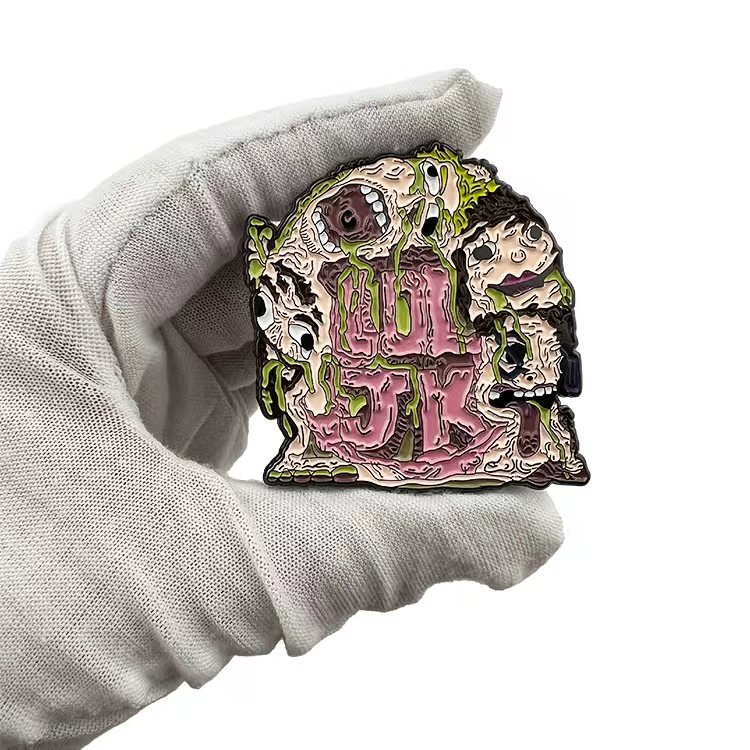
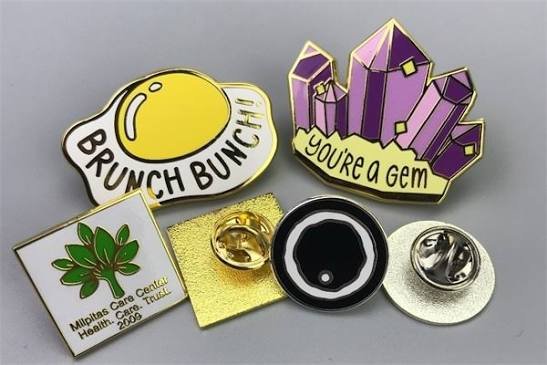
Soft enamel pins take a completely different path. Instead of printing color onto a flat surface, the design is first die-struck into the metal, creating recessed grooves that outline your artwork. Liquid enamel colors are then hand-filled into those recessed areas, one color at a time, and baked to cure. The raised metal lines that separate each color stay slightly higher than the enamel fill — which is exactly why soft enamel pins have that signature textured, almost 3D feel when you run your finger across them.
Because each color is applied individually by hand, soft enamel can’t reproduce gradients or photo-quality detail the way offset printing can. But what it lacks in color complexity, it more than makes up for in durability and presence. These are the pins people actually want to collect, trade, and display.
Why people love soft enamel pins:
- Durable metal construction that holds up to years of handling
- Distinctive textured surface — it looks and feels premium
- Bold, clean color separation that reads well even from a distance
- The classic “trading pin” look that’s instantly recognizable
Where they fall short:
- No gradients or complex shading — colors must be solid and separated
- Slightly higher unit cost than offset printing at comparable volumes
- Typically requires a mold or die, adding a small setup step
Offset Printed vs. Soft Enamel: Side-by-Side
| Feature | Offset Printed Pins | Soft Enamel Pins |
|---|---|---|
| Texture | Smooth, flat surface | Raised metal lines, tactile |
| Color options | Unlimited (CMYK, gradients) | Solid spot colors only |
| Detail level | High — photo-quality | Moderate — bold and clean |
| Durability | Durable with protective epoxy coat | Very durable, classic metal build |
| Look & feel | Modern, glossy, high-resolution | Traditional, premium, collectible |
| Best for | Complex artwork, photos, gradients | Logos, mascots, brand marks |
| Typical lead time | Faster | Slightly longer (mold + hand-fill) |
Which One Should You Choose?
Here’s where it gets practical. The right pin type really comes down to what your artwork looks like and what job the pin needs to do.
If you’re producing high volumes of pins with detailed, colorful, or photo-based designs — say, a tournament series with team photos, or a limited-run design with a gradient background — offset printing pins gives you the flexibility to reproduce that artwork exactly as designed, without cutting corners on color.
On the other hand, if your logo is bold and clean — a wordmark, a mascot, a crest — soft enamel is going to elevate it. The raised metal borders and solid color fill give even a simple design a premium, finished look that customers associate with quality merchandise rather than a cheap giveaway.
It’s also worth thinking about how the pins will actually be used. A great real-world comparison is custom hockey pins vs generic stock pins you might grab off a shelf. Generic pins are usually mass-produced, one-size-fits-all designs with no branding flexibility — fine for a quick giveaway, but forgettable. Custom hockey pins, whether offset printed or soft enamel, let a team or league put their actual crest, colors, and player details on something fans genuinely want to trade and collect. The production method you choose (offset for detailed jerseys and mascots, soft enamel for a clean team logo) directly affects how that pin performs — literally and in terms of how proud people are to wear it.
For e-commerce sellers and retail buyers, there’s a photography angle worth considering too. Soft enamel’s raised texture catches light beautifully in product photos and close-ups, which tends to boost perceived value online. Offset printed pins, meanwhile, shine when the product listing itself needs to show off intricate artwork or licensed designs that simply can’t be simplified into solid colors.
Cost & MOQ Considerations for Bulk Orders
When you’re ordering in bulk — whether you’re a trader stocking up for a tournament season, a brand launching a merch line, or a retailer filling shelf space — cost per unit and minimum order quantities matter as much as the design itself.
Offset printed pins generally win on price at scale. Because there’s no mold or die required, setup costs are lower and turnaround is faster, which is a big deal if you’re working against a tight event date. Soft enamel pins typically involve a one-time mold fee (many enamel pin manufacturers, including us, waive this for qualifying orders), and the hand-fill process adds a bit more time to production. That said, the price gap narrows the larger your order gets, and many buyers find the durability and perceived value of soft enamel worth the small premium.
A quick rule of thumb: if your design is complex and your budget is tight, lean offset. If your design is simple and you want something that feels built to last, soft enamel is usually worth the extra step.
Design Considerations Before You Order
Before you lock in a process, take an honest look at your artwork:
- Does it have gradients, shadows, or photo elements? That’s a strong signal for offset printing pins.
- Is it a clean, iconic logo or crest? Soft enamel will make it pop.
- Do you need it fast and inexpensive at high volume? Offset epoxy pins are hard to beat.
- Are you building a collectible or premium merch line? Soft enamel’s texture and durability do a lot of the heavy lifting.
It’s also worth knowing that hybrids exist — hard enamel (a polished, flush-surface cousin of soft enamel), or combination pins that mix printed detail with enamel accents. These are worth a conversation with your manufacturer if neither option feels like a perfect fit, but for the vast majority of orders, offset printed and soft enamel cover the bases beautifully.
Durability, Care & the Customer Experience
Both pin types are built to last with basic care, but they age a little differently. Offset printed pins rely on that epoxy dome for protection — keep them away from harsh chemicals or excessive friction, and the glossy finish will hold up for years. Soft enamel pins, thanks to their metal construction, are naturally more resistant to scratching and fading, though the recessed enamel can collect dust over time (a soft cloth wipe usually does the trick).
If you’re a retail buyer worried about returns or damage in transit, both processes travel well when packaged properly, but soft enamel’s solid metal build tends to give buyers extra peace of mind — it simply feels more substantial in the hand.
Conclusion
There’s no universally “better” option here — just the better fit for your design and your goals. Ask yourself three quick questions: Is your artwork complex or photo-based? Is unit cost your top priority? Do you want a premium, tactile product people will actually want to keep? Your answers will point you straight to offset printed or soft enamel.
Whichever direction you go, working with a manufacturer who can walk you through proofs, pricing, and turnaround for both processes makes all the difference. If you’re ready to compare samples side by side, reach out for a free quote — we’re happy to help you figure out exactly which type of printing pins will make your project shine.
FAQs
Are soft enamel pins more expensive than offset printed pins?
Generally, yes — soft enamel involves die-striking and hand-filling, which adds cost. The gap shrinks at higher order volumes.
Which pin type is better for wholesale or bulk trading?
Offset printed pins are often preferred for large trading pin runs because of lower per-unit cost and faster turnaround, especially for detailed designs.
Can offset printed pins have raised metal lines like enamel pins?
No — offset printing produces a flat, smooth surface. If you want the raised, textured look, soft enamel (or hard enamel) is the way to go.
What’s the minimum order quantity for custom soft enamel pins?
This varies by manufacturer, but many suppliers offer flexible MOQs and can waive mold fees for qualifying bulk orders — worth asking about upfront.
How long does production take for each type?
Offset printed pins are typically faster since there’s no mold or hand-fill step. Soft enamel takes a bit longer due to the die-striking and manual color-filling process.
Which pin type is better for e-commerce product photography?
Soft enamel’s texture tends to photograph well and read as premium in close-ups, while offset printing shines when the design itself is the star — detailed, colorful, or photo-based artwork.