






A plain enamel pin does its job. But for traders, brand teams, and retail buyers looking to stand out on a shelf, in a subscription box, or at a trade show booth, “job well done” isn’t the goal — memorable is. That’s where special-effect finishes come in. At Unique Custom Pins, we get asked constantly: which upgrade is actually worth it?
This guide breaks down four popular pin upgrades — glitter, glow-in-the-dark, spinning, and rainbow plating — covering how each is made, what it costs, and which orders they suit best. Whether you’re sourcing for e-commerce, private label, or corporate giveaways, understanding these options before you brief your supplier saves time, budget, and a few rounds of email back-and-forth.
Why Bother Upgrading Beyond Standard Enamel?
Standard soft or hard enamel pins are reliable, affordable, and fine for most orders. But a special effect changes how a pin feels to the person holding it. Glitter and rainbow plating push perceived value up, which supports a higher retail price. Glow-in-the-dark and spinning pieces turn a static accessory into something people want to show a friend. And for collectible or limited-run series, a unique finish creates the “I need that one” pull that drives repeat sales.
None of this means every order needs an upgrade — it means knowing which upgrade fits which goal. Let’s go through them one at a time.
Glitter Pins — Sparkle That Sells

Glitter enamel is made by mixing fine glitter particles directly into the colored enamel before it’s baked into the pin’s recessed areas. The result is a finish that catches light from every angle instead of sitting flat.
Design tip: glitter shows up best in larger, open color blocks. Cram it into thin lines or tiny details and the sparkle gets lost — something worth flagging to your designer before artwork is finalized.
Where it works: youth and lifestyle brands, holiday or seasonal drops, anniversary and achievement pins, and “chase” variants inside a collectible pin series. Cost impact sits in the low-to-moderate range compared to standard enamel, and it rarely affects minimum order quantities.
Browse glitter pin options to see finished examples across different color combinations.
Glow-in-the-Dark Pins — The Feature That Surprises People
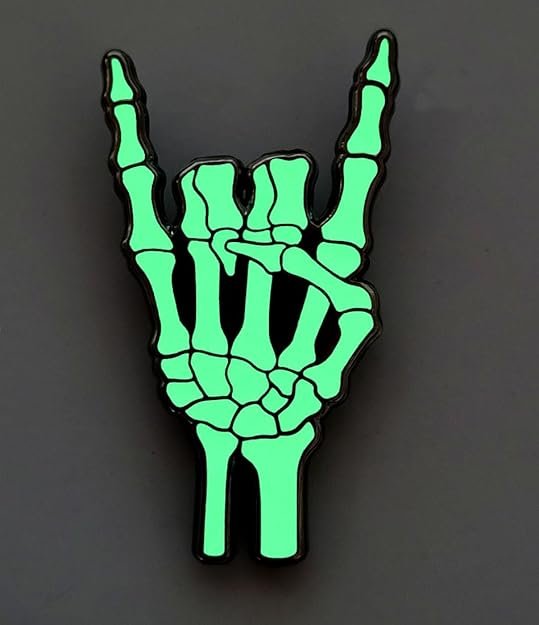
Glow-in-the-dark pins use a phosphorescent powder — often a compound like strontium aluminate — mixed straight into the enamel fill. The powder absorbs light energy during the day and slowly releases it as a visible glow once the lights go down.
In daylight, the pin looks like a normal (sometimes slightly milky) enamel piece. Under low light, it lights up — usually in green or blue — which makes it a natural conversation starter. Two things worth setting expectations on: the glow works best on white or light base colors with generous open space, and it fades over time, needing periodic “recharging” under any light source to keep glowing.
Where it works: night events, concerts, festivals, Halloween or space-themed products, and “hidden feature” pins that reward a second look. Cost impact is low-to-moderate, similar to glitter.
See our glow-in-the-dark pin collection for reference designs.
Spinning Pins — Built for Interaction
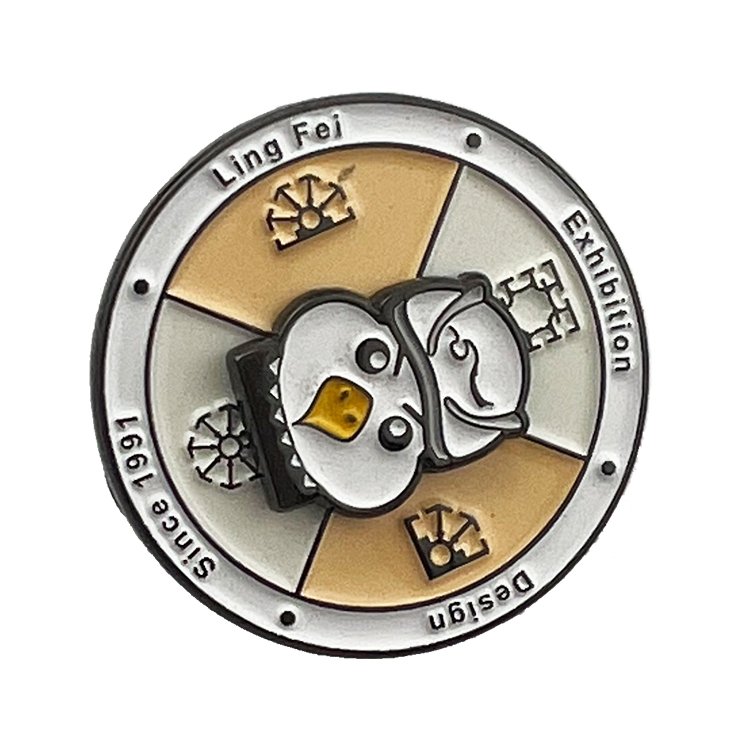
Spinning pins are assembled from two separate pieces: a base pin and a top piece attached with a rivet that lets it spin a full 360 degrees. Because each spinning pin requires manufacturing two components and hand-assembling them, this is a more labor-intensive upgrade than a finish applied directly to the enamel.
That extra step is exactly why spinning pins cost more and carry a higher price tier than glitter or glow effects — you’re essentially paying for two small manufactured parts instead of one, plus assembly time. It’s a fair trade-off for the payoff: spinning pins are consistently among the most requested designs in trading pin culture and limited-edition collector drops, because they invite people to actually pick up and play with the piece.
Where it works: collector series, trading pin sets, novelty and fidget-style products, and any design where hands-on engagement matters more than unit cost.
Check out spinning pin designs to get a feel for what’s possible.
Rainbow Plating Pins — Premium Shine Without Extra Color

Rainbow plating is a metal-finishing technique rather than an enamel effect. A thin metallic coating is applied over the pin’s surface in a way that shifts color depending on the angle of light — shimmering through purples, blues, golds, and pinks without a single drop of colored enamel.
Because the effect comes from the metal itself, rainbow plating works best on designs with minimal color fill — think bold silhouettes, text, or simple line art that lets the iridescent surface do the talking. Overload the design with solid enamel colors and you lose most of the visual payoff you’re paying for.
Where it works: premium or luxury branding, fashion collaborations, statement retail pieces, and any product where “understated but expensive-looking” is the goal. Cost impact is moderate — higher than glitter or glow, but generally below spinning pins.
Explore rainbow plating pin styles for inspiration.
Can You Combine Effects?
Short answer: often, yes — and this is where the real “upgrade” thinking happens.
- Glitter + Rainbow Plating: glitter enamel fill paired with a rainbow-plated border or base metal can work well, as long as the glitter areas stay limited so the plating still reads clearly.
- Spinning + Glow-in-the-Dark: applying a glow fill to the spinning top piece is a popular combo for event and nightlife-themed collectibles — the movement and the glow reinforce each other.
- Glitter + Glow-in-the-Dark: technically possible but rarely recommended, since glitter particles can interfere with how evenly light-emitting powder distributes.
As a general rule, combining two effects adds cost roughly in proportion to each individual upgrade — it’s not usually a steep multiplier — but it’s worth confirming feasibility with your supplier at the sampling stage rather than assuming any combination will translate cleanly from concept to production.
Quick Comparison: Which Upgrade Fits Your Order?
| Effect | Visual Impact | Cost Tier | MOQ Flexibility | Best For |
|---|---|---|---|---|
| Glitter | Sparkly, eye-catching | Low–Medium | High | Seasonal drops, collectible chase variants |
| Glow-in-the-Dark | Surprising, interactive | Low–Medium | High | Events, Halloween, hidden-feature pins |
| Rainbow Plating | Iridescent, premium | Medium | Medium | Luxury branding, fashion collabs |
| Spinning | Interactive, playful | High | Medium | Trading pins, limited collector editions |
What to Confirm Before You Place an Order

A few questions worth asking any supplier before committing: What does the digital proof process look like, and how many revisions are included? How does per-unit pricing change across quantity tiers? Does this specific effect raise your minimum order quantity? And how much extra time does the upgrade add compared to a standard production timeline?
At Unique Custom Pins, we run free digital proofs with unlimited revisions and don’t impose extra MOQs for most special-effect finishes — details worth comparing against any quote you’re weighing.
One small aside if you’re building out a broader giveaway or retail line: if you’ve ever wondered what a golf ball marker is used for, it’s the small flat disc golfers place behind their ball on the green before lifting it to putt. Standard golf ball marker size runs around 25–30mm, compact enough to snap onto a magnetic golf ball marker holder on a cap. The best golf ball marker for retail or corporate gifting usually pairs a custom design with a secure hat clip, and — much like pins — there are several ways to mark a golf ball, from plain coin-style markers to enamel-finished versions with the same upgrade options covered above.
Turn a Standard Pin Into a Product People Want
Glitter, glow-in-the-dark, rainbow plating, and spinning pins each solve a different problem: sparkle for shelf appeal, glow for surprise, plating for premium polish, and movement for engagement. None of them is universally “better” — the right choice depends on your product, your audience, and your budget per unit.
If you’re ready to see how any of these effects would look on your own design, reach out to our team for a free proof — it’s the fastest way to know exactly what you’re ordering before production starts.