


If you’ve ever stood at a finish line, lungs burning and legs done, you know the feeling: someone loops a piece of metal around your neck, and the pain suddenly feels worth it. That’s the magic of a finisher medal. So here’s a question we hear often: do you get medals for marathons every time, or only at big-name races? Almost every organized marathon hands one out today.
The real competition isn’t whether you get a medal — it’s whether it’s memorable enough to make runners sign up again. That’s what we’re digging into today: some of the coolest marathon medals on the planet, what makes them collectible, and how you can source medals with that same “wow” factor for your own event.
Why Marathon Medals Matter More Than Ever
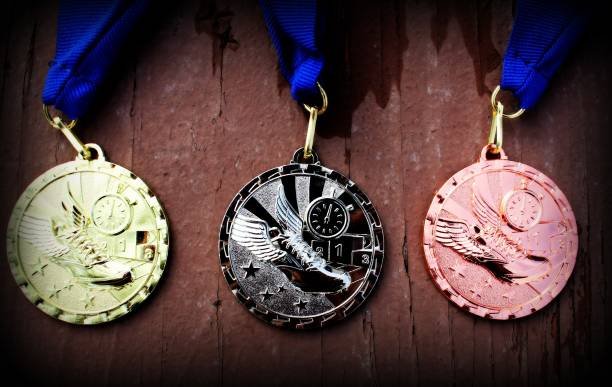
Finisher medals used to be a formality. Now they’re a marketing asset. Runners post them on Instagram, trade stories about them in Facebook groups, and — for the truly obsessed — chase specific races just for the medal design. This is sometimes called the “medal economy,” and it’s a real driver of race registrations.
Consider the Abbott World Marathon Majors: Boston, London, Berlin, Chicago, New York, and Tokyo. Finish all six and you earn the exclusive Six-Star Medal — a badge of honor within the running community that has motivated thousands of “major chasers” to book flights across continents. London alone draws well over 40,000 participants a year, and a meaningful chunk of that demand is fueled by bragging rights tied to the medal itself.
For event organizers and retail buyers, this matters because a great medal isn’t just a thank-you gift — it’s a retention tool, a social media asset, and, increasingly, a merchandising opportunity. Runners who love their medal are runners who register again, buy the branded hoodie, and tell their friends.
The World’s Most Iconic Marathon Medals
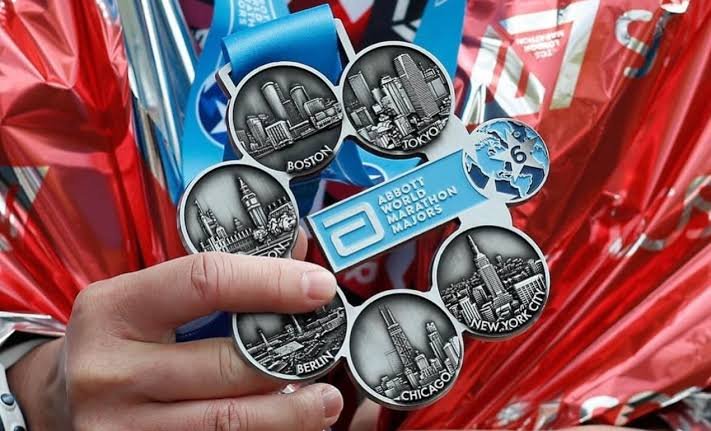
Let’s look at a few standout examples and what makes each one tick.
The World Marathon Majors. Boston’s medal features a unicorn — the symbol of the Boston Athletic Association — and has become instantly recognizable among serious runners. London leans into its skyline, working Big Ben and Tower Bridge into the design. Berlin nods to the Brandenburg Gate, Chicago captures its skyline silhouette, and New York features the Statue of Liberty. Each medal tells a hyper-local story, which is a big part of why they’re so coveted.
Innovation-driven medals. Not every iconic medal relies on tradition. The Illinois Marathon uses a pocket-watch design that actually opens up, revealing a spinning dial you can set to your finish time. Miami was one of the earliest races to popularize the “spinner” medal — a design where an inner disc rotates freely inside an outer ring. More recently, races like the Wuxi Marathon in China have pushed things further with NFC chips embedded in the medal, letting runners tap their phone to pull up race photos and results instantly.
Story and material-driven medals. The Big Sur Marathon has handed out handcrafted clay medals for decades, each one slightly different, reinforcing the race’s artisanal, community-rooted identity. The Space Coast Marathon in Florida leans hard into its NASA-adjacent location with rocket launches, dolphins, and coastal wildlife worked into a chunky, oversized design that runners rave about online.
Novelty and shape-driven medals. Then there are the medals that go all-in on fun. Gasparilla’s pirate-themed medal, the horseshoe-shaped medal from Bird in Hand, the rooster medal from the Key West Half Marathon, and the guitar-shaped medal from the Mississippi Blues Half Marathon are proof that a little personality goes a long way. These are consistently mentioned when runners talk about the best half marathon medals in online communities — proof that half marathons don’t need to play second fiddle to full marathons when it comes to design creativity.
Little Rock deserves its own shoutout too: it’s famous for producing some of the heaviest, most oversized medals in the sport, occasionally jokingly compared to “a personal pizza” in size by runners who collect them.
What Makes a Medal “Iconic”? A Practical Framework
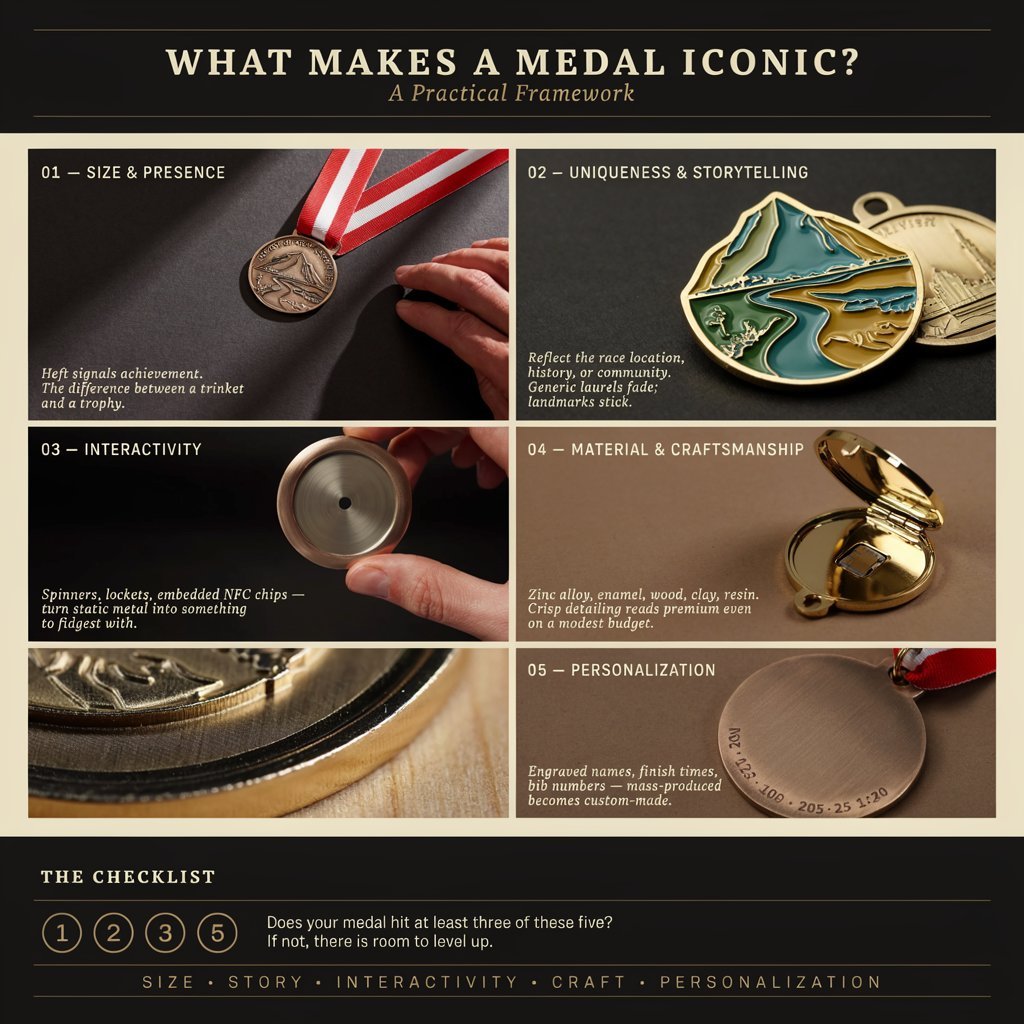
After looking at dozens of examples, a pattern starts to emerge. The best medals — the ones people talk about years later — tend to share five characteristics.
1. Size and presence. Bigger isn’t always better, but a medal with real heft and visual weight signals effort and achievement. It’s the difference between a trinket and a trophy.
2. Uniqueness and storytelling. The strongest designs reflect something specific about the race — its location, its history, its community. Generic laurel wreaths are fine, but a medal shaped like a local landmark or cultural symbol sticks in people’s minds.
3. Interactivity. Spinner medals, medals that open like a locket, medals with embedded tech like NFC chips — these turn a static object into something people want to fidget with, show off, and photograph.
4. Material and craftsmanship. Zinc alloy, enamel, wood, clay, even resin — the material choice affects not just cost, but the entire feel and durability of the piece. A well-plated medal with crisp detailing looks premium even on a modest budget.
5. Personalization. Engraved names, finish times, or bib numbers turn a mass-produced item into something that feels custom-made for the individual runner.
If you’re a race organizer, brand, or retail buyer thinking about your next batch of medals, this framework is a genuinely useful checklist. Ask yourself: does our medal hit at least three of these five elements? If not, there’s room to level up.
From Inspiration to Production: Sourcing Custom Marathon Medals
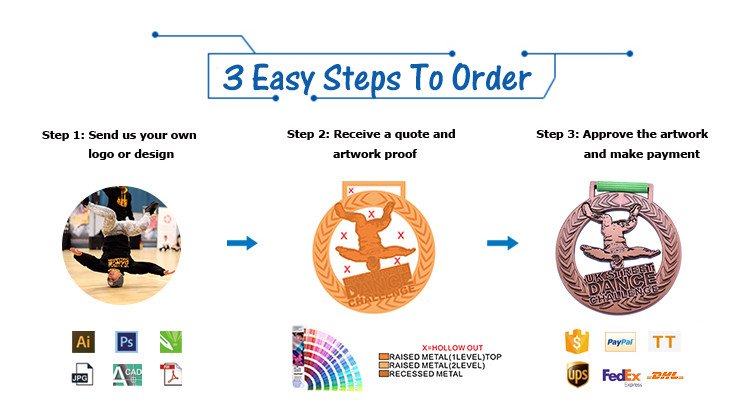
This is where things get practical. Loving a great medal design is one thing — actually getting one made, on budget and on time, is another. Here’s what we typically walk clients through.
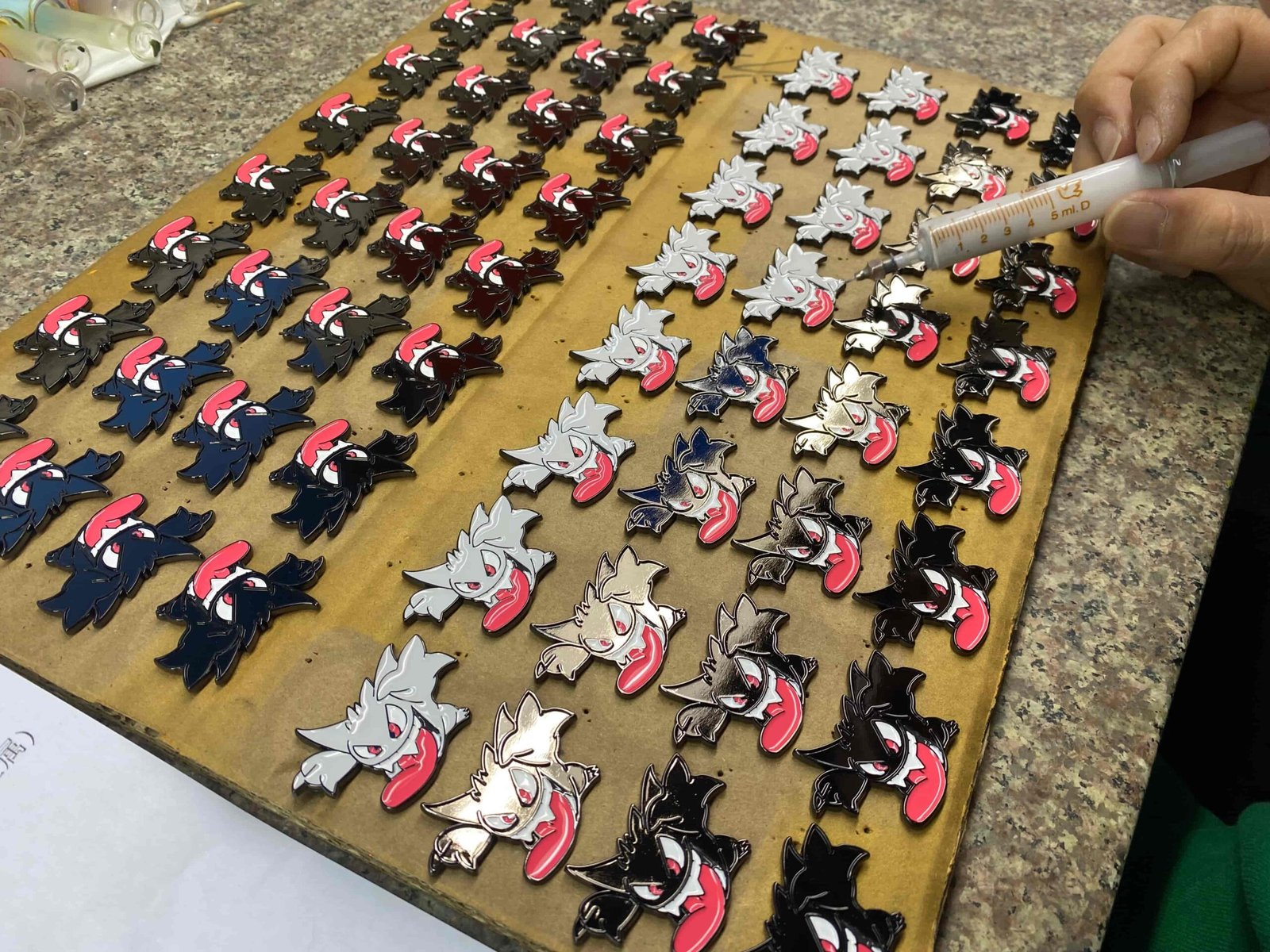
Choosing the right manufacturing process. Most premium medals start with zinc alloy die-casting for that solid, substantial feel, then get finished with soft or hard enamel color fill, electroplating (gold, silver, antique bronze, and so on), or a 2.5D/3D relief effect for extra depth. Spinner and locket-style medals require additional assembly work, so it’s worth flagging that early in your design brief.
MOQ, lead time, and cost. This is usually the first question we get from smaller race organizers and e-commerce sellers: how many do I actually need to order, and how fast can I get them? The good news is that custom medal manufacturing has become far more accessible than it used to be. Factory-direct partners can now offer no minimum order quantity, free design and revisions, and production turnaround as fast as 7–14 days — a huge shift from the old model where you needed thousands of units and months of lead time just to get a quote.
Working with a factory-direct partner. If you’re a trader, brand, or retail buyer sourcing medals for resale or event use, the manufacturing partner matters as much as the design. Look for CNC tooling with tight tolerances (±0.01mm is a good benchmark), ISO 9001 and SEDEX certified workshops, in-house 3D prototyping to cut down sampling time, and full material traceability with RoHS/REACH compliance if you’re shipping internationally. These aren’t just nice-to-haves — they’re what separates a medal that looks great in a mockup from one that actually looks great in 10,000 runners’ hands.
Design Trends to Watch for 2026–2027
A few shifts are worth keeping on your radar if you’re planning ahead:
- Sustainable materials — recycled metal and eco-conscious finishes are increasingly requested by race organizers looking to align with runner values.
- Tech integration — NFC and QR-enabled medals that link directly to race photos, results, or digital certificates are moving from novelty to near-standard for larger events.
- Deeper personalization — engraved finish times and custom bib-number etching are becoming easier and cheaper to produce at scale, thanks to improved laser engraving workflows.
Ready to Design Your Own Iconic Medal?
Whether you’re a race director trying to boost next year’s registrations, a brand looking for a standout piece of branded merchandise, or a retail buyer sourcing medals for resale, the takeaway is the same: the medal is no longer an afterthought. It’s part of the product.
If you’ve got a design in mind — or just a vague idea and a launch date — we’d love to help you bring it to life. Get a free quote in 30 seconds and let’s build something runners will actually want to show off.
FAQs
What makes a marathon medal valuable to collectors?
Rarity, unique design elements, limited-edition status, and emotional connection to a specific race or personal milestone all play a role.
Do you get medals for marathons every time you finish?
Yes — the vast majority of organized marathons and half marathons today provide a finisher medal as standard. The differentiator is design quality, not whether you receive one at all.
How much does it cost to custom-manufacture race medals in bulk?
Costs vary based on size, material, plating, and finishing details, but factory-direct manufacturers with no MOQ requirements have made small and mid-size orders far more affordable than in the past.
What’s the typical MOQ for custom marathon medals?
Traditionally MOQs sat in the thousands, but many modern manufacturers now accept orders with no minimum quantity at all, making custom medals accessible for smaller races and startups.