







If you’re reading this, you’re probably not planning a backyard soccer tournament. You’re sourcing product — for a storefront, a marketplace listing, a client contract, or a container that needs to clear customs on time. So let’s skip the “which one means more to a child’s heart” conversation and get into what actually matters to you: cost, margin, MOQ, shipping, and which SKU your customers will actually reorder.
The classic medal trophy debate has been written about a thousand times from the buyer’s point of view — parents, coaches, event planners. Almost nobody writes it from your side of the table: the trader deciding what to stock, the brand deciding what to private-label, or the retail buyer deciding what earns shelf space. That’s the gap we’re filling here.
Medal vs Trophy: The Basics, Recapped Quickly
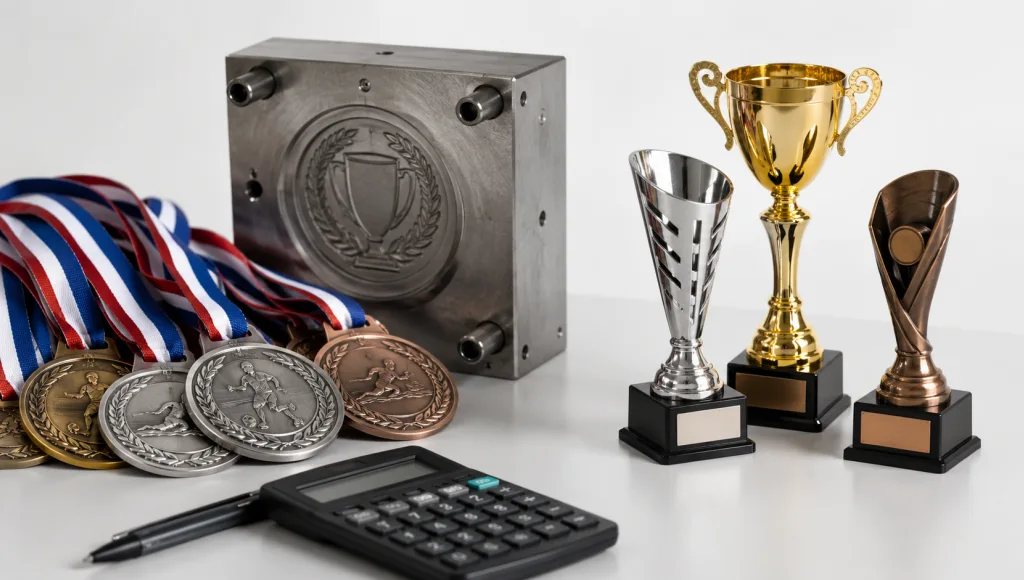
You already know roughly what these are, but let’s align on definitions so the rest of this article makes sense in a sourcing context.
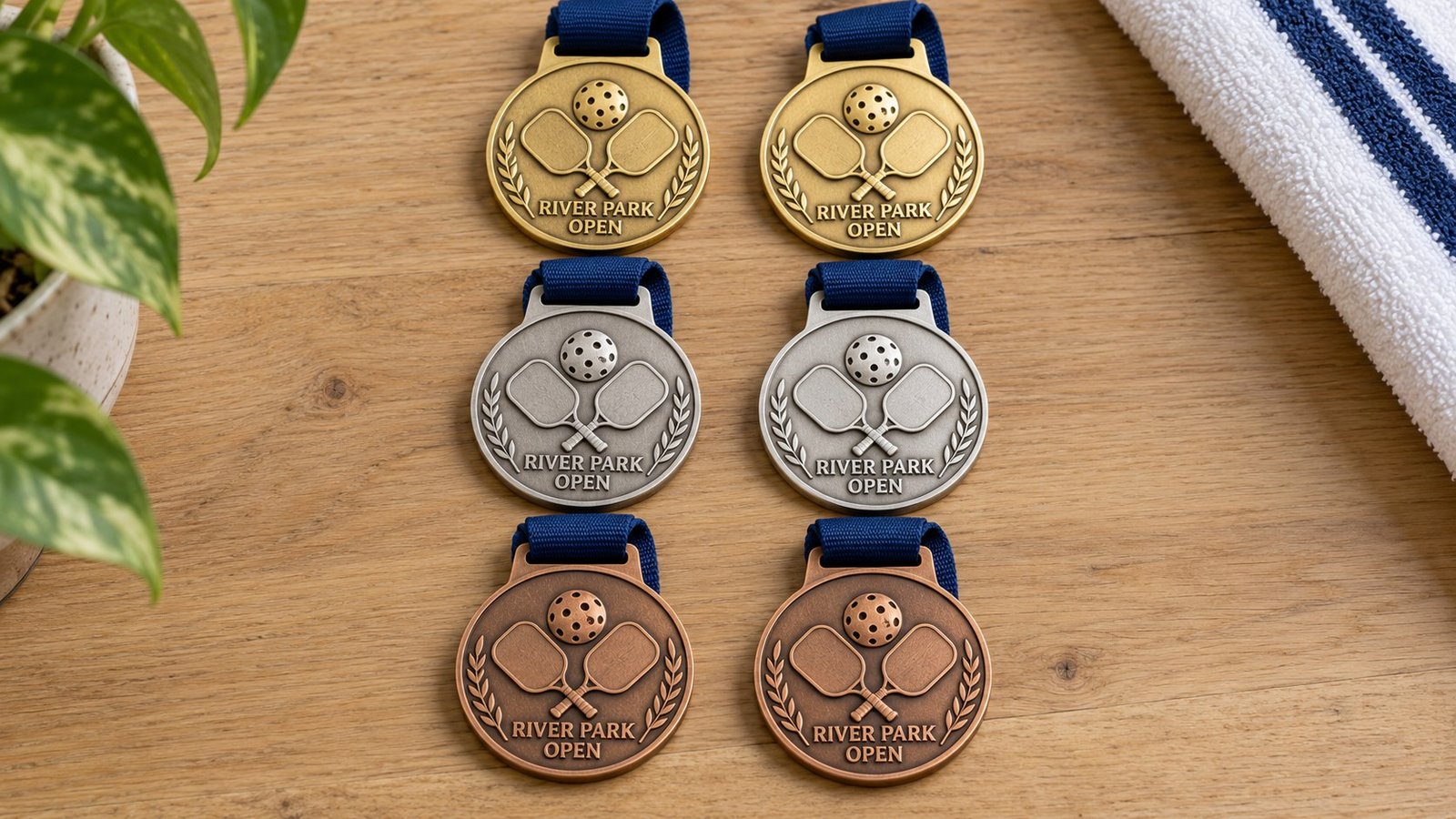
Medals are flat, wearable pieces — usually metal, zinc alloy, or enamel — attached to a ribbon. They’re stamped, die-cast, plated, and sometimes printed, which makes them fast and cheap to produce at scale.
Trophies are three-dimensional — a base plus a figure, cup, or sculpture — made from metal, acrylic, resin, or crystal. They’re built through casting, assembly, and engraving, which takes longer and typically costs more per unit.
Here’s the comparison that actually matters when you’re the one placing the purchase order:
| Factor | Medals | Trophies |
|---|---|---|
| Unit cost at volume | Low | Higher |
| Typical MOQ | Low to none | Often higher (tooling/mold costs) |
| Customization turnaround | Fast (stamping, printing) | Slower (casting, multi-part assembly) |
| Shipping cost per unit | Low — light, stackable | High — bulky, needs protective packaging |
| Damage/return rate | Low | Higher — trophies chip and crack in transit |
| Reseller margin pattern | Volume-driven, lower per-unit margin | Lower volume, higher per-unit margin |
| Reorder frequency | High (seasonal races, recurring contracts) | Lower, but higher order value |
Neither wins outright. They serve different parts of your catalog, and honestly, the smartest sellers stock both — just strategically.
Why This Decision Hits Different for Traders Than for Event Organizers
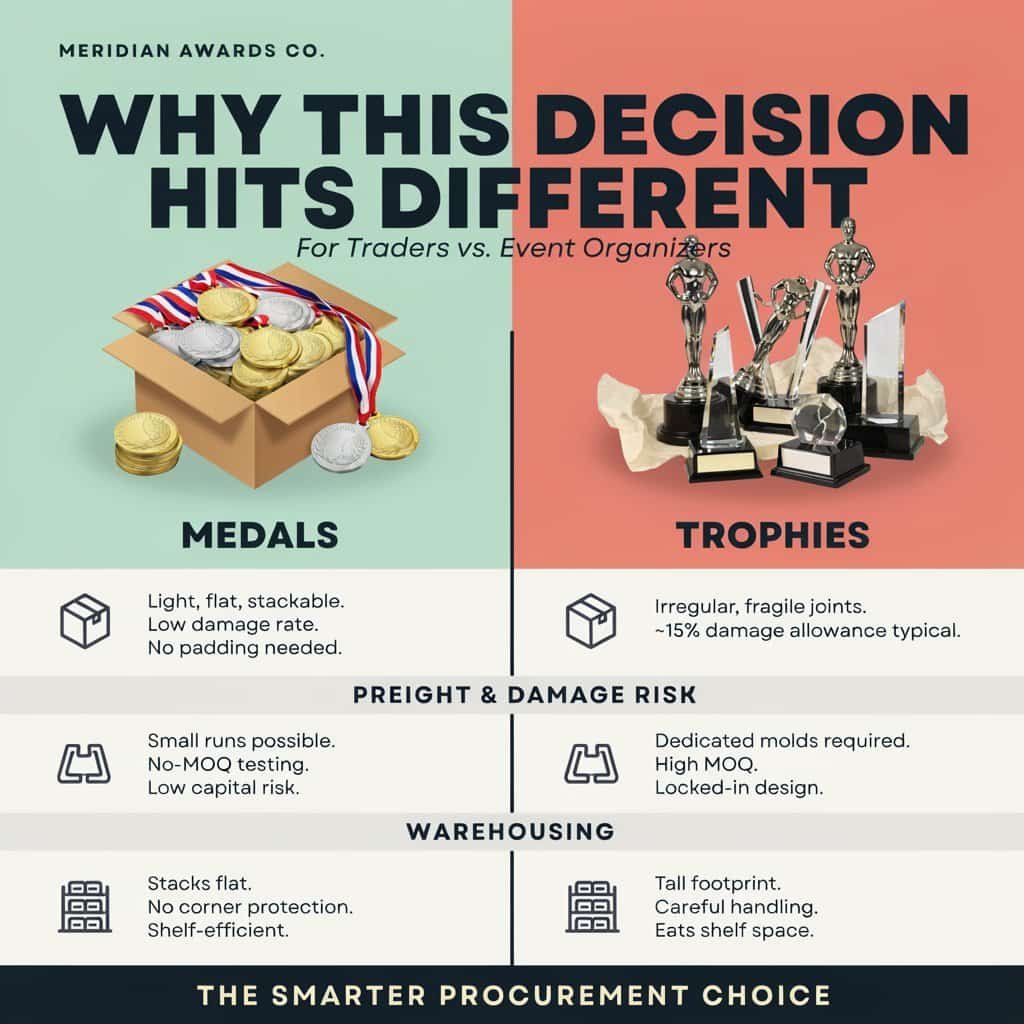
An event organizer thinks about symbolism. You think about landed cost. Here’s where the two paths diverge.
Freight and Damage Risk
Medals are light, flat, and stack neatly into a box — a dream for anyone paying per kilogram or per cubic meter on an ocean freight quote. Trophies are the opposite: irregular shapes, fragile joints, and a much higher chance of arriving with a cracked base or a snapped figure. If you’ve ever opened a container and found 15% of your trophy order damaged, you already know why savvy buyers pad their trophy orders with a damage allowance that they’d never need for medals.
MOQ and Tooling
Trophies often require dedicated molds or tooling for custom bases and figures, which pushes minimum order quantities up and locks you into a design longer than you might want. Medals, especially stamped or die-cast ones, can be produced in smaller runs — which is exactly why a no-MOQ manufacturer is such a low-risk way to test a new medal SKU before committing real capital to a trophy line.
Warehousing
If you’re running an e-commerce operation or a wholesale warehouse, medals are simply easier to store. They stack, they don’t tip over, and they don’t need corner-protected boxes. Trophies eat shelf space and need more careful handling — a real cost that rarely shows up until you’re the one doing inventory.
Which One Sells Better, and Where?
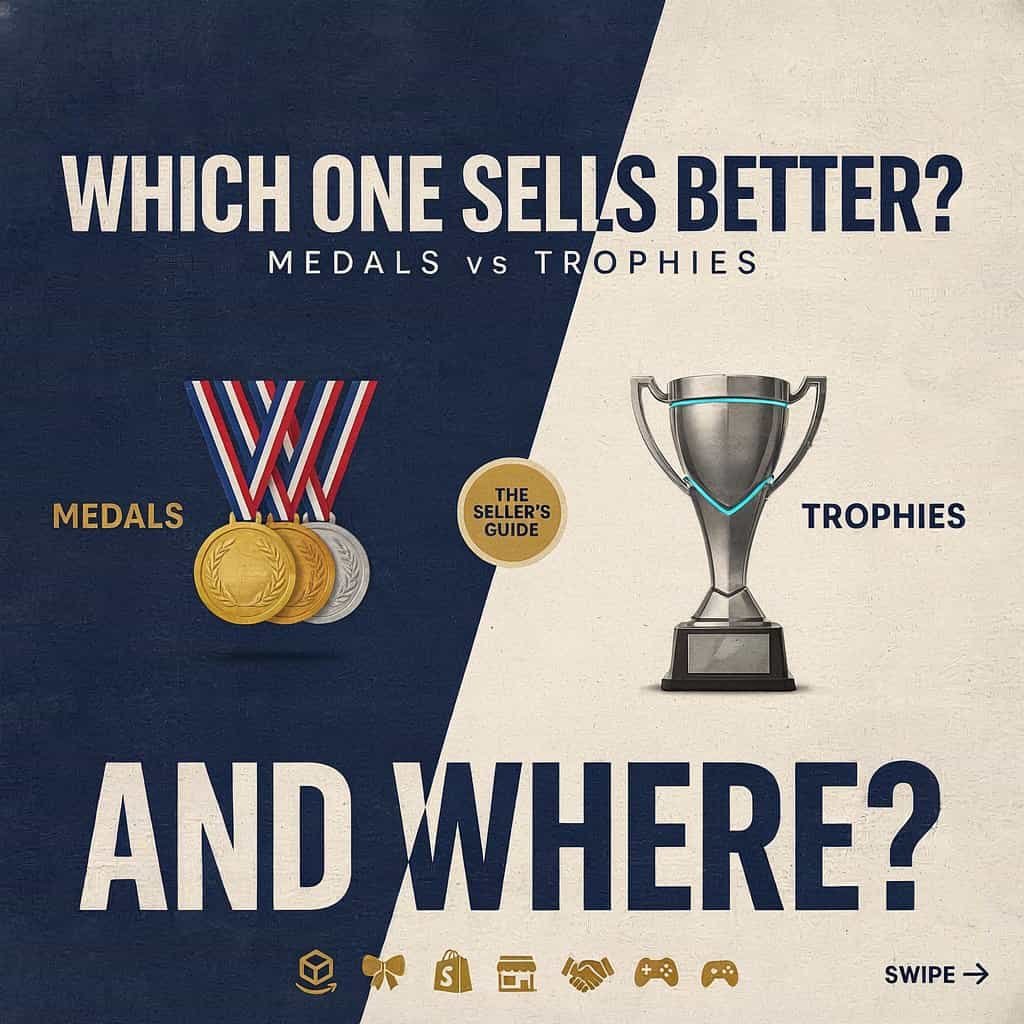
This is the question that actually decides your buy.
E-commerce and marketplace sellers tend to do better with medals as a core SKU. Lower shipping cost per unit means better margins on Amazon, Etsy, or a Shopify store, and medals fit naturally into recurring-purchase niches — running clubs, martial arts schools, spelling bees, corporate wellness programs.
Retail and engraving shops still lean on trophies as the anchor product, especially for local sports leagues and school award ceremonies. Medals work well here too, but usually as an add-on or upsell rather than the star of the display case.
B2B bulk buyers — race organizers, school districts, corporate HR departments — often want a hybrid order: hundreds or thousands of participation medals, plus a small run of trophies for the top three finishers. If you can fulfill both halves of that order from one supplier, you become the buyer’s one-stop vendor instead of one of two.
Gaming and esports organizers are a fast-growing niche worth calling out specifically. A game awards trophy — something bold, sculptural, and photograph-ready for a livestream or tournament stage — has become a real category of its own, distinct from traditional sports trophies. Esports leagues, gaming conventions, and streaming platforms want awards that look sharp on camera, and many are actively looking for suppliers who understand that aesthetic rather than defaulting to a generic bowling-trophy look.
How to Look for a Trophy Alternative?
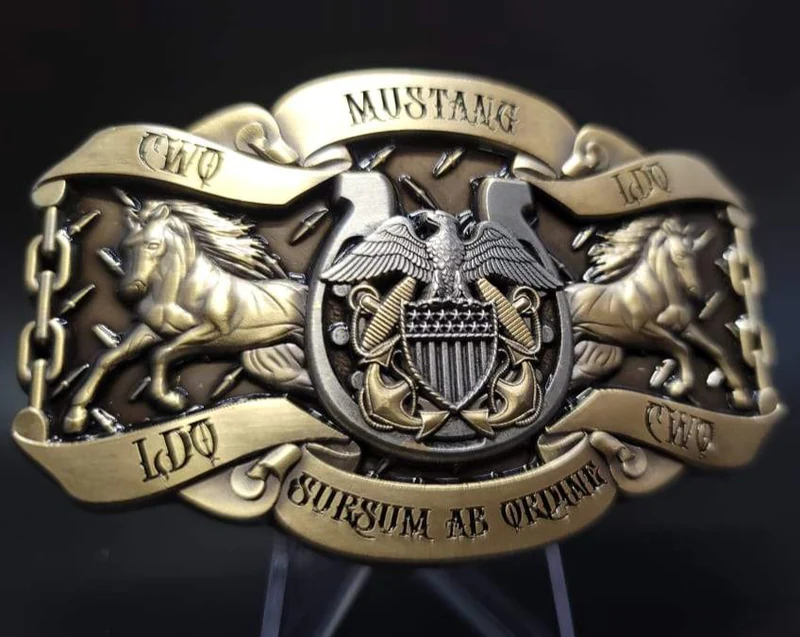
Here’s something a lot of buyers overlook: not every recognition product needs to be a medal or a trophy. If your customer base is asking for something with more prestige than a medal but a smaller footprint (and lower cost) than a trophy, a solid trophy alternative is worth adding to your line card. Custom plaques, engraved crystal blocks, challenge coins, and — somewhat unexpectedly — custom belt buckles all fill that middle ground nicely, and they open up entirely different customer segments.
Belt buckles in particular are an underrated recognition item. They’re compact and cheap to ship like medals, but they carry a sense of permanence and status closer to a trophy. Military, law enforcement, motorcycle clubs, and Western/rodeo events all have strong buckle traditions, which makes this a great cross-sell for buyers already sourcing medals or coins.
A common question that comes up when buyers start exploring this niche is: what are navy belt buckle called, exactly, and is there a standard everyone follows? The short answer is that they’re generally just referred to as Navy belt buckles or regulation belt buckles, and yes — there’s an actual US Navy belt buckle regulation that governs them. Under Navy uniform rules, officers and Chief Petty Officers wear a plain gold-anodized buckle for official inspections and ceremonial occasions, while enlisted sailors (E-6 and below) wear a silver-anodized version for the same occasions. Outside of formal inspections, sailors have more freedom to wear decorated buckles featuring their command insignia, ship crest, or unit emblem — which is exactly the kind of detail a custom manufacturer can produce.
Why does this matter to you as a trader or brand? Because it illustrates a broader point: recognition products for military, service, and institutional buyers follow strict specifications, and suppliers who understand those specs (metal finish, insignia accuracy, regulation compliance) win repeat business that a generic factory can’t touch. The same logic applies whether you’re sourcing medals for a marathon or belt buckles for a naval unit — accuracy and finish quality are what turn a one-time order into a standing account.
Cost and Margin Breakdown for Resellers
Rough unit economics shift a lot depending on volume, but the pattern holds pretty consistently:
- At 100 units, trophies and premium medals land in a similar per-unit cost range, so margin comes down to your retail pricing power.
- At 1,000 units, medals pull ahead sharply on cost-per-unit, while trophy tooling costs get amortized more slowly.
- At 10,000+ units, medals become the clear volume play; trophies at that scale usually only make sense for a narrow top-tier segment of an order (think: 50 trophies for the top finishers within a 10,000-medal race order).
The margin isn’t just in the base product — it’s in the add-ons. Custom ribbon printing, branded packaging, engraving services, and finish upgrades (glow-in-the-dark, glitter enamel, antique plating) all give you room to raise your price point well above the base unit cost, on both medals and trophies.
A Quick Decision Framework
If you want a shortcut, here’s how most experienced buyers land on an answer:
- High volume, price-sensitive end market? → Start with medals.
- Premium, low-volume, “top of the podium” SKU? → Trophies.
- Testing a new recognition niche with limited capital? → Medals, because of the lower MOQ and lower risk.
- Already running an established trophy/engraving business? → Add medals as a complementary tier rather than replacing what already sells.
- Serving military, institutional, or highly regulated buyers? → Consider expanding beyond medals and trophies into belt buckles, coins, and insignia-accurate products where compliance knowledge is the real differentiator.
Why Buyers Choose a No-MOQ Manufacturer?
None of the above matters much if your supplier can’t move at the speed your business needs. That’s the practical reason so many traders, brands, and retail buyers work with a manufacturer that offers:
- No minimum order quantity — so you can test a new medal or trophy SKU without tying up capital
- Free design support — faster private-label launches with fewer sampling rounds
- Fast turnaround — critical if you’re restocking for an e-commerce store or filling a time-sensitive bulk order
- Reorder and mold storage programs — a real advantage for recurring buyers like race organizers or annual corporate contracts
Whether you’re sourcing medals for a fast-growing marathon series, trophies for a regional esports tournament, or exploring adjacent categories like belt buckles and challenge coins, the right manufacturing partner should be able to scale with your order size — not force you into someone else’s minimums.
Conclusion
The real answer to “medal vs trophy” isn’t a winner — it’s a strategy. Medals give you volume, speed, and margin at scale. Trophies give you prestige, display value, and a higher price ceiling for the SKUs that deserve it. And if you look slightly outside the traditional lineup, alternatives like belt buckles, coins, and plaques can open up whole customer segments your competitors haven’t touched yet.
If you’re ready to test a new medal, trophy, or alternative recognition product especially different types of trophies without committing to a big minimum order, we’d be glad to help you figure out what fits your catalog — get a free quote and see what’s possible.
FAQs
Is it cheaper to import medals or trophies wholesale?
Medals are almost always cheaper per unit and cheaper to ship, thanks to their light weight and stackability. Trophies cost more upfront and in freight, but they can command a higher retail price.
What MOQ do trophy manufacturers usually require?
It varies by supplier, but many trophy manufacturers set higher minimums than medal producers because of mold and tooling costs. Look for a manufacturer offering no MOQ if you want to test designs before committing to bulk production.
Can medals be private-labeled with my own branding?
Yes — custom ribbon colors, branded packaging, and logo engraving are all straightforward on medals, making them one of the easiest recognition products to private-label quickly.
Which has better resale margins, medals or trophies?
Medals typically offer better margins at high volume; trophies offer better margins per unit at lower volume. Many sellers run both to cover different price points.
Are custom belt buckles a viable trophy alternative for niche markets?
Yes, especially for military, western, and motorcycle club audiences, where a buckle carries prestige similar to a trophy but ships and stores like a medal.