




Enamel pins are metal badges that carry color-filled designs, usually worn on lapels, bags, or hats for branding, fandom, or achievement. If you’re sourcing pins for your brand, store, or event, the first decision you’ll face isn’t the artwork — it’s the type of enamel pin. There are three main options: hard enamel, soft enamel, and die struck. Each looks different, costs differently, and fits different use cases.
This guide focuses specifically on how these three types compare, so you can pick the right one before you request a quote. (If you want a full walkthrough of how pins are manufactured from start to finish, see our complete guide to making enamel pins. If you’re weighing enamel pins against a different product entirely, see enamel pins vs. button pins.)
Types of Enamel Pins at a Glance
| Type | Surface Feel | おすすめ | Relative Cost |
|---|---|---|---|
| Hard Enamel | Flat, glass-smooth | Clean logos, premium gifting | Highest |
| Soft Enamel | Textured, raised metal lines | Detailed or colorful artwork | Lowest |
| Die Struck | Bare metal, no color fill | Minimalist, classic badges | Low-to-mid |
Below, we break down each one.
ハードエナメルピン
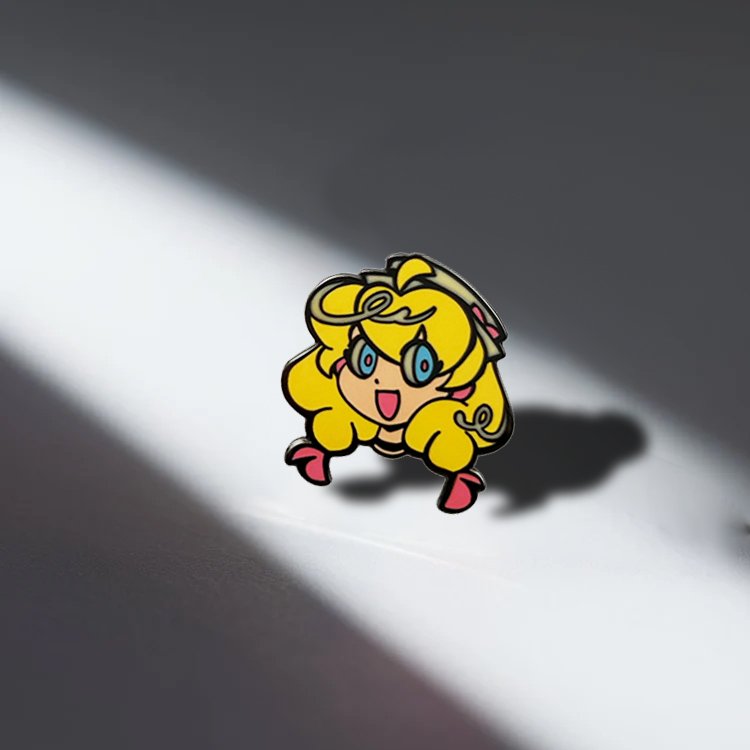
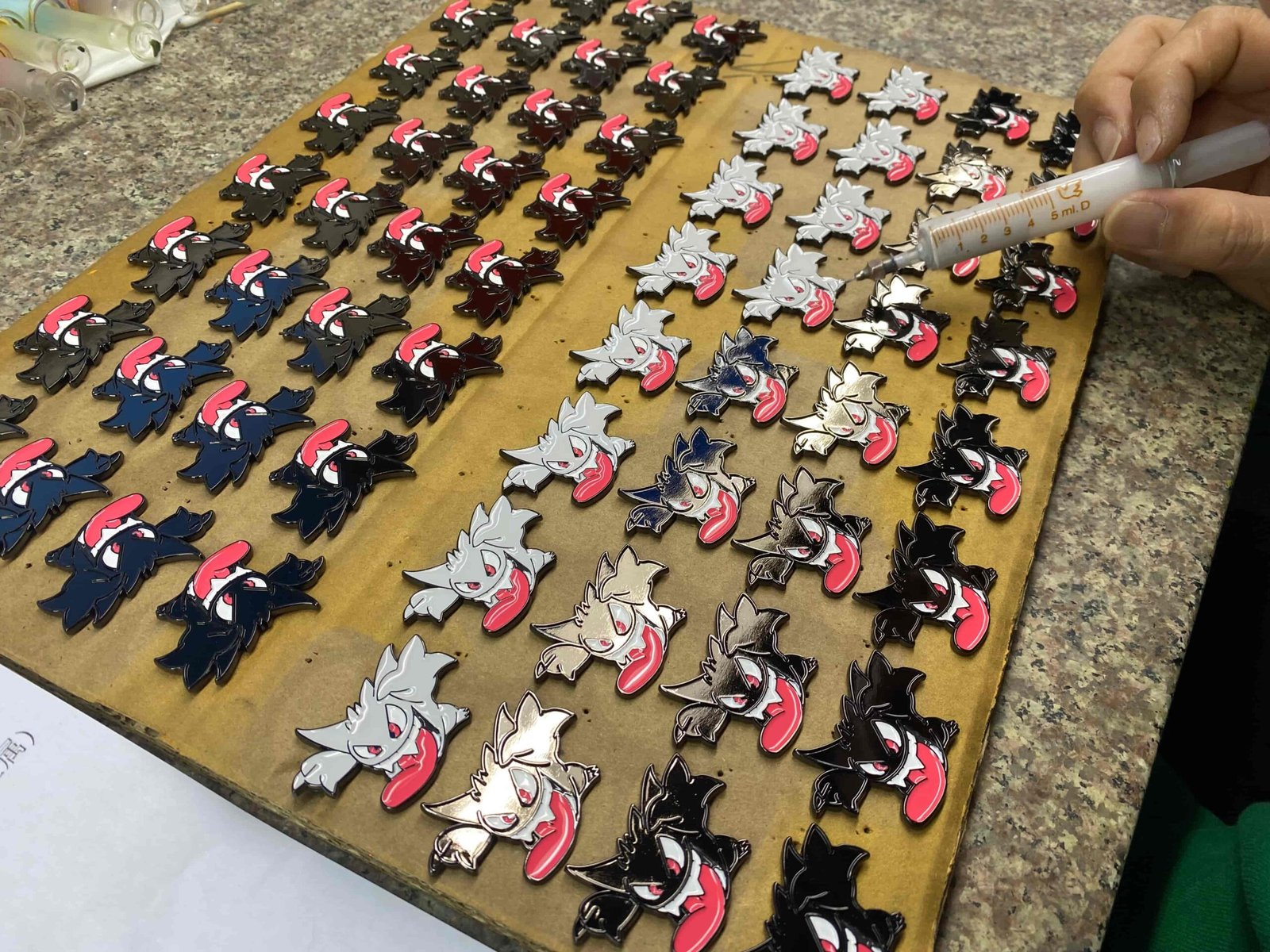
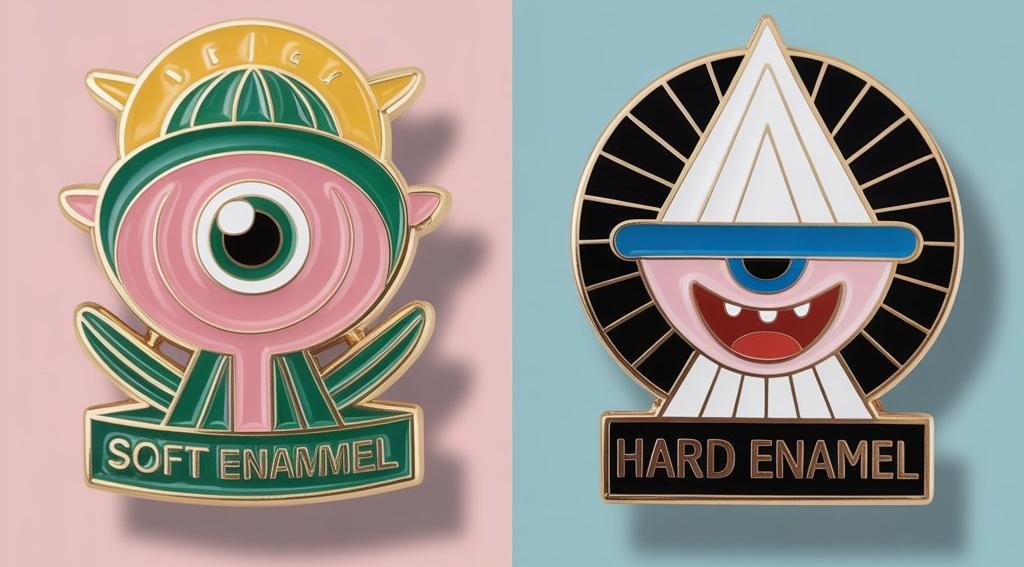
Hard enamel pins are made by stamping a metal base (usually brass or iron), filling the recessed areas with enamel paste one color at a time, and firing the piece in a kiln between each color. After the final firing, the surface is polished flat, so the enamel sits flush with the metal lines — no bumps, no texture. A plating layer (gold, silver, or nickel) finishes the piece.
The result is a glossy, jewel-like surface that resists fading and scratching. Because the enamel is polished level with the metal, hard enamel pins photograph well and hold up to years of handling, which is why they’re common for corporate gifts, executive awards, and collectible releases meant to last.
The trade-off is production time and cost: multiple firings per color and a hand-polishing step make hard enamel pins slower and more expensive to produce than soft enamel, and very fine details (thin lines, tight gradients) can blur slightly during polishing. Getting the plating tone and enamel colors to match your brand palette exactly also matters more here than with soft enamel — see our guide to enamel pin color matching if color accuracy is a priority.
Soft Enamel Pins
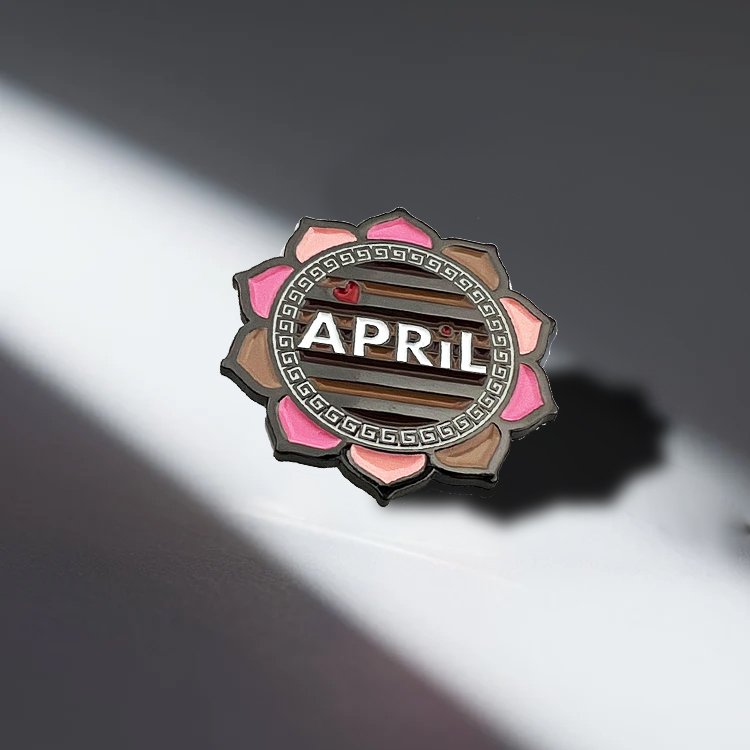
Soft enamel pins start the same way — a die stamps the metal outline — but the enamel is poured into the recesses and baked just once, at a lower temperature. The metal lines stay raised above the enamel, giving the pin a textured, slightly 3D feel. An epoxy dome coating is often added afterward to smooth the surface and add scratch resistance without removing the texture.
Because there’s no polishing step to worry about blurring detail, soft enamel handles intricate artwork — fine linework, shading, small text — better than hard enamel. It’s also faster and cheaper to produce, which is why it’s the default choice for merch drops, event giveaways, and any order where budget or turnaround time matters more than a flush, jewelry-grade finish.
Die Struck Enamel Pins
Die struck pins skip the enamel entirely. The design is stamped directly into metal, so the color comes from the metal itself (or from an antique/oxidized finish) rather than from filled-in paint. This gives a pin a more classic, minimalist look — think old-style military insignia or vintage-style badges — and because there’s no enamel to chip or fade, it’s naturally the most durable of the three.
Die struck is the right call when your design doesn’t need multiple colors, or when you specifically want a metal-only look rather than the glossy or textured finish enamel gives. It’s often the cheapest option per piece, since it skips the enamel-filling and firing steps altogether — but it’s a poor fit if your logo or artwork relies on color to read clearly, you should consider offset printed lapel pins which are not only affordable but also feature multiple colors.
Hard vs. Soft vs. Die Struck: Side-by-Side
| Aspect | Hard Enamel | Soft Enamel | Die Struck |
|---|---|---|---|
| Surface | Flat, polished | Raised metal lines | Bare metal, no fill |
| Color capability | Full color, crisp edges | Full color, best for fine detail | No color (or antique tone only) |
| Durability | Very high | Good, higher with epoxy | Highest (nothing to chip) |
| Typical use case | Premium/corporate gifting | Bulk merch, colorful designs | Classic badges, minimalist logos |
| Relative production time | Longest | Shortest | Short |
Why Hard Enamel Takes Longer Than Soft Enamel
This is the question we get most often once buyers see the price and lead-time difference: why does hard enamel cost more and take longer for what looks like a similar-sized pin?
The answer comes down to firing, not just polishing. Soft enamel is baked once, after all colors are poured in. Hard enamel is fired once per color — each color goes in, gets baked, cools, and only then does the next color get added, to keep colors from bleeding into each other during the multiple heat cycles. A five-color hard enamel design can mean five separate firing cycles before the piece is even ready to polish and plate.
That’s the core trade-off: hard enamel’s durability and flat finish come directly from a slower, more labor-intensive process, while soft enamel’s speed comes from doing it all in one pass.
Which Type Should You Choose?
- Choose hard enamel if the pin represents your brand at a premium level — executive gifts, long-life collectibles, or anything meant to be worn daily for years.
- Choose soft enamel if you need color, detail, and volume — event giveaways, merch drops, fast turnaround for a launch.
- Choose die struck if your design is simple enough to work without color, or you want a metal-only, vintage-style badge.
Most brands don’t need to choose just one — it’s common to use hard enamel for a flagship logo pin and soft enamel for a wider, more affordable product line. Whichever type you land on, getting the pin size right and avoiding common enamel pin design mistakes will matter more to the final result than the type alone — and if you’re building toward a collectible line rather than a one-off giveaway, it’s worth understanding how serious pin collectors evaluate quality before you finalize your spec.
よくある質問
Is hard enamel really worth the extra cost?
If durability and a premium look matter more than budget or speed, yes. Hard enamel pins do cost more than soft enamel for the reasons above, but for short-run promotional giveaways, soft enamel usually makes more financial sense.
Can die struck pins have any color at all?
Typically only through plating tone (gold, silver, antique brass, black nickel) rather than filled color — so it’s a look, not a full-color option.
How much longer does hard enamel actually take?
As a rule of thumb, expect hard enamel to take about 30-50% longer than soft enamel for the same design, mainly due to the extra firing cycles per color.
Can I mix hard and soft enamel in one design?
Some manufacturers offer dual-plating or mixed-finish pins, but it adds cost and complexity — worth discussing directly with your supplier before finalizing artwork.