If you’ve ever unboxed a medal and instinctively touched the ribbon before you even looked at the metal, you already know something most buyers overlook: the ribbon is doing a lot of emotional heavy lifting. It’s the first thing a customer’s fingers feel, the part that gets worn around the neck, photographed, and shared online. For traders, brands, and retail buyers sourcing medals at scale, getting the ribbon right isn’t a nice-to-have — it’s a line item that can make or break customer satisfaction, return rates, and repeat orders.
This guide walks through everything a B2B buyer needs to know before placing a purchase order: sizing logic, material trade-offs, color conventions, safety compliance, customization costs, and how to vet a supplier who won’t leave you with a warehouse full of mismatched ribbon. Let’s get into it.
Why Ribbon Selection Matters More Than Buyers Think
Here’s a scenario we hear constantly: a buyer sources a beautiful die-struck medal, gets excited about the finish, and treats the ribbon as an afterthought — just “whatever’s in stock.” Then the complaints start rolling in. The ribbon frays after two wears. The colors don’t match the brand deck. Parents flag safety concerns for kids’ events. Suddenly a $2 component is generating support tickets and refund requests that cost far more than the ribbon itself.
The ribbon is also where a lot of your brand storytelling happens. Custom colors, woven logos, and thoughtful pairing with the medal colors meaning you’re trying to convey all shape how a recipient feels about the award — and whether they wear it again, post about it, or toss it in a drawer. If you’re selling to schools, sports leagues, or corporate recognition programs, that emotional payoff directly affects your reorder rate.
Understand Ribbon Types by Use Case
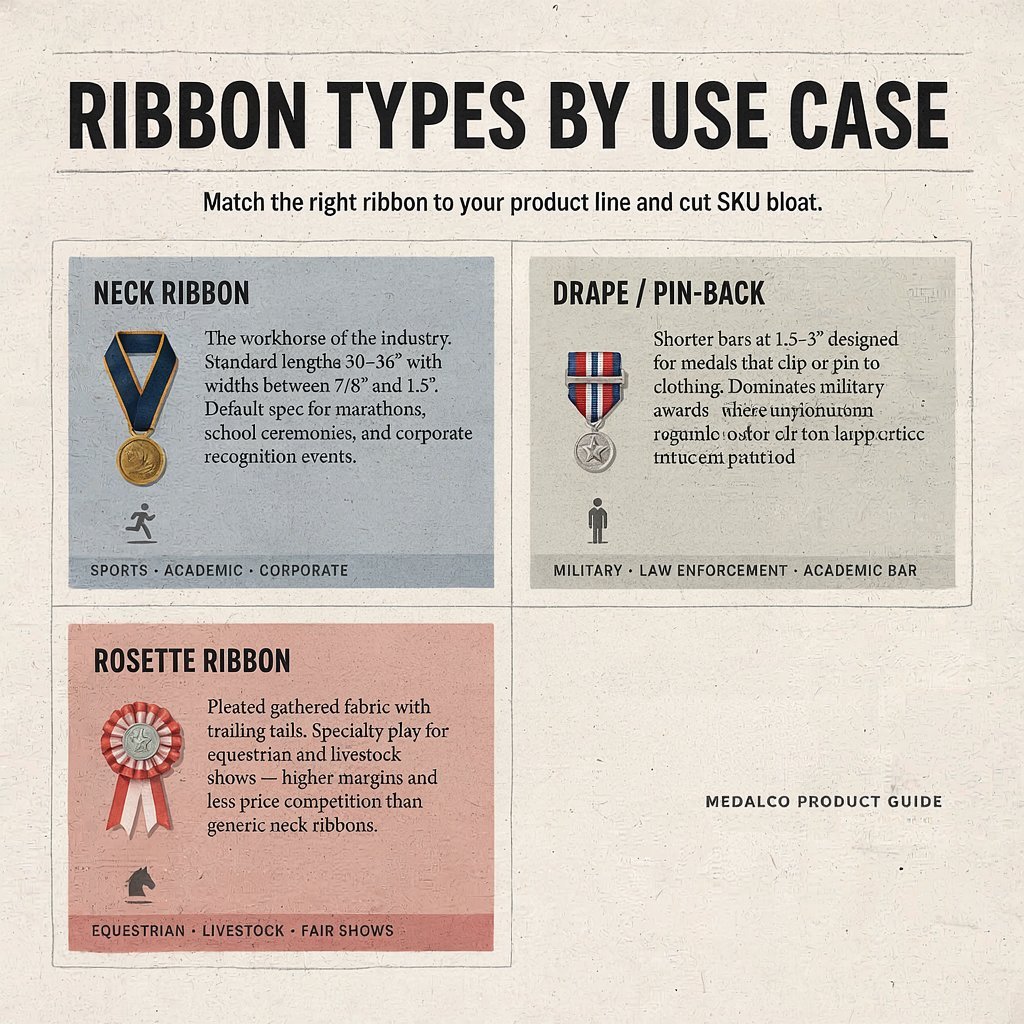
Not all ribbons serve the same purpose, and matching the right type to your product line saves you from costly SKU bloat.
Neck Ribbons are the workhorse of the industry. Standard lengths run 30–36 inches with widths between 7/8″ and 1.5″. These are what you want for large medallions worn around the neck — think marathons, school ceremonies, and corporate recognition events. If your catalog leans toward sports or academic medals, this is your default spec.
Drape or Pin-Back Ribbons are shorter (1.5–3 inches) and designed for smaller medals that clip or pin to clothing rather than hang around the neck. This style dominates in military medals and ribbons, where uniform regulations call for compact, structured presentation rather than a long dangling strap.
Rosette Ribbons are the specialty play — pleated, gathered fabric with trailing tails, popular in equestrian and livestock shows. If you’re expanding into a niche vertical, rosettes command higher margins and less price competition than generic neck ribbons.
Material Comparison: What to Specify in Your PO
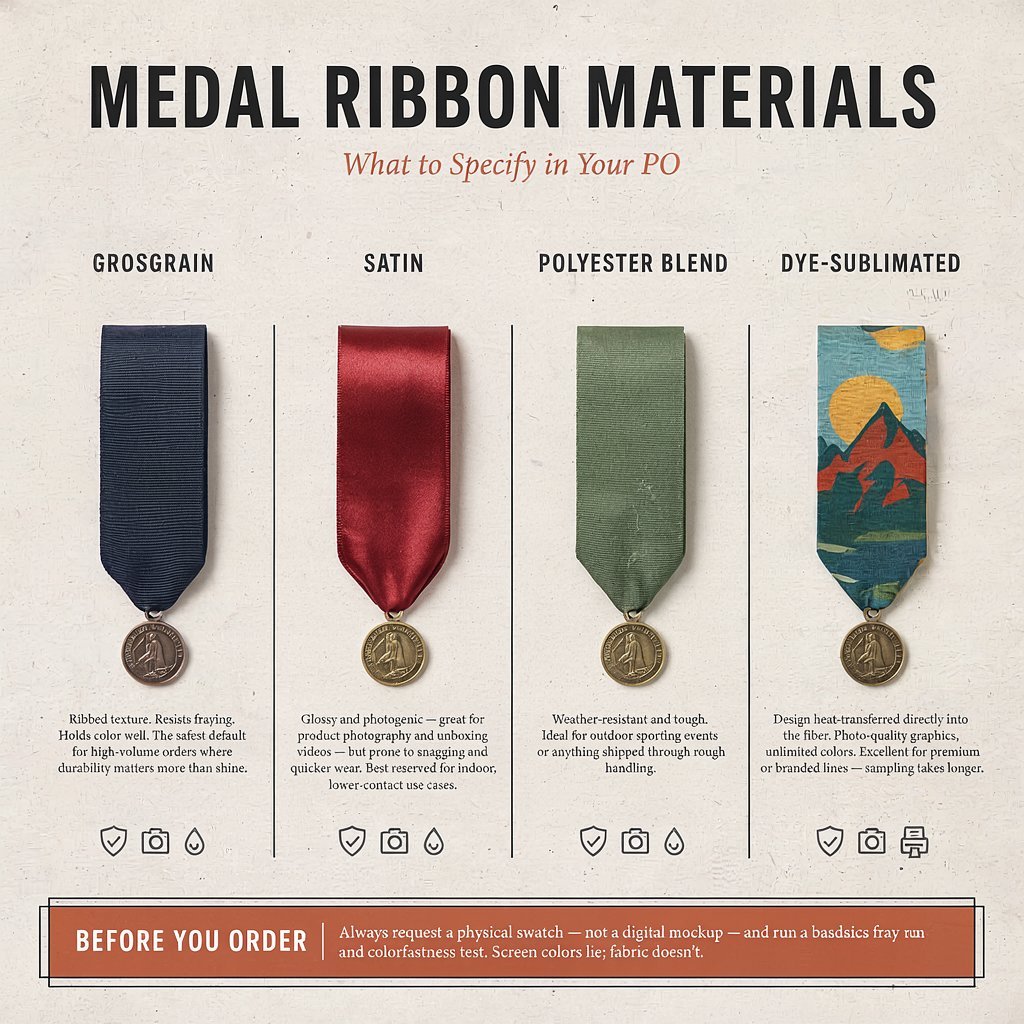
Choosing a material isn’t just an aesthetic decision — it’s a warranty decision. Here’s the quick rundown buyers should keep in a spec sheet:
- Grosgrain: Ribbed texture, resists fraying, holds color well. The safest default for high-volume orders where durability matters more than shine.
- Satin: Glossy and photogenic — great for product photography and unboxing videos — but prone to snagging and quicker wear. Best reserved for indoor, lower-contact use cases.
- Polyester Blends: Weather-resistant and tough, ideal for outdoor sporting events or anything shipped through rough handling.
- Dye-Sublimated Ribbons: The design is heat-transferred directly into the fiber, allowing photo-quality graphics and unlimited colors. Excellent for premium or branded lines, though sampling takes longer.
Before locking in a bulk order, always request a physical swatch — not a digital mockup — and run a basic fray and colorfastness test. Screen colors lie; fabric doesn’t.
Color & Design: Standards vs. Brand Differentiation

This is where B2B buyers need to think in two layers: industry convention and brand opportunity.
The Traditional Color Code
Across nearly every competitive category — school sports days, corporate contests, community races — there’s a globally recognized shorthand for ribbon colors for placing:
- 1st place: Blue ribbon with a gold medal
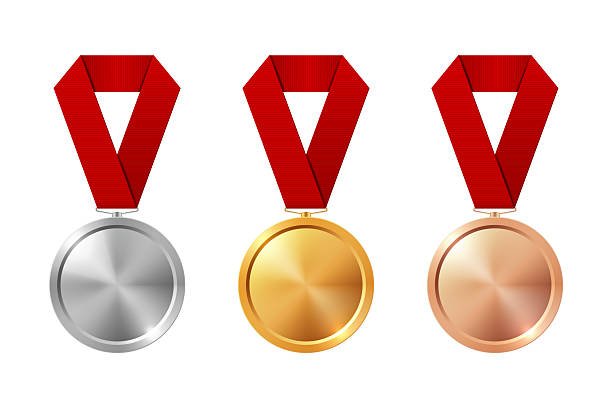
- 2nd place: Red ribbon with a silver medal
- 3rd place: White ribbon with a bronze medal
If your buyers are sourcing for schools or amateur athletics, deviating from this convention can actually confuse end users, so it’s worth defaulting to it unless a client specifically requests custom branding. Interestingly, the second place ribbon — traditionally red — is one of the most frequently misordered items we see, because buyers assume silver medal means silver ribbon. It doesn’t. Get this wrong on a large order and you’ll be reprinting labels or, worse, reshipping product.
Vertical-Specific Variations
Not every industry follows the blue-red-white pattern. Horse shows, for instance, often run 1st blue, 2nd red, 3rd yellow, 4th white, extending all the way to 10th place with its own designated color. Livestock and dog show conventions differ again. If you’re supplying a niche vertical, it pays to research (or simply ask your client) which color hierarchy their governing body follows before quoting.
Brand Differentiation Opportunities
Outside of formal placement conventions, this is your chance to build margin. Gradient ribbons, woven logos, and proprietary color codes tied to a client’s brand palette let e-commerce platforms and retail buyers differentiate their private-label medal lines from generic wholesale stock. A medallion with ribbon customized to a brand’s exact Pantone shade photographs better, unboxes better, and — critically — reorders better.
Size & Sizing Logic for Bulk Orders
As a rule of thumb, ribbon width should scale with medal diameter: larger medals need wider, sturdier ribbon to support the weight comfortably around the neck, while smaller medallions pair fine with narrower straps. For bulk buyers, the smartest move is standardizing on two or three width tiers across your catalog rather than customizing every SKU — this simplifies inventory, reduces minimum order complexity, and keeps unit costs predictable.
Attachment Methods & Safety Compliance
This section is one retail and e-commerce buyers can’t afford to skip.
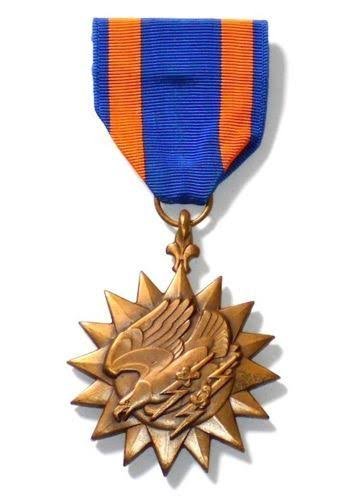
Split rings offer a classic, secure connection that lets the medal hang and rotate naturally. Crimp covers give a more polished finish by concealing raw ribbon edges at the attachment point — a small detail that noticeably raises perceived quality.
But the real compliance issue is around the clasp itself. If any part of your catalog touches youth sports, school events, or children’s programs, safety breakaway clasps are non-negotiable. Standard knots or fixed clasps around a child’s neck present a real strangulation risk, and this is exactly the kind of detail that triggers product liability claims and marketplace delisting. When drafting your purchase order, explicitly specify breakaway hardware for any product line marketed to minors — don’t assume your supplier will default to it.
Customization Options & Cost/Lead Time Trade-Offs
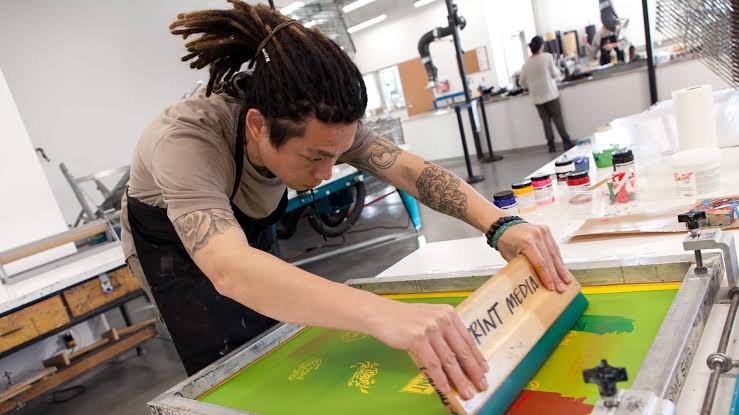
Matching your customization method to your order volume and budget prevents nasty cost surprises down the line:
- Screen Printing: One to four colors, cost-effective at scale, fast turnaround. Best for large orders with simple logos or text.
- Heat Transfer: Enables full-color designs even on smaller runs — useful for e-commerce sellers testing multiple SKUs before committing to bulk.
- Woven Ribbons: The design is built into the fabric structure itself rather than printed on top. It’s the most durable and premium-looking option, but expect higher minimums and longer lead times — reserve this for flagship or long-running product lines.
MOQ, Lead Times & Ordering Timeline
Plan to place custom ribbon orders six to eight weeks before you need finished inventory. That window covers production scheduling, sample review, and any color corrections — plus shipping buffer. Always insist on a physical pre-production sample rather than approving from a digital proof; color discrepancies between screen and fabric are one of the most common (and preventable) causes of disputed orders.
It’s also smart to order a modest buffer above your projected need. Late registrations, damaged stock, and reorders happen, and most manufacturers offer better per-unit pricing at higher volumes anyway — so padding your order slightly is often cost-neutral.
How to Vet a Medal Ribbon Supplier
Before signing a purchase order, confirm:
- Certifications: Textile safety and quality certifications (relevant if you’re selling into regulated markets or major retail platforms).
- Sample testing: Request swatches and run basic fray, pull-strength, and colorfastness checks yourself rather than relying on the supplier’s word.
- Spec clarity: Your order sheet should nail down material, width, length, Pantone color code, print method, attachment hardware, and packaging requirements in writing.
- Private label feasibility: If you’re building a house brand, ask upfront about OEM/white-label capacity and minimums — this is often negotiable but rarely offered unless you ask.
Care, Storage & Handling for Wholesale Inventory
Ribbon fades under direct light and humidity, so warehouse storage should stay cool, dry, and out of direct sun exposure — especially for satin stock, which shows wear faster than grosgrain. For large inventory runs, flat or rolled storage (rather than tightly folded) reduces creasing that’s hard to reverse before shipping. A little attention here prevents avoidable customer complaints and returns down the line.
Common Mistakes Buyers Make
- Skipping safety clasp requirements for youth-oriented products
- Approving orders from screen mockups instead of physical samples
- Underestimating how much the ribbon affects perceived medal quality
- Mismatching customization method to order volume, blowing the budget on premium weaving for a small test run
- Forgetting that army medal ribbons and civilian sports ribbons follow completely different sizing and color conventions — sourcing the wrong template for the wrong client is a common and costly mix-up
Conclusion
Choosing the right ribbon is really a sourcing decision disguised as a design decision. Get the material, color convention, safety hardware, and lead time right, and you’ll spend far less time fielding complaints and far more time fulfilling repeat orders. Whether you’re supplying military medals and ribbons, standard sports awards, or building out a branded retail line, the details covered here — from the meaning behind medal colors to the fine print of a breakaway clasp — are what separate a smooth bulk order from an expensive reprint.
Ready to source custom medal ribbons that match your exact specs, from color code to attachment hardware? Get in touch with the UniqueCustomPins team for a sample kit and volume quote.
FAQs
What is the standard size for medal ribbons?
Neck ribbons typically run 30–36 inches long and 7/8″ to 1.5″ wide; smaller pin-back ribbons range from 1.5 to 3 inches.
What material is best for bulk medal ribbon orders?
Grosgrain is the most reliable default for durability and cost, though polyester blends are better for outdoor or high-handling use.
Do medal ribbons need safety clasps for children’s events?
Yes — breakaway clasps are essential for any product marketed to minors to reduce strangulation risk.
What’s the typical MOQ for custom medal ribbons?
This varies by supplier and method, but woven customization generally carries the highest minimums, while screen printing offers the most flexibility for smaller runs.
How long does custom ribbon production take?
Budget six to eight weeks from order to delivery, including sampling and approval time.
What’s the difference between screen printing and woven ribbons?
Screen printing applies color to the ribbon’s surface and suits large, simple-design orders; woven ribbons build the design into the fabric itself, offering a more premium, long-lasting finish at a higher cost.