









Sustainability isn’t a buzzword anymore — it’s a procurement requirement. If you’re a brand manager, trader, or e-commerce owner reading this, your customers are already asking: Where does this come from? Is it eco-friendly?
The good news: custom pins can absolutely be part of your sustainability story, without sacrificing quality, design flexibility, or budget.
Why Sustainable Materials Matter for Your Business
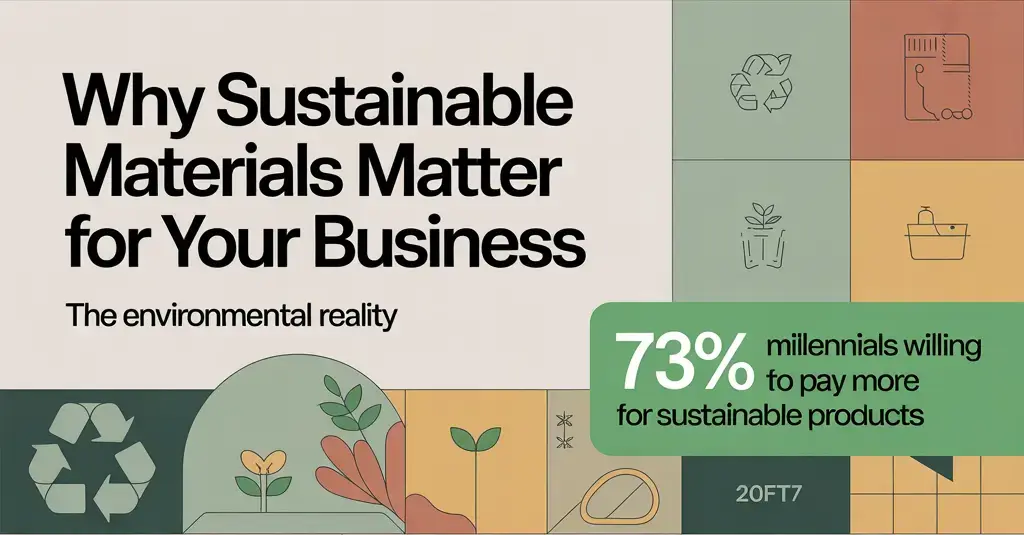
Traditional pin production relies on mining virgin metals, chemical-heavy electroplating, and a fair amount of waste along the way. That’s changing fast. Consumers are paying closer attention to what their merchandise is made of, and a growing share say they’d choose — or even pay a bit more for — products with a credible eco story.
For brands, sustainable pins strengthen your CSR profile; when someone wears your eco-friendly pin, they’re wearing your values. For traders and distributors, more B2B buyers now build sustainability criteria into procurement, so offering eco-friendly lapel pins keeps you competitive as a supplier. For e-commerce and retail sellers, eco-conscious shoppers actively search for greener merchandise, and green promotional products have become a real point of differentiation rather than a nice-to-have.
There’s also a compliance angle: environmental regulations around materials, plating chemicals, and packaging are tightening in several major markets. Getting ahead of that now avoids scrambling — and re-tooling costs — later.
Your Sustainable Material Options
Recycled Metals: The Powerhouse Choice
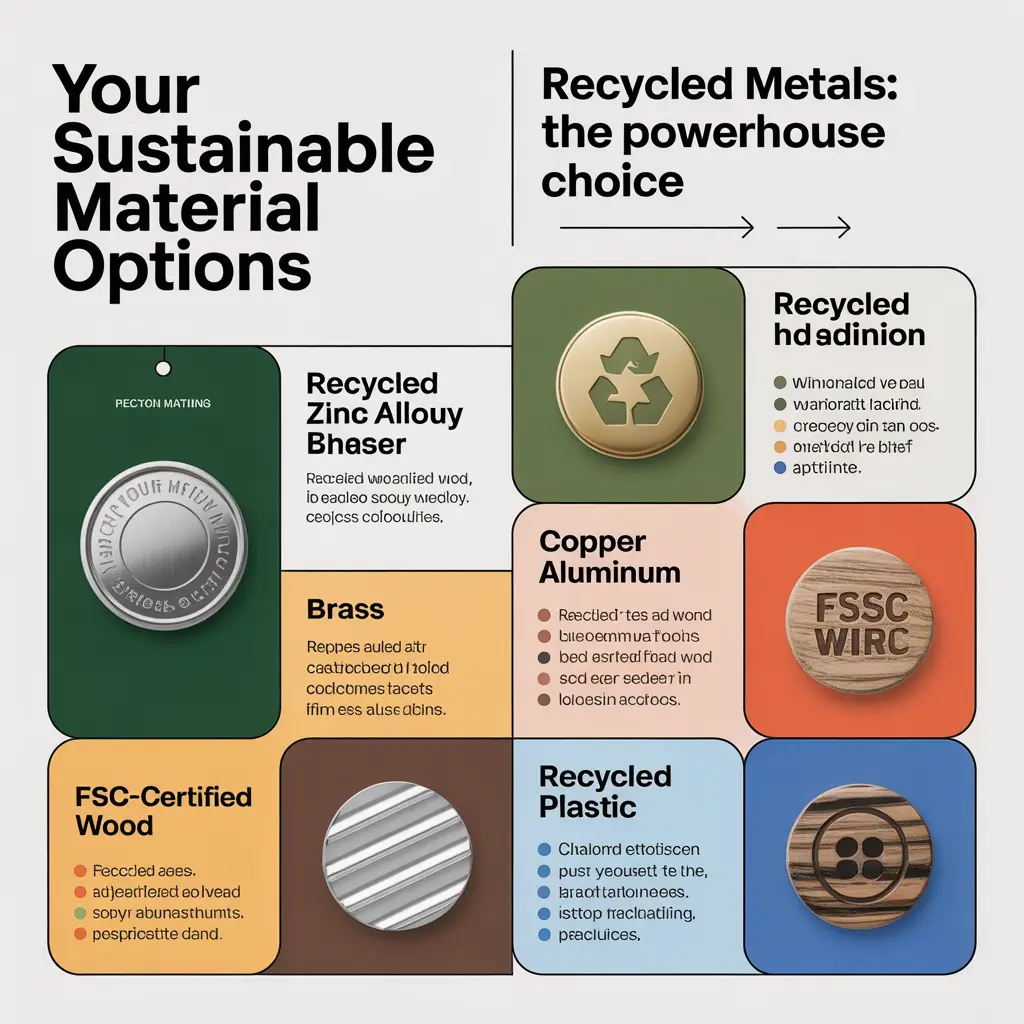
Recycled Zinc Alloy is the workhorse of sustainable pin manufacturing. Die-casting naturally generates metal scrap, which gets melted down and reused in a fairly tight closed-loop system. It’s cost-effective, moldable into intricate shapes, and performs identically to virgin zinc — customers genuinely can’t tell the difference. Best for soft enamel pins, 3D cast pins, and high-volume runs.
Recycled Brass and Copper suit brands chasing a more premium feel. Old brass is shredded, melted, purified, and re-formed into new sheet stock, delivering the durability and classic look that make it ideal for detailed die-struck work — think hard enamel pins, employee badges, and membership pins.
Recycled Aluminum is lightweight, durable, and carries a meaningfully lower carbon footprint than virgin aluminum, partly because remelting aluminum uses a fraction of the energy of primary production. It also keeps shipping costs down for larger designs, which is why it’s a favorite for trading pins and sports team merchandise.
Alternative Materials: Beyond Metal
FSC-Certified Wood Pins come from sustainably managed forests and offer a distinctive, tactile aesthetic that metal simply can’t replicate. They support full-color printing, custom laser engraving, and biodegradable disposal, making them a strong fit for eco-brands, outdoor retailers, and nature-focused identities.
Recycled Plastic (RPET) Pins, often 3D-printed from recycled PET filament, divert plastic waste from landfills and oceans. They’re cost-effective at scale, come in unlimited colors, and ship light — a natural fit for promotional campaigns, festivals, and one-off events where budget matters more than heirloom durability.
Material Comparison at a Glance
| Material | Sustainability | Durability | Price | Ideal para |
|---|---|---|---|---|
| Recycled Zinc | ★★★★☆ | High | $$ | Soft enamel, 3D pins |
| Recycled Brass | ★★★★☆ | Very High | $$$ | Hard enamel, badges |
| Recycled Aluminum | ★★★★★ | High | $$ | Trading pins |
| FSC Wood | ★★★★★ | Medium | $ | Nature-focused brands |
| Recycled Plastic | ★★★★☆ | Medium | $ | Mass promotions |
Manufacturing Processes That Make a Difference
Sourcing sustainable materials is only half the equation — how they’re processed matters just as much.
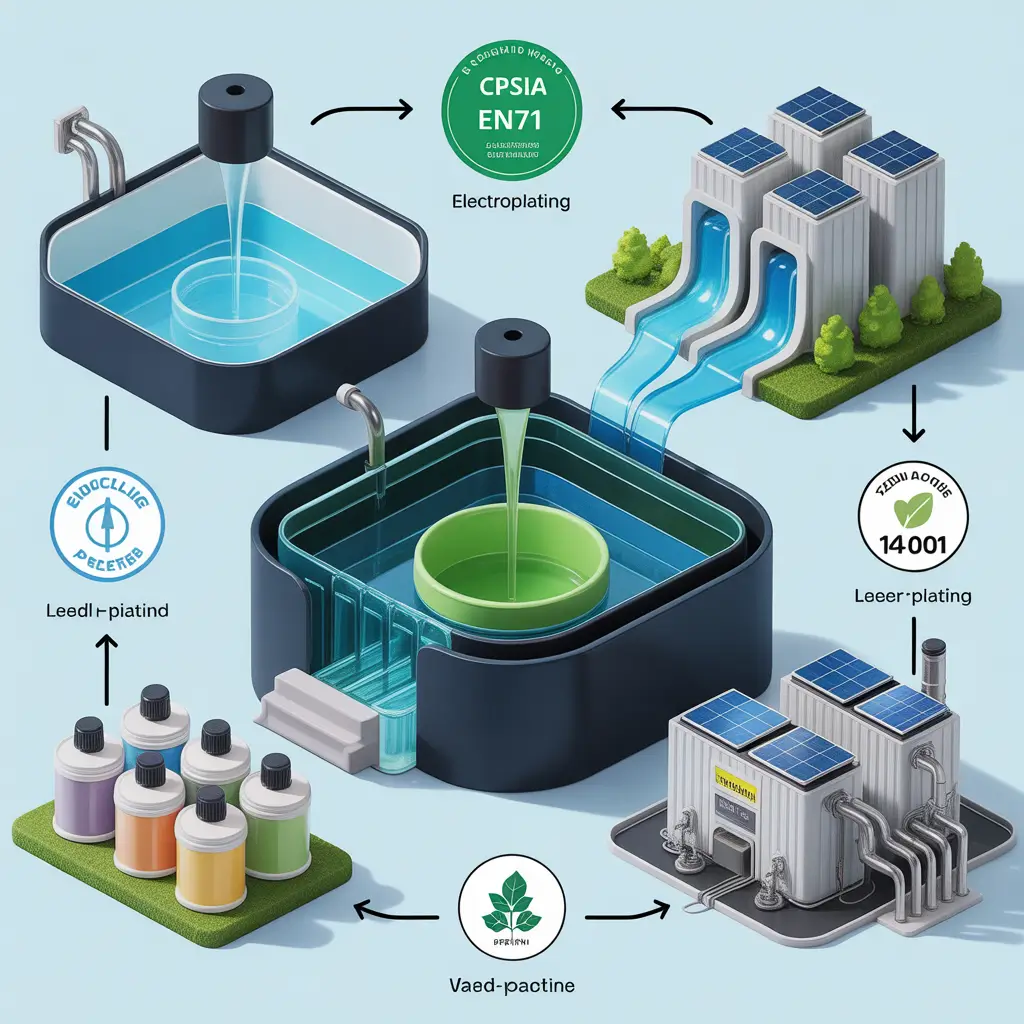
Lead-free electroplating has become standard among reputable manufacturers, replacing older lead-based finishes with alternatives like nickel, antique copper, or black nickel. These meet CPSIA and EN71 safety standards, which is non-negotiable if you’re selling into the US or European markets.
Water-based paints and enamels eliminate the harmful VOCs found in solvent-based alternatives, delivering equally vibrant, long-lasting color while creating safer working conditions on the factory floor.
Beyond materials and finishes, the strongest manufacturers invest in the infrastructure behind sustainability: in-house electroplating lines with proper wastewater treatment, zero-discharge water recycling systems, renewable energy integration, and ISO 14001 environmental certification. Any one of these is a good sign; a manufacturer that can speak to several is telling you sustainability isn’t just a marketing line for them.
The Real Cost of Going Green
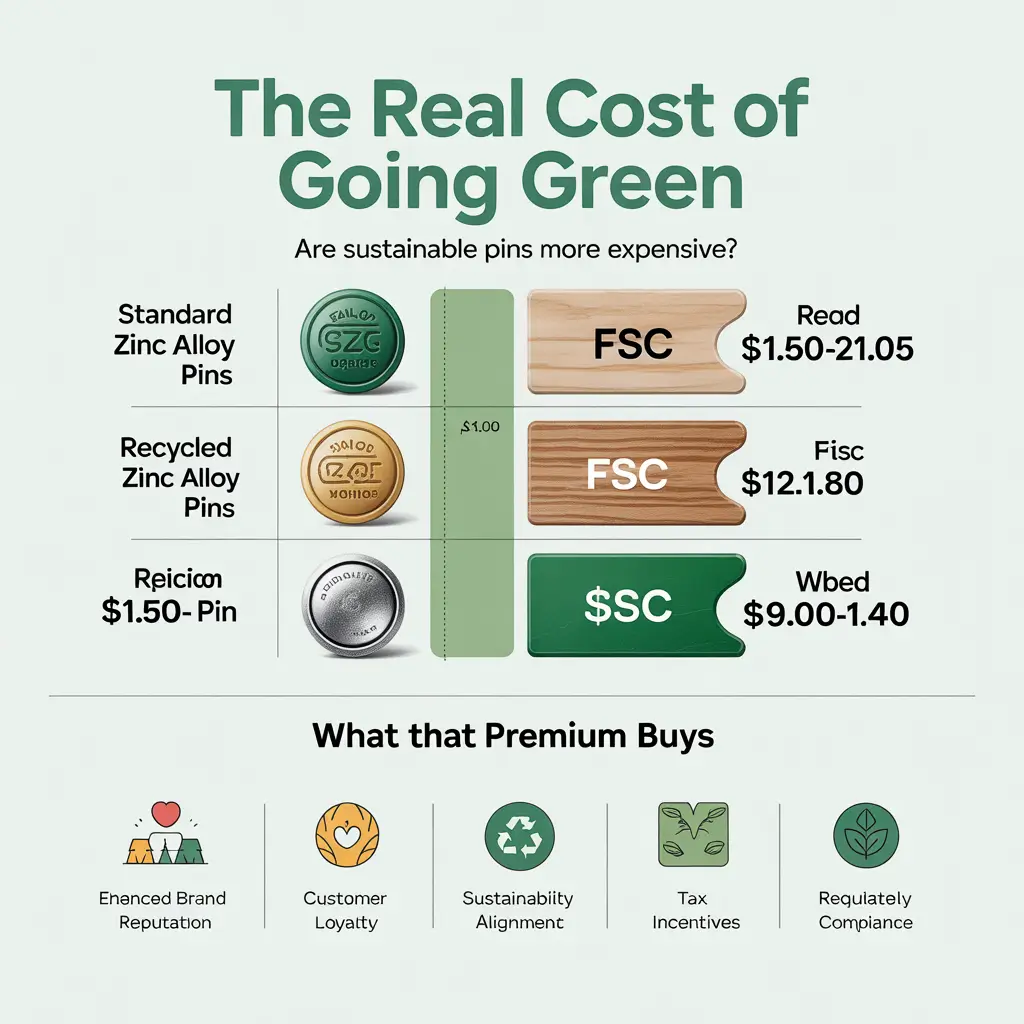
Are sustainable custom pins more expensive? Slightly, but less than most buyers expect. Recycled metals typically run 5-15% above virgin materials — for an order of 100 pins, that works out to roughly $0.10-0.15 extra per unit.
Sample pricing for 100 units: standard zinc alloy runs $1.50-2.00/unit, recycled zinc alloy $1.60-2.15/unit, FSC wood $1.20-1.80/unit, and recycled plastic $0.90-1.40/unit. Notably, wood and recycled plastic often cost less than traditional metal while offering a stronger sustainability story — worth remembering if budget is your main constraint rather than a fixed material preference.
That modest premium tends to buy more than it costs: better brand perception, higher repeat engagement, easier alignment with corporate sustainability commitments, and a head start on regulatory requirements that are only getting stricter.
Choosing Your Sustainable Pin Partner
Not all manufacturers who claim “eco-friendly” back it up. Use this checklist when vetting suppliers:
Certifications worth asking about: ISO 14001 (environmental management), CPSIA and EN71 compliance, FSC certification for wood products, and social compliance audits like SEDEX or BSCI.
Questions worth asking directly: What percentage of materials are actually recycled or sustainably sourced? Is wastewater treatment handled in-house? Can they provide material source documentation, not just a verbal claim? What renewable energy, if any, powers production? And what MOQs apply to eco-friendly options — most reputable manufacturers keep these in the 50-100 piece range, identical to standard runs.
Red flags: vague sustainability language with no supporting documentation, no environmental certifications at all, reluctance to share factory audit results, or a general lack of transparency about where materials actually come from. If a supplier can’t answer specifics, treat “eco-friendly” as a slogan rather than a fact.
Sustainable Packaging Completes the Story
An eco-friendly pin loses credibility fast if it arrives wrapped in excess plastic. Plastic-free options worth considering include customizable kraft paper backing cards, recyclable cardboard boxes, glassine paper wrapping, and compostable poly bags.
There’s a marketing upside here too: adding “Made with Recycled Materials” messaging, or a QR code linking to your sustainability story, turns packaging into a small but visible extension of your brand values — something customers do notice and mention.
Where the Market Is Headed
Demand for sustainable merchandise has been growing at a fast clip, and both regulation and consumer expectation are pushing in the same direction. A few developments worth watching: ocean-plastic recycling programs feeding into promotional products, carbon-neutral manufacturing facilities becoming a selling point rather than a niche claim, blockchain-based supply chain transparency tools letting brands verify sourcing claims, and plantable, seed-embedded pin cards that turn packaging waste into something genuinely useful.
Brands that treat sustainable materials as a standard spec rather than a special edition tend to be the ones customers associate with the trend early — which carries its own brand equity.
A Simple Action Plan
- Assess your needs — quantity, budget, and design requirements first.
- Solicitar muestras — test materials in hand before committing to a bulk order.
- Verify credentials — ask for certifications and documentation, not just claims.
- Tell the story — market your material choice as a brand value, not a footnote.
Conclusión
Sustainable materials in custom pin manufacturing aren’t a compromise — they’re an upgrade. They strengthen your brand, meet customers where their expectations already are, and put you ahead of regulations that are only tightening.
Whether you’re a trader expanding your product line, a brand building out CSR credentials, an e-commerce platform targeting eco-conscious shoppers, or a retail buyer looking to differentiate your merchandise, eco-friendly lapel pins offer a genuine competitive edge. The question isn’t really whether to make the switch — it’s when.
Ready to explore sustainable options? Please Contáctanos — the planet and your customers will thank you.
Preguntas frecuentes
Are recycled metal pins as durable as virgin-material pins?
Yes. They go through identical quality control and durability standards.
What’s the minimum order for eco-friendly options?
Most start at 50-100 pieces, the same as standard pins.
Do sustainable pins take longer to produce?
No. Typical production runs 3-3.5 weeks, in line with conventional manufacturing.
Can I still get full-color, detailed designs?
Yes. Modern techniques support vibrant, detailed color work on all sustainable materials.
What’s the best material for trading pins specifically?
Recycled aluminum — lightweight, durable, and cost-effective at larger sizes.