







Your organization needs another run of an old lapel pin, but the artwork is missing and the original supplier is no longer available. A surviving pin, clear photographs, or archived records can often provide a starting point for recreating the design. Before proceeding, establish which features must match and which remain uncertain: the references may show the design clearly without confirming its original colors, materials, or construction.
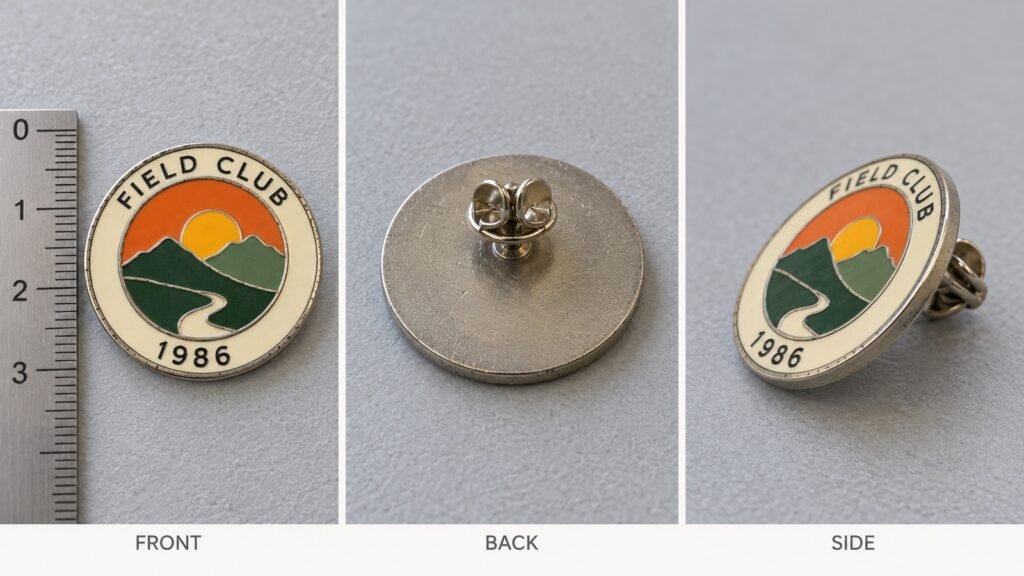
What Can You Recreate from the References You Still Have?
You do not need a complete archive to begin. What matters is understanding what each reference can support. A surviving pin allows direct measurement and inspection; photographs and documents may help recover the design while leaving physical details unresolved.
| Available reference | What it can help establish | What may remain uncertain |
|---|---|---|
| A surviving pin | Current outline, measurable dimensions, visible lettering, surface details, and attachment positions | Original color codes, material specifications, and changes caused by wear |
| Clear front and back photographs | Artwork placement, readable text, and visible attachment details | Thickness, surface texture, hidden construction, and dimensions without a scale reference |
| Old catalogs or archived logos | Organization name, emblem details, and historical wording | Whether the artwork matches the manufactured pin, plus its size and back construction |
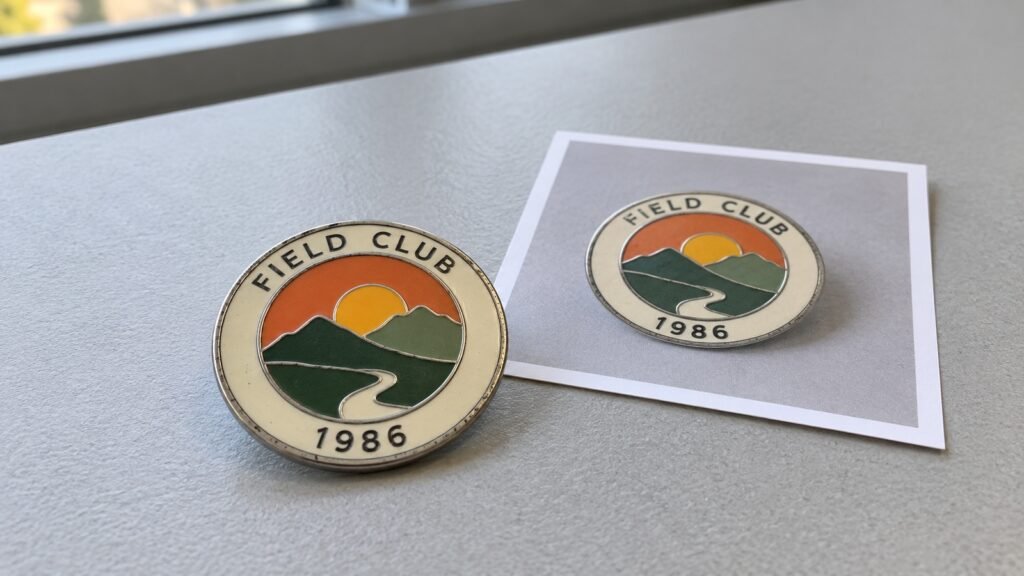
For photographs, include a straight-on view and a ruler beside the pin, on the same surface. A side view can help explain its profile, although it does not replace a reliable thickness measurement. If lettering is difficult to read, type it separately and identify any characters you cannot confirm.
References may disagree. A catalog might show an earlier name, while the surviving pin uses a later abbreviation. Specify which reference governs each detail—for example, the physical pin for dimensions and an archived drawing for lettering. Unclear details should remain marked as unresolved until there is evidence or an agreed replacement.
Which Details Make the Old Pin Recognizable?
Define the features people recognize first
“Make it the same” needs to become a set of specific requirements. Start with the outline, proportions, central emblem, and relationship between the emblem and surrounding text. These features give the designer a clear basis for reconstructing the pin.
Check names, dates, historical abbreviations, and letter spacing individually. Do not automatically replace an older typeface or “correct” unusual wording. A cleaner-looking redraw may change a feature that members recognize. Where lettering is unreadable, request clarification rather than treating a guess as the original design.
Separate known details from decisions still open
Record what must remain unchanged and what the organization is willing to reconsider. This also prevents different people reviewing the remake against different expectations.
| Detail | Decision to record |
|---|---|
| Outline and dimensions | Preserve the measured size or allow a specified change |
| Emblem and wording | Identify the exact elements, names, dates, and spacing that must remain |
| Enamel colors | Follow documented brand standards or use the surviving pin as the visual reference |
| Metal appearance | Aim for a clean new finish or an agreed aged appearance |
| Back attachments | Preserve the historical arrangement or prioritize current wearing needs |
If several departments are involved, designate one person to resolve conflicting instructions. Historical wording, current branding, and practical use may each have a different owner within the organization.
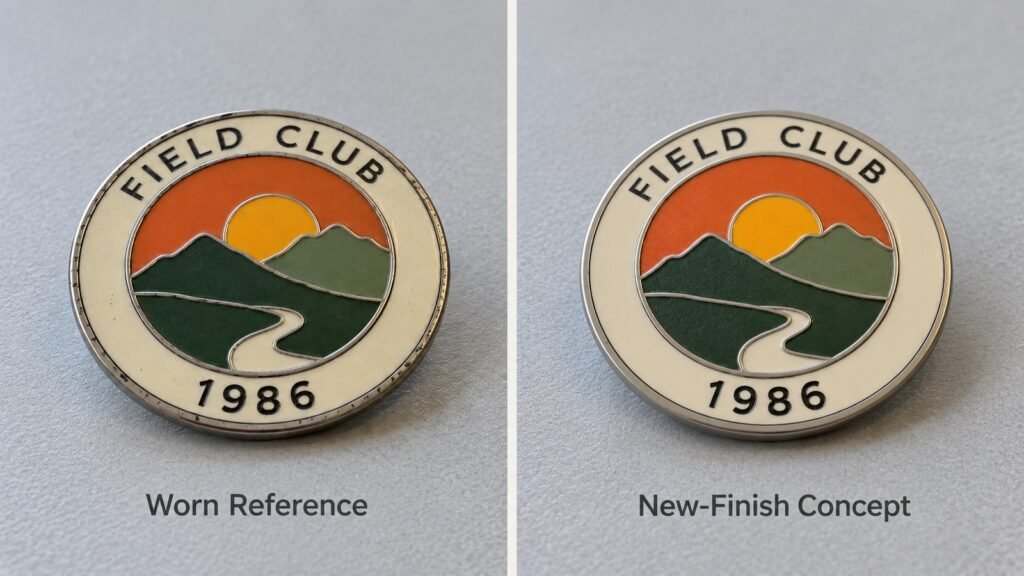
Should the New Pin Look Aged or Newly Made?
A surviving pin shows how it looks today. Without supporting records, it may not establish how it looked when first produced. Decide whether fading, scratches, and reduced shine are features you want to retain or changes you want the remake to leave behind.
For pins being issued to new members or employees, the priority may be the familiar design with a clean, newly made appearance. A historical anniversary project may instead favor a subdued finish that suits the period. Neither choice requires reproducing every scratch on the surviving example.
An antique finish and natural wear are different references. An intentionally aged surface can create a period feel, but it should not be described as an exact reproduction of decades of handling. If particular marks matter to the project, identify them separately so their feasibility can be discussed.
Color needs the same care. Phone lighting, reflections, and screen settings can change how a pin appears. A photograph should not be treated as an exact color specification. If historical color records are unavailable, agree on a new reference rather than claiming to have recovered the original shade. Our guide to enamel pin color matching explains the broader considerations.
Can You Remake the Pin Without the Original Mold?
Often, yes. Original artwork and production tooling serve different purposes: the artwork defines the design, while molds, dies, or other tools help manufacture it. If the original tools are unavailable, a manufacturer needs to assess whether the design can be reconstructed and what new tooling the proposed production method requires.
Even if the previous supplier still holds a mold, a new supplier may not be able to obtain or use it. Ownership, condition, access, and equipment compatibility would need to be established before relying on it.
A previously manufactured design may therefore require redrawing, new tooling, or changes to details that cannot be reproduced as originally made. Ask the quotation to identify any reconstruction and tooling charges, including whether they are separate or included in the total.
An old design does not automatically mean a repeat order without setup costs. For broader pricing considerations, see our custom pin cost guide.
What Can Change Without Losing the Original Identity?
Some updates can preserve the recognizable design, but their effect should be considered individually. A change that seems minor in writing may alter the proportions or wearing position of the finished pin.
Updating the organization’s name. For example, an organization may retain its original emblem while updating the name beneath it. If the new name is longer, fitting it into the same space could require smaller lettering or a different layout. Discuss which relationship matters most: the emblem’s size, the text’s readability, or the original balance between them.
Changing the attachment. A different clutch or pin arrangement may suit current uniforms, but attachment position can affect how the pin sits and whether it rotates. Explain where it will be worn and whether the historical back arrangement is itself important. A change on the reverse should still be assessed for its effect on the front-facing presentation.
Replacing an uncertain material or detail. If the original specification cannot be established, ask what the proposed alternative would change: appearance, weight, thickness, texture, or attachment behavior. Describe it as an agreed substitution. Where it would visibly alter a defining feature, the organization should decide whether that tradeoff is acceptable.
What Should You Send When You Have No Artwork?
Start with the references you have. You do not need to reconstruct the artwork before making an inquiry. If a measurement, date, or detail is uncertain, label it as unknown rather than guessing.
Include:
- Front, back, and side photographs, where available. State if you only have one view.
- Known width and height, or a photograph with a ruler beside the pin.
- Typed wording and dates, with uncertain characters clearly marked.
- Features that must stay unchanged, plus any updates you want to discuss.
- Whether a physical pin remains available for further reference.
- Planned quantity, destination country, and required arrival date, especially if the pins are needed for a fixed event.
If the surviving pin is your only example, mention that before discussing shipment. Photos and measurements can be assessed first; any need for physical inspection should be explained before you decide whether to send it.
FAQs About Recreating Old Lapel Pins
Can a lapel pin be recreated from a blurry photograph?
A blurry photograph may establish the overall outline and arrangement. Missing lettering or small motifs need clearer images, archived records, or a decision about how to reconstruct them. Details inferred from the image should be identified as assumptions.
Do I have to send my only original pin?
Not necessarily. Start with photographs and known dimensions. Complex relief, texture, or attachment construction may require additional physical reference, but confirm why it is needed and agree on handling and return arrangements before sending your only example.
Will the recreated pin be exactly the same?
An exact match cannot be promised before the references and manufacturing options are assessed. New tooling, material choices, and wear on the old pin can affect the result. Define the features that must match and discuss any expected differences before committing to production.
Does using an old design avoid artwork or mold charges?
Not automatically. If usable artwork or tooling is missing, reconstruction or new tools may still be required. Ask which initial costs apply to your specific remake and whether they are included in the quoted total.
Have an old pin but no original artwork? Request a Quote with the references you have, and explain what your organization needs to preserve. Include any uncertainties so the initial discussion can focus on what can be established and what still needs a decision.