







Have you ever held a gleaming silver piece in your hand and wondered, “Is this a coin I could technically spend, or is it ‘just’ a medal?” You’re not alone. The world of coins and medals is full of beautiful objects that look almost identical at first glance, yet they live in completely different categories. Today we’re going to untangle this shiny puzzle in a way that’s clear, fun, and—most importantly—useful whether you’re a seasoned collector or someone who simply loves pretty metal discs.
Coins, Commemorative Coins, and Medals
Let’s start with the fundamentals.
Coins
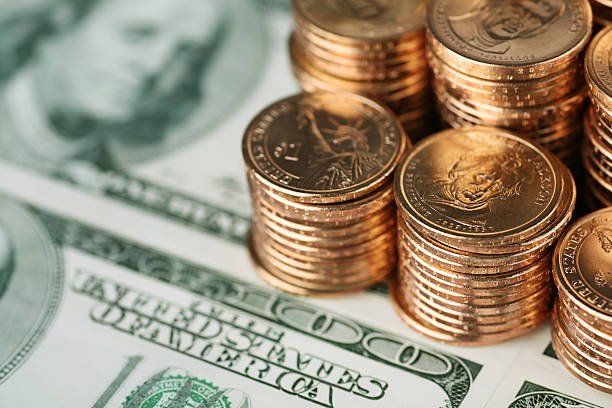
A coin is official money issued by a sovereign government or its authorized mint. It has a stated face value (even if that value is only $1 while the metal inside is worth $30). Coins are designed for circulation or official investment programs. Think American Silver Eagle, Canadian Maple Leaf, or Austrian Philharmonic—government-backed, standardized, and legally spendable (in theory).
Commemorative Coins
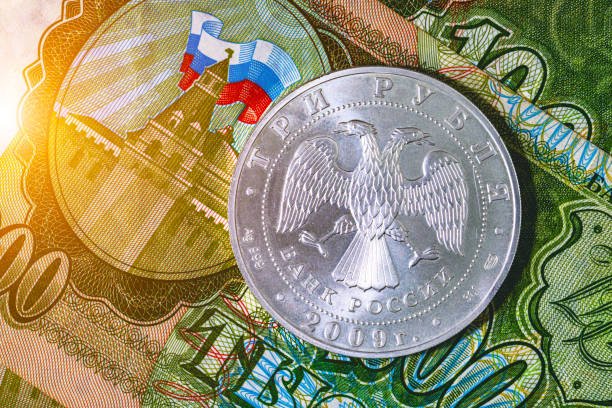
These are a special subcategory of coins. A commemorative coin is still real legal tender with a face value, but it’s struck in limited quantities to celebrate an event, person, or anniversary. Because of low mintages and high collector demand, you’ll almost never see one being used to buy coffee. Examples: the 2024 Paris Olympics €2 coin or the U.S. 1982 George Washington half-dollar.
Medals (including medallions)
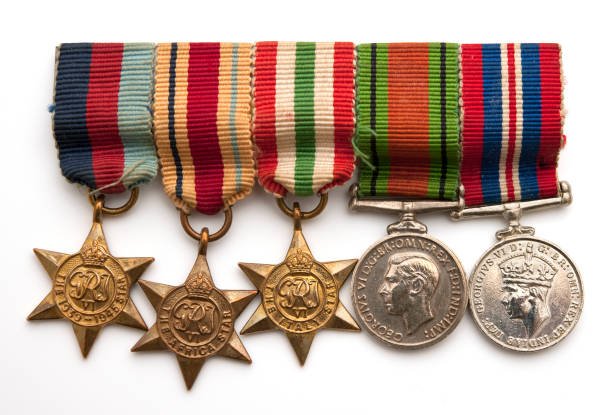
Here’s where the confusion begins. A medal has no face value and zero status as legal tender. It can be issued by governments, private mints, companies, clubs—anyone with a press and a dream. Medals exist purely for commemoration, art, prestige, or fun. The term “medallion” is usually just a fancier or larger version of a medal. So medal vs medallion? Think of it as “medal” = general term, “medallion” = the cool older cousin who shows up wearing a velvet ribbon.
Quick Reference Table
| Feature | Regular Coin | Commemorative Coin | Medal / Medallion |
|---|---|---|---|
| Issued by government? | Yes | Yes | Not necessarily |
| Has a face value? | Yes | Yes | No |
| Legal tender? | Yes | Yes (but rarely used) | No |
| Purpose | Everyday money / bullion | Celebration + collecting | Art, honor, souvenir |
| Typical buyer | Citizens, investors | Collectors | Collectors, gift buyers |
| Design freedom | Strict rules | More artistic | Almost unlimited |
| Alignment (flip test) | Coin alignment ↑↓ | Usually coin alignment | Often medallic ↑↑ |
Why “Medallion Coin” Makes Everyone Scratch Their Heads
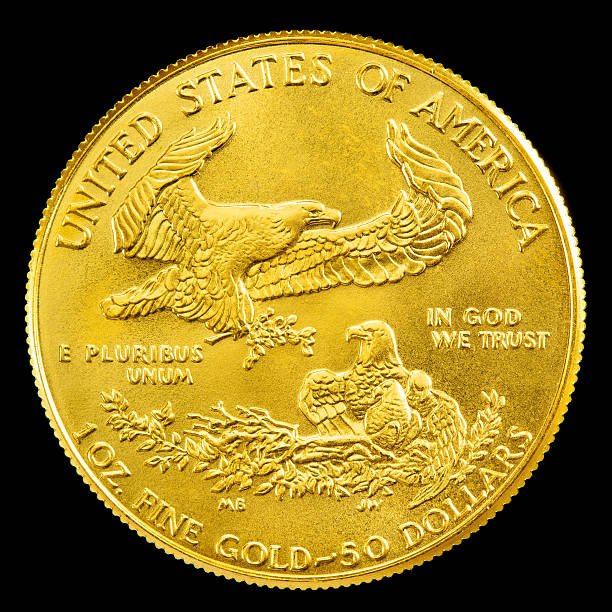
You’ll sometimes see sellers describe something as a “medallion coin.” Strictly speaking, that’s an oxymoron—like saying “decaf espresso.” If it has a face value and is government-issued, it’s a coin (possibly commemorative). If it has no face value, it’s a medallion or medal—no matter how coin-like it looks. The phrase is usually marketing fluff designed to make a private-issue silver round sound more prestigious. Now you know better!
Real-World Examples That Make the Difference Crystal Clear
- Government Coin: 2024 American Silver Eagle – $1 face value, 99.9% silver, legal tender.
- Commemorative Coin: 2023 King Charles III Coronation £5 coin – legal tender in the UK, but you won’t see it in a vending machine.
- Medal/Medallion: 2024(private mint) “Buffalo Warrior” 1 oz silver round – identical weight and purity to the Silver Eagle, but no face value, no government backing.
- Sport Medallion: Paris 2024 Olympic participant medal – given to athletes, made partly from recycled electronics, zero monetary face value, yet priceless to the recipient.
Speaking of sport medallions, Olympic and Paralympic participant medals are the perfect illustration of how glorious a non-coin can be. They’re often thicker, more sculptural, and carry symbolic elements you’d never see on circulating money. The 2024 Paris medals even embedded a tiny piece of original Eiffel Tower iron—talk about bragging rights!
A Quick Detour to France: Home of Stunning Medallions
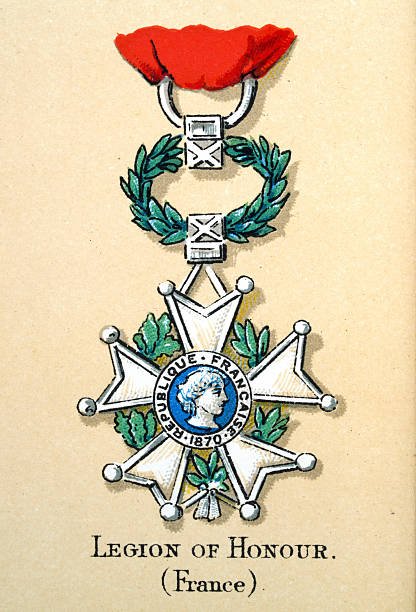
France has a love affair with the medallic art form that goes back centuries. French medallions—especially portrait medallions—are legendary. From the Renaissance bronze portraits by Pisanello to the Art Nouveau masterpieces of Oscar Roty and Louis-Oscar Roty’s famous “Semeuse” design that still appears on French euro coins today, France treats the medal as high art. The Monnaie de Paris (French Mint) produces both official euro coins and breathtaking limited-edition medallions every year. Collectors go weak at the knees for their annual “Women of France” or “Histoire de la Médaille” series. These portrait medallions often use ultra-high relief and antique finishes that would be impossible on circulating coinage.
Rounds, Tokens, Challenge Coins—Where Do They Fit?
Just to keep life interesting, we have a few more cousins in the family:
- Silver/Gold Rounds – Private mint 1 oz (or other weight) pieces that copy famous coin designs. They’re essentially medallions marketed to stackers who want the lowest premium over spot price.
- Challenge Coins – Thick, usually colorful medals given within military units, fire departments, police, or even companies. They have zero monetary value but enormous sentimental value.
- Tokens – Small, usually base-metal pieces for arcades, transport, or casinos.
So Which Should You Collect or Invest In?
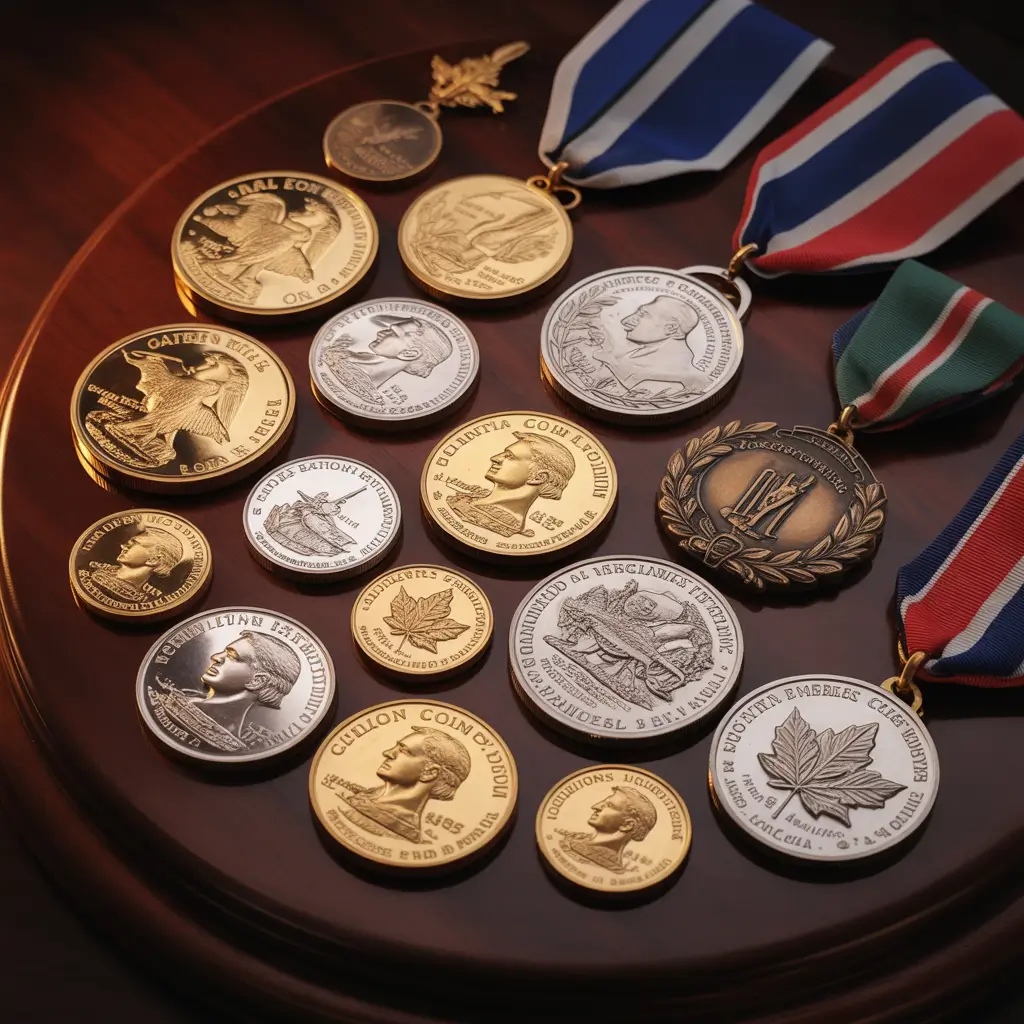
That depends entirely on your goal:
- Want government guarantee and easy liquidity? → Stick to bullion coins (Silver Eagles, Maples, etc.).
- Love limited-edition beauty and don’t mind slightly lower liquidity? → Commemorative coins or high-end government medals.
- Hunting for artistic masterpieces or niche themes (space flight, classic cars, sport medallions)? → Private medals and medallions are your playground.
- Like the idea of “stacking” metal as cheaply as possible? → Generic rounds (a.k.a. the people’s medallion).
The Flip Test
Next time you’re holding a mystery piece, do the “flip test.” Hold it between thumb and forefinger by the edges and rotate it top-to-bottom (like flipping a burger).
- If the top and bottom are upside-down relative to each other → coin alignment → almost certainly a coin.
- If the top and bottom stay right-side up → medallic alignment → you’re holding a medal or medallion.
It’s a tiny detail that has delighted (and confused) collectors for over 200 years.
Wrapping It Up
Coins and medals may share the same DNA—round, metallic, gorgeous—but they serve completely different purposes in our world. Coins are the responsible citizens of the numismatic realm, while medals and medallions are the artists, athletes, and storytellers. Whether you’re drawn to the rock-solid reliability of a government-issued commemorative coin, the sculptural drama of French medallions, the emotional punch of a sport medallion, or the pure affordable shine of a private round, there’s a perfect piece of metal out there calling your name by using these different types of trophies.
So go ahead—collect what makes your heart skip a beat. After all, in this hobby, the only real rule is that shiny things make people happy.
FAQs
What is the main difference between a coin and a medal for bulk orders?
Coins have an official face value and are usually government-issued; medals (including medallions) have no face value and are made purely for commemoration, awards, or branding. For business orders, medals offer far more design freedom and lower cost.
Can you produce legal-tender commemorative coins for us?
No. Only sovereign mints can issue legal-tender coins. We specialize in high-quality custom medals, medallions, challenge coins, and private rounds that look virtually identical to coins but at a fraction of the cost.
What is the typical minimum order quantity (MOQ) for custom medals and medallions?
We don’t have a strict minimum order quantity; it depends on the size, craftsmanship, and other factors of the medal being customized.
How long does it take to produce a custom coin or medal order?
Sampling: 10–18 days. Mass production: 15–25 days after sample approval. Rush service (7–10 days production) is available for urgent projects.
What materials can you use for bulk medals and medallions?
Zinc alloy (most cost-effective), brass, copper, iron, stainless steel, sterling silver 925, and fine gold/silver for premium lines.