Let’s be honest—sustainability isn’t just a buzzword anymore. It’s a business imperative. If you’re a brand manager, trader, or e-commerce platform owner reading this, you’ve probably noticed your customers asking questions: Where does this come from? Is it eco-friendly?
Here’s the good news: custom pins can absolutely be part of your sustainability story. And no, you don’t have to sacrifice quality, design flexibility, or your budget to make it happen.
Why Sustainable Materials Matter for Your Business
The Environmental Reality
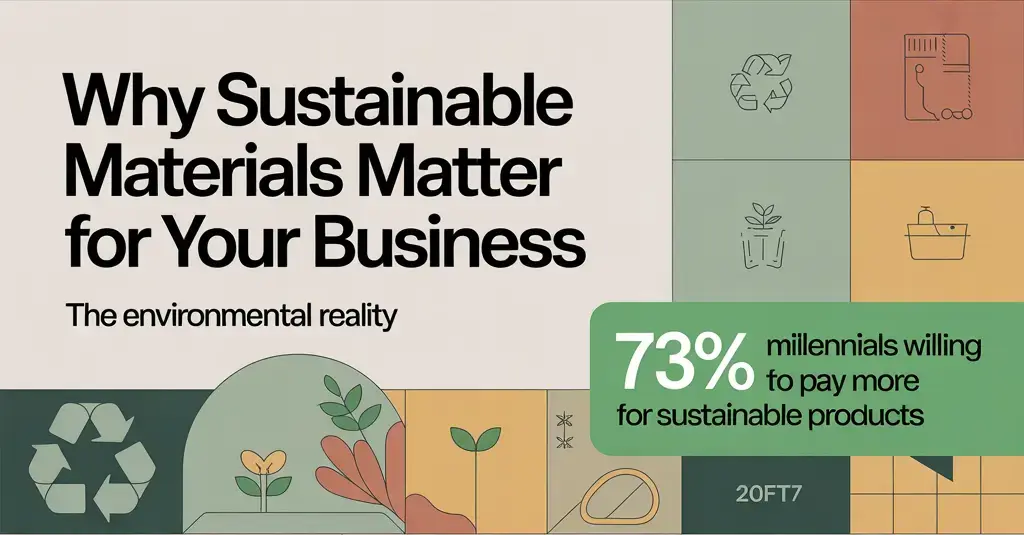
Traditional pin production involves mining virgin metals, chemical-heavy electroplating, and significant waste generation. But here’s what matters for your business: consumers are paying attention. According to recent research, 73% of millennials are willing to pay more for sustainable products.
The Business Benefits
For Brands: Sustainable custom pins enhance your CSR profile. When customers wear your eco-friendly pin, they’re wearing your values.
For Traders: B2B clients increasingly require sustainability in procurement. Offering eco-friendly lapel pins positions you as a forward-thinking supplier.
For E-commerce & Retail: Eco-conscious consumers actively seek sustainable merchandise. Green promotional products aren’t just nice to have—they’re a competitive advantage.
Plus, environmental regulations are tightening globally. Getting ahead of compliance saves future costs and headaches.
Your Sustainable Material Options
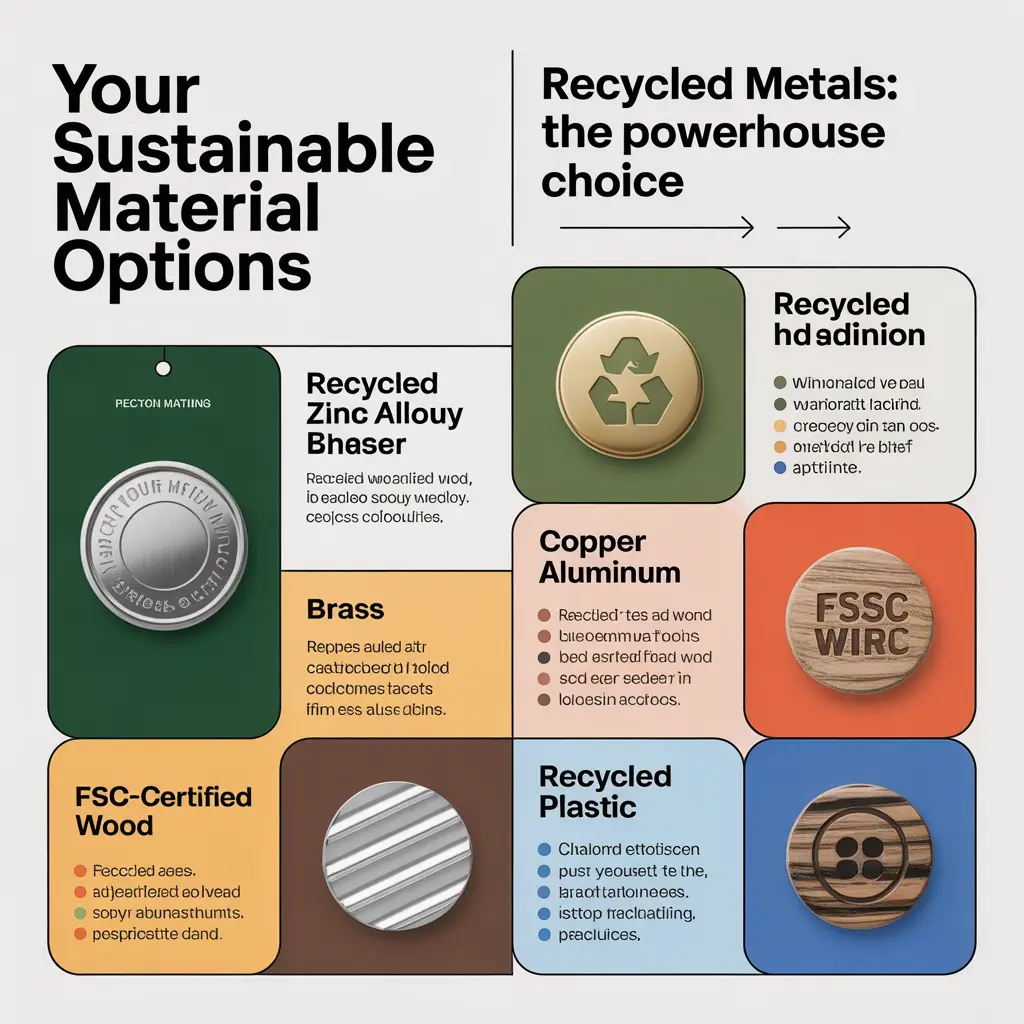
Recycled Metals: The Powerhouse Choice
Recycled Zinc Alloy
The workhorse of sustainable pin manufacturing. Die-casting naturally generates metal scraps that get melted down and reused—a perfect closed-loop system.
Why it works: Cost-effective, moldable into any shape, and maintains identical quality to virgin materials. Your customers won’t tell the difference.
Best for: Soft enamel pins, 3D cast pins, high-volume orders.
Recycled Brass and Copper
Want premium quality? Recycled brass delivers. Old brass gets shredded, melted, purified, and formed into new sheets.
Why it works: Exceptional durability with classic, sophisticated appearance. Perfect for detailed die-struck work.
Best for: Hard enamel pins, employee badges, membership pins.
Recycled Aluminum
Lightweight, durable, with significantly lower carbon footprint than virgin aluminum.
Why it works: Keeps shipping costs down while maintaining quality.
Best for: Trading pins, sports teams, larger pin designs.
Alternative Materials: Beyond Metal
FSC-Certified Wood Pins
Wood from sustainably managed forests offers unique, natural aesthetics that stand out.
Why it works: Full-color printing, custom laser engraving, unlimited shapes, biodegradable. That tactile, organic feel customers love.
Best for: Eco-brands, outdoor retailers, nature-focused identities.
Recycled Plastic Pins (RPET)
3D printing with recycled PET filament diverts plastic waste from landfills and oceans.
Why it works: Cost-effective for large quantities, unlimited colors, lightweight shipping, clear environmental story.
Best for: Promotional campaigns, festivals, events.
Material Comparison at a Glance
| Material | Sustainability | Durability | Price | Perfect For |
|---|---|---|---|---|
| Recycled Zinc | ★★★★☆ | High | $$ | Soft enamel, 3D |
| Recycled Brass | ★★★★☆ | Very High | $$$ | Hard enamel, badges |
| Recycled Aluminum | ★★★★★ | High | $$ | Trading pins |
| FSC Wood | ★★★★★ | Medium | $ | Nature brands |
| Recycled Plastic | ★★★★☆ | Medium | $ | Mass promotions |
Manufacturing Processes That Make a Difference
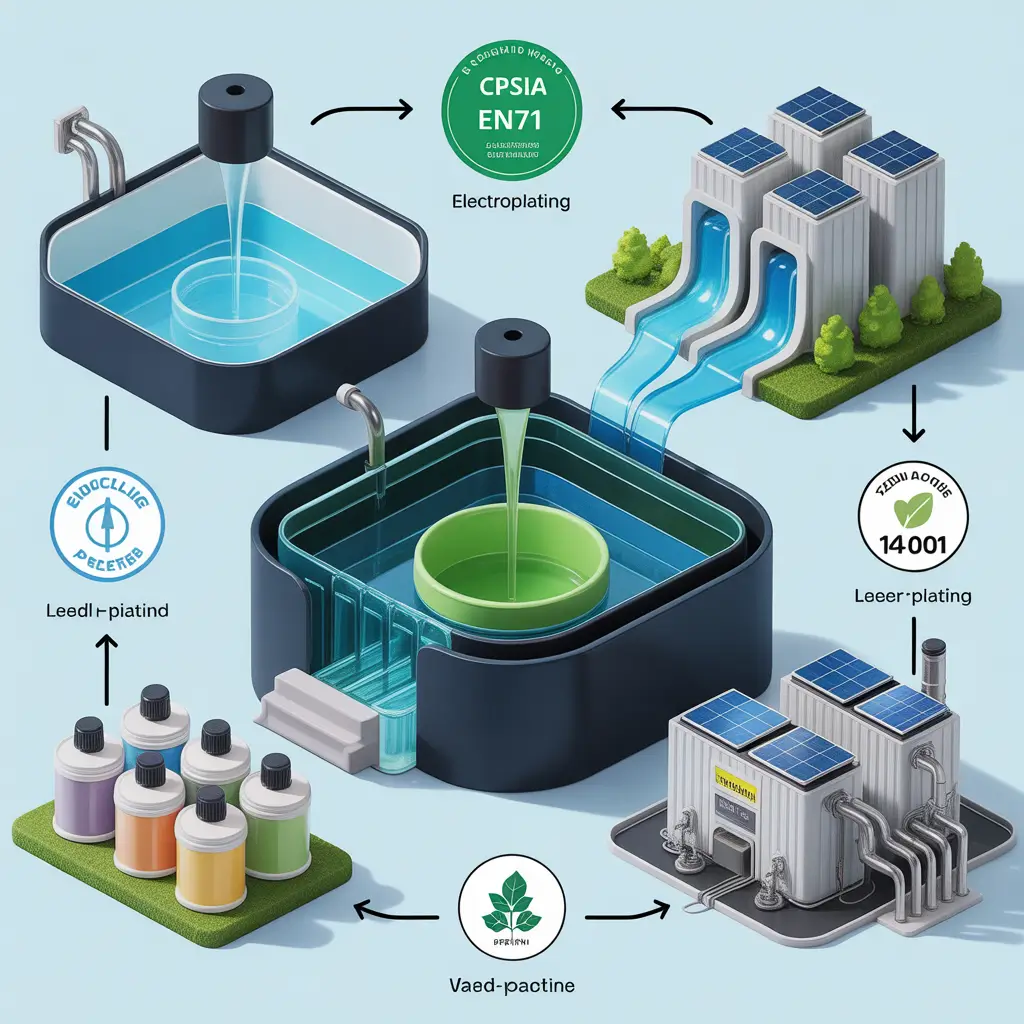
Sustainable materials are only half the story. Processing matters just as much.
Lead-Free Electroplating
Modern eco-friendly lapel pins use lead-free alternatives like nickel, antique copper, or black nickel. These meet CPSIA and EN71 safety standards—crucial for US and European markets.
Water-Based Paints and Enamels
Water-based alternatives eliminate harmful VOCs while delivering vibrant, long-lasting colors. Plus, they create safer working conditions for factory employees.
Advanced Green Facilities
Top sustainable pin manufacturers invest in:
- In-house electroplating with wastewater treatment
- Zero-discharge water recycling
- Renewable energy integration
- ISO 14001 environmental certification
These indicate serious commitment to sustainability across entire operations.
The Real Cost of Going Green
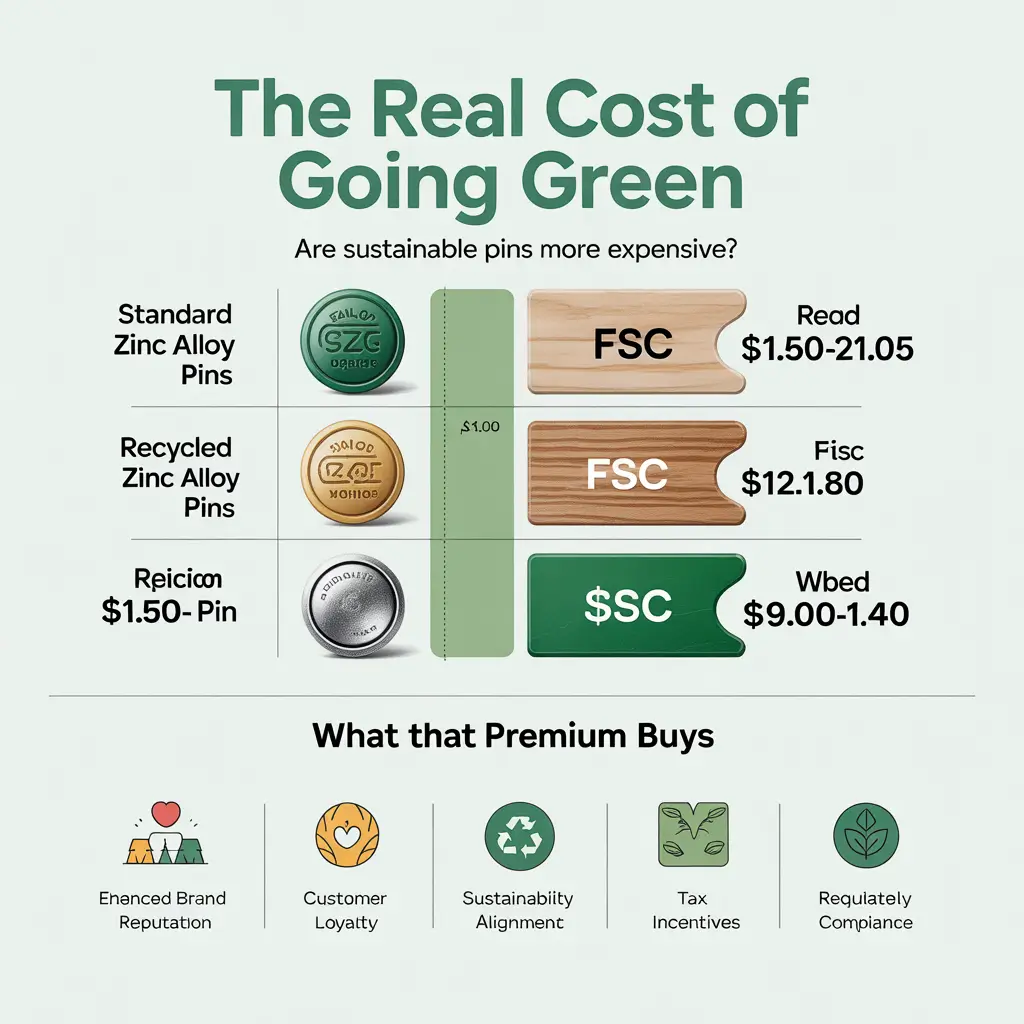
Are sustainable custom pins more expensive?
Slightly, but less than you think. Recycled metals typically cost 5-15% more than virgin materials. For 100 pins, that’s roughly $0.10-0.15 extra per unit.
Sample Pricing (100 units):
- Standard zinc alloy: $1.50-2.00/unit
- Recycled zinc alloy: $1.60-2.15/unit
- FSC wood: $1.20-1.80/unit
- Recycled plastic: $0.90-1.40/unit
Notice that wood and recycled plastic can actually cost less than traditional metal while offering superior sustainability.
What That Premium Buys:
- Enhanced brand reputation
- Increased customer loyalty
- Corporate sustainability alignment
- Potential tax incentives
- Future regulatory compliance
Choose Your Sustainable Pin Partner
Not all manufacturers are equal. Here’s your vetting checklist:
Essential Certifications
✅ ISO 14001 (Environmental Management)
✅ CPSIA & EN71 Compliance
✅ FSC Certification (for wood)
✅ Social compliance (SEDEX/BSCI)
Critical Questions
- What percentage of materials are recycled or sustainable?
- Do you have in-house wastewater treatment?
- Can you provide material source documentation?
- What renewable energy do you use?
- What are MOQs for eco-friendly options?
Most reputable manufacturers offer flexible MOQs starting at 50-100 pieces—identical to standard options.
Red Flags to Avoid
- Vague sustainability claims without proof
- No environmental certifications
- Unwillingness to share factory audits
- Lack of material sourcing transparency
Sustainable Packaging Completes the Story
Don’t undermine your eco-friendly pins with wasteful packaging.
Plastic-free options:
- Kraft paper backing cards (customizable)
- Recyclable cardboard boxes
- Glassine paper wrapping
- Compostable poly bags
Marketing opportunity: Add “Made with 100% Recycled Materials” messaging or QR codes linking to your sustainability story. Customers notice and appreciate this.
Real-World Success Stories
Sustainable Fashion Startup
A fashion brand chose recycled brass hard enamel pins with kraft packaging. Result: 40% social media engagement increase, eco-blog features, and customers citing pins as a purchase factor.
Corporate Recognition Program
A tech company ordered 5,000 recycled aluminum employee pins. Result: Higher employee satisfaction, CSR report feature, strengthened employer brand.
Outdoor Retail Innovation
A retailer created FSC wood pins with seed-embedded cards customers could plant. Result: Best-selling accessory, 60% customer retention rate.
The Future is Already Here
The sustainable merchandise market grows at 25% annually. Regulations expand. Consumer willingness to pay premiums increases.
Innovations emerging:
- Ocean plastic recycling
- Carbon-neutral facilities
- Blockchain supply transparency
- Plantable seed-embedded pins
Brands embracing this trend aren’t just doing good—they’re doing well.
Your Action Plan
- Assess needs: Quantity, budget, design requirements
- Request samples: Test materials before bulk orders
- Verify credentials: Check manufacturer certifications
- Tell your story: Market your eco-choice as brand value
The Bottom Line
Sustainable materials in custom pin manufacturing aren’t a compromise—they’re an upgrade. They enhance your brand, appeal to modern consumers, and position you ahead of regulations.
Whether you’re a trader expanding your line, a brand strengthening CSR, an e-commerce platform targeting eco-conscious shoppers, or a retail buyer differentiating merchandise, eco-friendly lapel pins offer a clear competitive advantage.
The question isn’t whether to switch to sustainable custom pins. It’s when you’ll start.
Ready to explore sustainable options? Please contact us, the planet and your customers will thank you.
FAQs
Are recycled metal pins as durable?
Yes. Identical quality control and durability standards to virgin materials.
What’s the minimum order?
Most eco-friendly options start at 50-100 pieces—same as standard pins.
Do they take longer to make?
No. Typical 3-3.5 week production, same as conventional manufacturing.
Can I get full-color designs?
Absolutely. Modern techniques support vibrant colors on all sustainable materials.
Best material for trading pins?
Recycled aluminum—lightweight, durable, cost-effective for larger sizes.