A tarnished belt buckle on your display isn’t just unattractive—it’s a lost sale and a hit to your brand reputation. Whether you’re managing retail displays, e-commerce product photography, or wholesale inventory, proper cleaning and maintenance directly impacts your bottom line.
This guide covers professional-grade cleaning methods that protect your inventory investment while keeping your products in pristine, sale-ready condition.
Understanding Your Inventory: Belt Buckle Materials 101
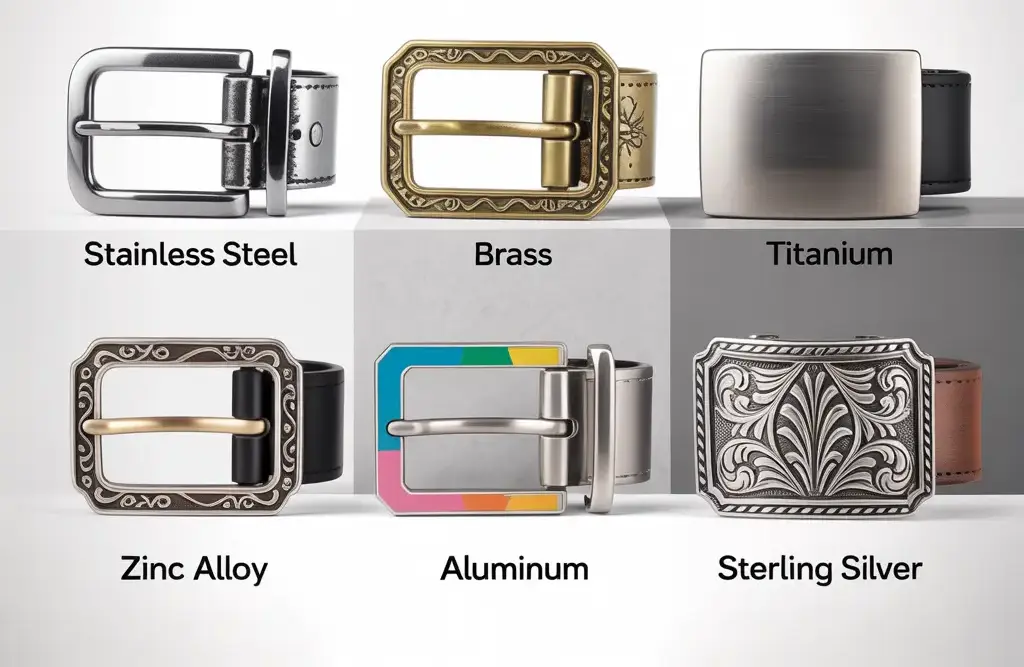
Before diving into cleaning methods, let’s talk materials. Understanding what you’re working with directly impacts your inventory management, customer education strategy, and warranty decisions.
Brass remains the most popular choice for custom buckles and pins, offering classic warmth, excellent durability, and cost-effectiveness for bulk orders. However, brass oxidizes over time, developing that familiar greenish tarnish.
Bronze metal serves as a premium alternative with superior corrosion resistance. When dealing with vintage brass buckle inventory or high-end merchandise, bronze often commands higher prices and requires specialized care.
Stainless steel has become increasingly popular for modern designs. It’s highly resistant to tarnishing, making it ideal for low-maintenance inventory—your staff spends less time cleaning, and customers appreciate the contemporary aesthetic.
Zinc alloy provides a cost-effective solution for bulk orders while still delivering quality results. It’s lightweight, easy to cast in intricate designs, and performs well with proper plating.
Silver and silver-plated options occupy the luxury segment, requiring more careful handling but offering unmatched elegance for premium product lines.
The Business Case: Why Cleaning Matters to Your Bottom Line
A tarnished belt buckle sitting on your shelf isn’t just unattractive—it’s actively costing you money.
For retail buyers, clean, shining buckles directly correlate to conversion rates. Products with visible tarnish experience up to 40% lower purchase intent. Proper maintenance also reduces return rates and customer complaints, protecting your margins.
E-commerce platforms need impeccable product photography. Tarnished items photograph poorly and lead to negative reviews. The unboxing experience matters too—when customers receive gleaming products, your review ratings soar.
Brands must consider long-term image. Every tarnished buckle represents a potential brand hit. Conversely, consistently pristine products build customer loyalty and command premium pricing.
Traders focused on inventory turnover need to maintain resale value. Proper storage and cleaning practices prevent merchandise degradation, ensuring your stock retains its value even during longer holding periods.
Professional Cleaning Methods: From Daily Maintenance to Deep Restoration
Method 1: Daily Maintenance for Retail Display
For regular upkeep of display inventory, simplicity wins. Keep microfiber cloths at every display station for daily wipe-downs that remove fingerprints, dust, and oils before they become problems.
Before product photography, use a soft-bristled brush to reach into detailed designs. This ensures every crevice looks perfect on camera. Set up a “touch-up station” in your stockroom with all cleaning supplies organized and ready for quick product refreshing before floor placement or shipping.
Method 2: Deep Cleaning for Wholesale Stock
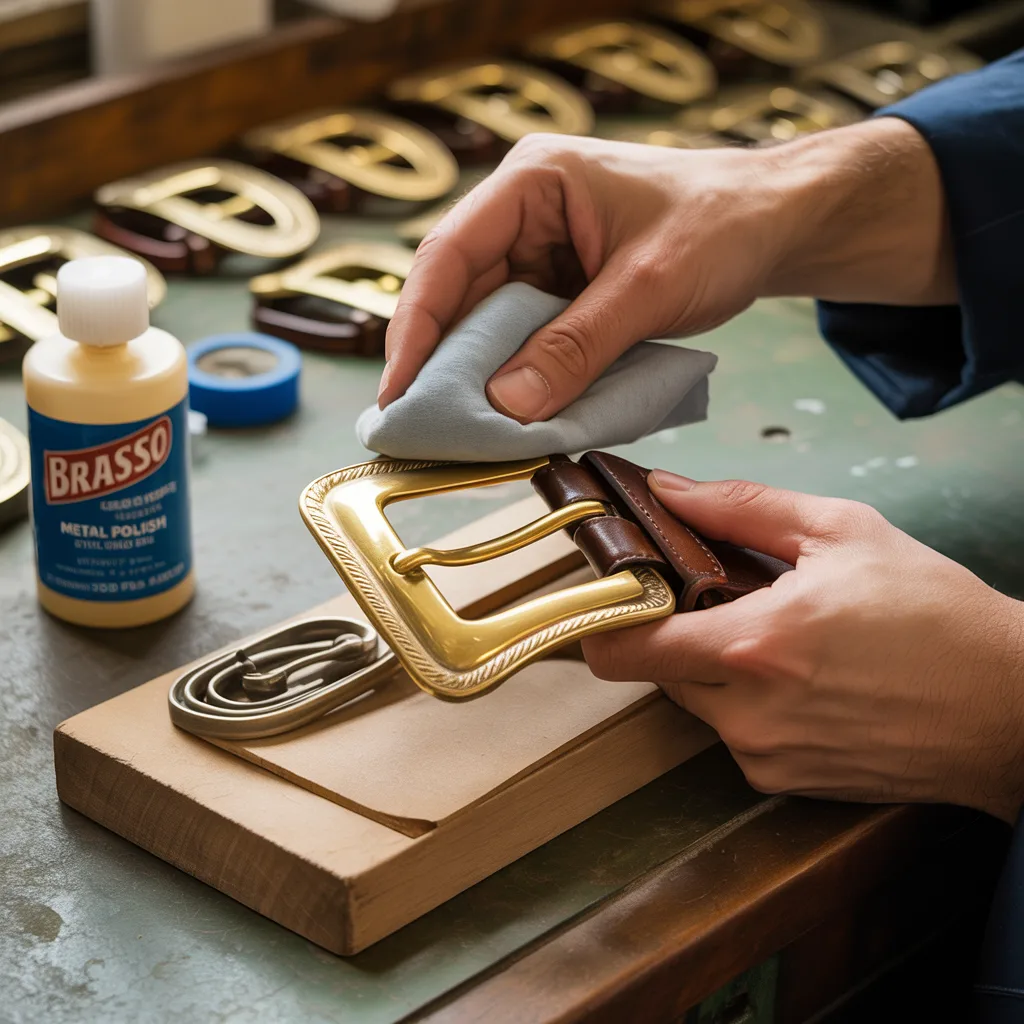
When you receive new inventory or retrieve items from long-term storage, more thorough cleaning becomes necessary.
How to Polish Brass Belt Buckle (The Professional Way)
Brass buckles benefit enormously from proper polishing. Here’s the scalable process:
Materials needed:
- Brasso metal polish (cost-effective at $0.15-0.20 per buckle)
- Soft cotton cloths (buy in bulk from janitorial suppliers)
- Soft-bristled brushes for details
- Protective gloves for staff
The process: Apply a small amount of Brasso to your cloth—not directly to the buckle. Rub onto the brass surface using consistent horizontal strokes to minimize visible scratching and create uniform finish.
Let the polish sit for 30-60 seconds until it hazes over slightly, allowing the chemical action to break down tarnish. Then buff vigorously with a clean, dry cloth. The transformation is immediate—dull brass becomes gleaming gold.
Time-saving tip: Set up an assembly line approach. One person applies polish, another buffs. This workflow can process 50+ buckles per hour.
How to Polish Bronze Metal
Bronze requires a slightly different approach than brass, particularly when dealing with vintage brass buckle inventory that may have developed valuable patina.
First, assess whether you should preserve or remove patina. On antique pieces, that aged appearance often increases value. For contemporary bronze items, customers typically prefer the bright finish.
For cleaning, use bronze-specific polish or Brasso applied gently. Apply the same horizontal stroke technique, working in sections for consistency. Document your bronze cleaning procedures—some customers seek vintage appearance, while others want mirror-bright finishes.
Stainless Steel: The Low-Maintenance Option
Most tarnish on stainless comes from fingerprints and dust rather than oxidation. For routine cleaning, warm water with mild dish soap works perfectly. Apply with a soft cloth, rinse thoroughly, and dry immediately to prevent water spots. This method costs roughly $0.05 per buckle.
For stubborn spots, a paste of baking soda and water provides a natural, cost-effective solution that’s gentle enough for repeated use.
Method 3: Restoration for Premium Stock
Sometimes you encounter seriously tarnished belt buckle inventory—perhaps from estate sales or long-term storage. These situations require more intensive intervention.
Assessment criteria: Before investing time, calculate ROI. High-value items justify professional restoration services, while lower-value inventory might not be worth extensive labor.
For in-house restoration: Mix equal parts white vinegar and baking soda to create a paste. Apply to tarnished areas and let sit for 30 minutes to several hours depending on severity. For serious corrosion, lemon juice and salt create a more aggressive natural cleaner that can work overnight.
After treatment, scrub gently with a soft brush, rinse thoroughly, and dry completely. Follow up with appropriate metal polish to restore the shine.
When to outsource: If restoration would take more than 15 minutes per piece, or if the item has significant value, professional restoration services often provide better ROI.
How to Shine a Belt Buckle: Quick Reference by Material
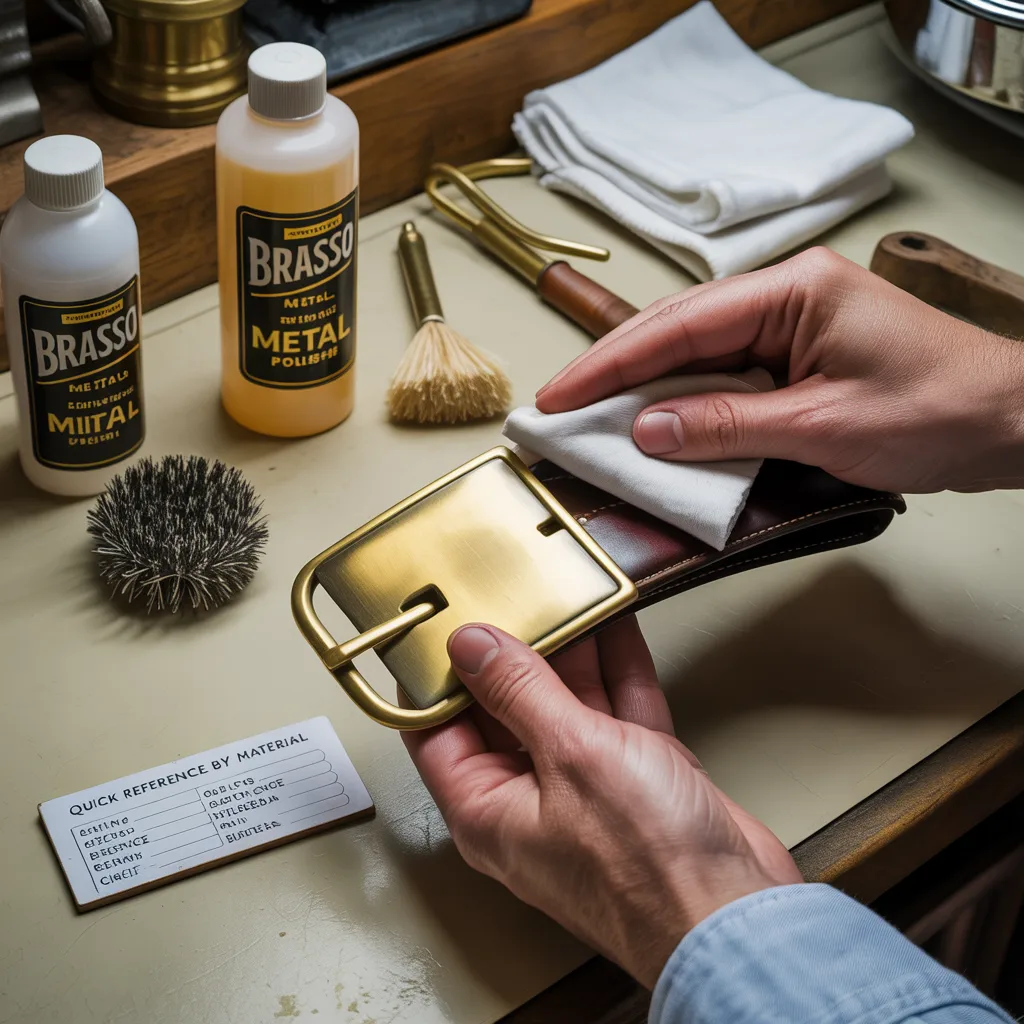
Brass & Bronze:
- Best method: Brasso or similar metal polish
- Frequency: Monthly for display items, quarterly for stock
- Avoid: Steel wool on plated pieces
- Cost per unit: $0.15-0.20
Stainless Steel:
- Best method: Soap and water, occasional stainless cleaner
- Frequency: Weekly wipe-down for displays
- Avoid: Harsh abrasives that scratch finish
- Cost per unit: $0.05
Silver/Silver-Plated:
- Best method: Silver-specific polish
- Frequency: Bi-weekly for high-touch displays
- Avoid: Prolonged soaking or harsh chemicals
- Cost per unit: $0.25
Zinc Alloy:
- Best method: Gentle soap solution
- Frequency: Monthly maintenance
- Avoid: Acidic cleaners that damage plating
- Cost per unit: $0.08
Storage Solutions That Prevent Problems
The best cleaning strategy? Minimize the need for it through proper storage.
Humidity control makes an enormous difference. Aim for 40-50% relative humidity in storage areas. Anti-tarnish packaging pays for itself quickly—individual bags with anti-tarnish tabs cost pennies but prevent oxidation during storage.
Inventory rotation systems ensure older stock gets used first, preventing items from sitting so long they require intensive restoration. Implement a simple “first in, first out” system with clear date labeling.
Regional climate factors: Humid coastal areas require increased cleaning frequency and more investment in humidity control. Desert climates need less anti-tarnish focus but more attention to dust accumulation.
Common Mistakes That Cost Money
Over-polishing plated items is the most costly mistake. Plating is thin—aggressive or frequent polishing wears through to base metal, ruining the piece. Train staff to use gentle pressure and minimize polishing frequency.
Using wrong chemicals can cause instant, irreversible damage. Never use harsh chemicals without verifying compatibility. When in doubt, test on an inconspicuous area first.
Inadequate drying leads to new tarnish formation almost immediately. Every cleaning protocol must include thorough drying as the final step.
Neglecting employee training results in inconsistent quality and damaged inventory. Invest time in proper training upfront—it saves money long-term.
Adding Value Through Customer Education
Smart retailers don’t just sell products—they solve problems and build relationships.
Care cards and packaging inserts cost pennies to print but significantly reduce return rates. Include basic cleaning instructions, storage tips, and a QR code linking to detailed care videos on your website.
Digital strategies extend your reach. Email care guides 48 hours after purchase when customers are most engaged. Create short social media videos demonstrating proper cleaning techniques. These content pieces serve double duty—customer service and SEO-boosting website content.
Warranty programs tied to proper care create win-win scenarios. Offer extended warranties for customers who follow your care guidelines, incentivizing proper maintenance while protecting you from excessive returns.
Sourcing Quality: Prevention Beats Cure
The best cleaning strategy starts with quality sourcing. At Unique Custom Pins, we control quality from the very beginning—proper plating thickness (minimum 3-5 microns for durability), high-quality base metals that resist corrosion, and finish durability that withstands normal handling.
Questions to ask any supplier:
- What plating thickness do you guarantee?
- What’s your base metal composition?
- What finish durability testing do you conduct?
- What cleaning methods do you recommend?
- What’s your defect rate for tarnish-related issues?
These questions separate quality suppliers from those who’ll create inventory headaches.
Clean Inventory is Profitable Inventory
Proper belt buckle maintenance protects your investment, enhances your brand, and maximizes profitability. Whether you’re learning how to polish brass belt buckle inventory or developing care protocols for diverse materials, the approach is clear: understand your materials, implement consistent procedures, train your staff, and source quality products.
Unique Custom Pins offers premium belt buckles with comprehensive B2B support—bulk cleaning recommendations, custom care cards, and technical consultation for large orders.
Ready to elevate your inventory quality?
- Request sample belt buckles to evaluate our quality
- Download our Product Care Guide for your team
- Schedule a consultation for custom bulk orders
In retail and e-commerce, every detail matters—including how brilliantly your belt buckles shine.