





If you’ve ever typed “how much does a keychain cost” into Google at midnight while trying to finalize a quote, you’re in good company. It’s one of those questions that sounds simple — until you start comparing quotes and realize the answer swings anywhere from 50 cents to eight dollars a piece, depending on who you ask.
Here’s the short answer: custom keychains typically cost between $0.50 and $8+ per piece, depending on material, order quantity, and design complexity — with wholesale retail prices usually landing between $8 and $20. But that range hides a lot of nuance, and if you’re a trader sourcing inventory, a brand building merch, or an e-commerce seller trying to protect your margins, that nuance is exactly what determines whether your order is a smart buy or an expensive mistake.
Quick Price Breakdown by Quantity & Material
The fastest way to understand custom keychain pricing is to look at how cost drops as order size increases. Manufacturers spread fixed setup costs — tooling, artwork prep, labor — across every unit, so the more you order, the less each piece “carries.”
| Quantity | Acrylic Keychains | Metal Keychains | PVC Keychains |
|---|---|---|---|
| 50–100 pcs | $1.20 – $2.00 | $2.50 – $4.50 | $2.00 – $3.50 |
| 300–500 pcs | $0.80 – $1.20 | $1.80 – $3.50 | $1.50 – $2.80 |
| 1,000+ pcs | $0.50 – $0.80 | $1.50 – $3.00 | $1.20 – $2.50 |
Most experienced buyers land somewhere in the 500-unit range — big enough to unlock real bulk keychain price savings, small enough to stay flexible if a design needs tweaking next season. Push past 1,000 units, and your per-unit cost can drop by 60–70% compared to a small 50-piece test batch.
What Actually Drives Keychain Pricing?
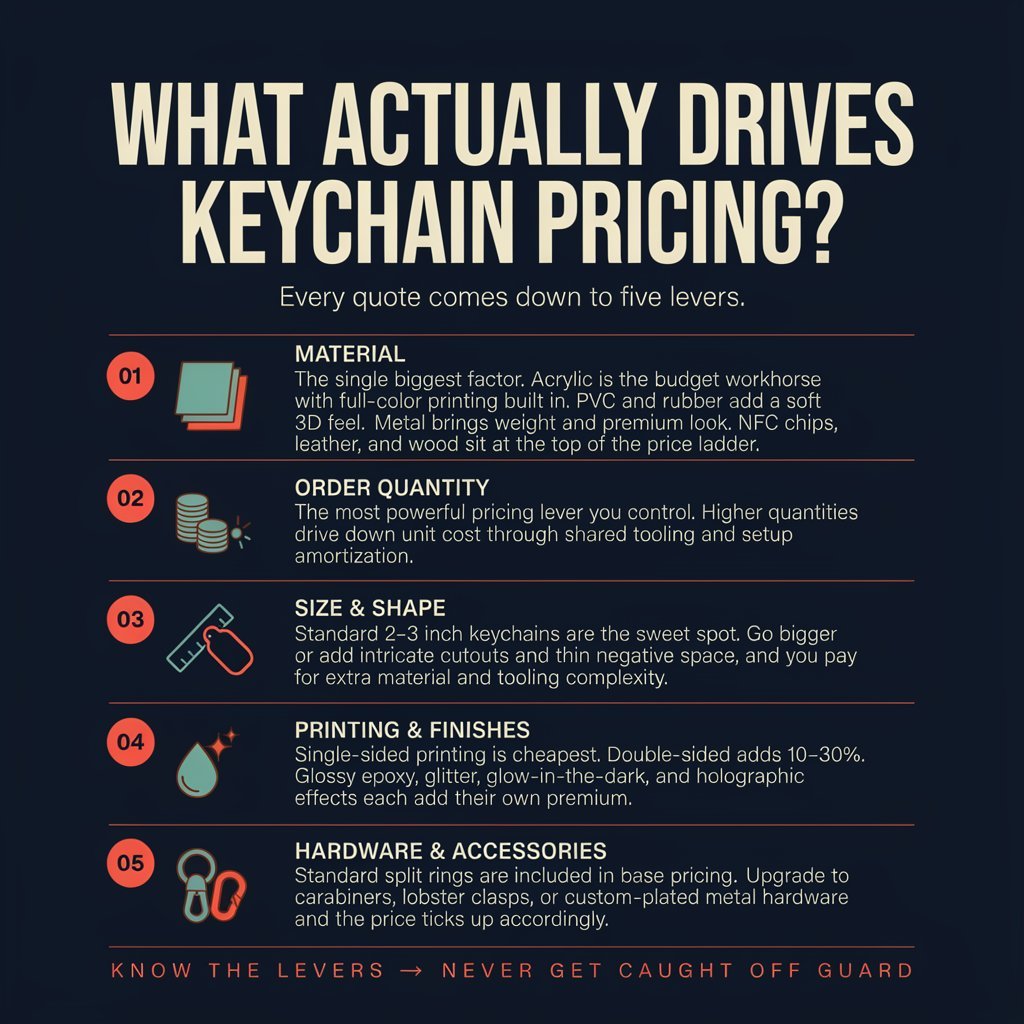
Every quote you’ll ever get comes down to five levers. Understanding them means you’ll never be caught off guard by a price again.
1. Material — the single biggest factor. Acrylic is the budget-friendly workhorse with full-color printing built in. PVC and rubber add durability and a soft, 3D feel. Metal brings weight and a premium look. Specialty options like NFC chips, leather, and wood sit at the top of the price ladder.
2. Order quantity. We covered this above, but it’s worth repeating: quantity is the most powerful pricing lever you control.
3. Size and shape. Standard 2–3 inch keychains are the sweet spot for cost efficiency. Go bigger, or add intricate cutouts and thin negative space, and you’ll pay for the extra material and tooling complexity.
4. Printing and finishes. Single-sided printing is your cheapest option. Double-sided adds 10–30% to the unit cost. Glossy epoxy coatings, glitter, glow-in-the-dark, and holographic effects each add their own premium — worth it if it fits your product, unnecessary if you’re stacking three effects “just because.”
5. Hardware and accessories. Standard split rings are included in base pricing almost everywhere. Upgrade to carabiners, lobster clasps, or custom-plated metal hardware, and the price ticks up accordingly.
Keychain Material Comparison: Which One Fits Your Business?
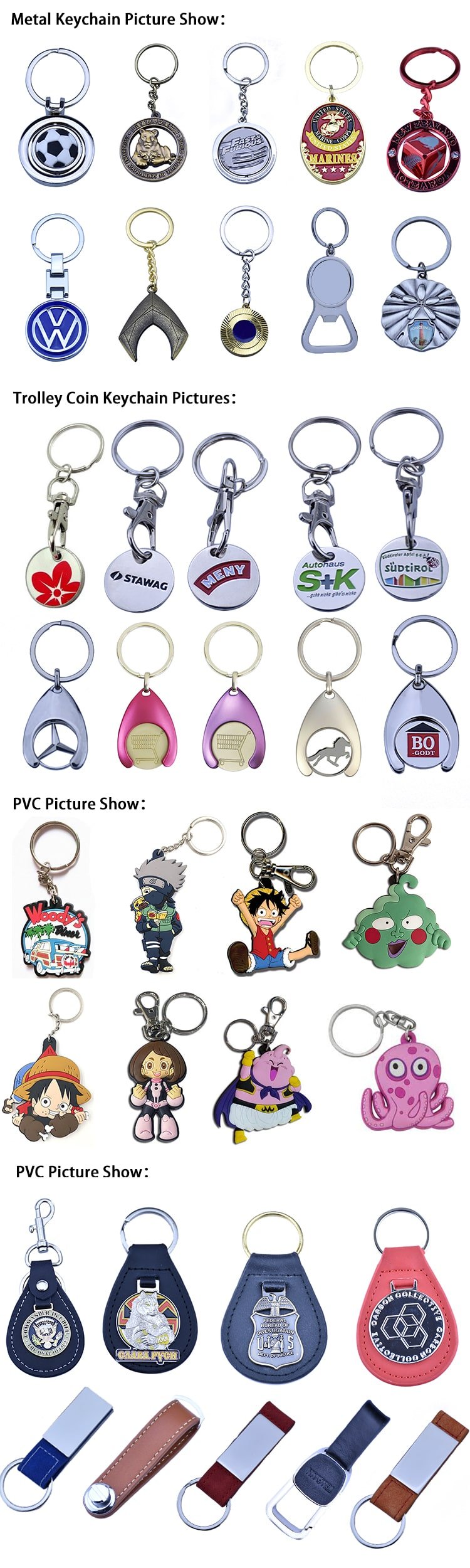
Not every material suits every buyer. Here’s a quick cheat sheet:
- Acrylic Keychains ($0.50–$2.00/pc) — Cheapest option with vibrant full-color printing. Ideal for high-volume orders, giveaways, and budget-conscious brands.
- PVC / Rubber Keychains ($1.20–$3.50/pc) — Soft, durable, great for 3D cartoon-style character merch.
- Metal Keychains ($1.50–$4.50/pc) — Premium weight and finish. A favorite for corporate branding and executive gifts.
- Epoxy Dome Keychains ($1.50–$4.00/pc) — Glossy, retail-ready, and extremely photogenic — a strong fit for e-commerce and Etsy-style storefronts.
- NFC Smart Keychains ($3.00–$8.00+/pc) — Tap-to-connect functionality for tech-forward campaigns and loyalty programs which makes keychains become promotional products.
- Leather / Wood Keychains ($2.00–$6.00+/pc) — Natural materials that signal craftsmanship, perfect for boutique or artisan branding.
If you’re budget-conscious, acrylic wins every time. If you want your product to photograph beautifully on a storefront, epoxy dome delivers the best cost-to-quality ratio. And if your buyers are corporate clients who judge quality by weight in their hand, metal is worth the premium.
Hidden Costs Wholesale Buyers Often Miss
Here’s something a lot of first-time buyers learn the hard way: the unit price on a quote is rarely the whole price. Many buyers are surprised when their final invoice lands 10–30% higher than expected — not because anyone was dishonest, but because nobody asked about these line items upfront.
| Hidden Cost | Typical Impact |
|---|---|
| Sampling / prototype fees | +$20–$60 |
| International shipping | +$20–$80 |
| Packaging (bags, backing cards) | +$0.05–$0.50/pc |
| Import duties & taxes | +5–20% |
| Tooling / mold fee | +$30–$80 |
| Rush production surcharge | +10–20% |
The fix is simple: always ask for a fully landed cost — production, tooling, shipping, and duties combined — before you approve anything. Better yet, ask if your supplier offers DDP (Delivered Duty Paid) terms. It eliminates customs surprises entirely and makes budgeting predictable.
Profit Margin Breakdown: Is Reselling Keychains Worth It?
Short answer: yes, and the math backs it up. Let’s walk through a realistic example.
Example: 500 Acrylic Keychains, Retail Scenario
- Production cost per unit: ~$0.90
- Shipping + packaging per unit: ~$0.30
- Total landed cost per unit: ~$1.20
- Retail price: $10.00
- Gross profit per unit: $8.80
- Gross margin: 88%
That’s a genuinely exceptional margin for a physical product — and keychains have the added bonus of being lightweight (cheap to ship) and highly collectible (easy to sell as impulse purchases or limited-edition drops). Even at metal or epoxy price points of $15–$20 retail, the margins stay strong because production cost scales alongside retail price.
Wholesale Pricing vs. Small-Batch Custom Pricing: Don’t Mix These Up
Here’s a trap a lot of sourcing beginners fall into: they see a $10–15 price tag on a hand-lettered, personalized keychain from a small Etsy-style maker, and assume that’s the going rate — then get confused when a factory quote comes back at $1 per unit.
Both prices are correct. They’re just answering different questions.
- Wholesale/factory pricing (300+ units) reflects economies of scale — molds, bulk material purchasing, and automated production spread the cost thin. This is the world traders, brands, and e-commerce sellers should be sourcing from.
- Small-batch, personalized pricing (single units, custom names, hand-finished) reflects labor and craftsmanship, not material cost. A maker charging $12 for a name-personalized keychain isn’t overpricing — they’re pricing their time.
If you’re building an inventory pipeline or private-label product line, benchmark against wholesale quotes, not marketplace listings for one-off custom pieces. Comparing the two is like comparing a bakery’s wedding cake price to a supermarket sheet cake — both are “cake,” but you’re paying for very different things.
How to Reduce Your Per-Unit Keychain Cost
Want to shave 30–60% off your next order without cutting quality? These strategies consistently deliver the biggest savings:
- Order at least 300–500 units. This is still the single most powerful lever for lowering your bulk keychain price.
- Stick to standard 2–3 inch sizing. Oversized designs mean more material and bigger tooling costs.
- Keep shapes simple. Clean die-cut silhouettes are cheaper and more consistent than intricate cutouts.
- Choose single-sided printing unless the back genuinely adds value for the customer.
- Limit special effects to one standout feature. Glow, glitter, and holographic finishes all add cost — pick the one that matters most.
- Plan ahead. Ordering with 4–6 weeks of lead time avoids rush production fees entirely.
Combine the first three strategies alone, and most buyers see a 40–60% reduction in per-unit cost compared to a small, complex, last-minute order.
Final Verdict: Keychain Cost at a Glance
| Budget Tier | Price Range | Best For |
|---|---|---|
| Budget | $0.50 – $1.00 | Acrylic, 1,000+ units, giveaways & events |
| Standard | $1.00 – $3.00 | Acrylic or PVC, 300–500 pcs, merch & retail |
| Premium | $3.00 – $5.00 | Metal or epoxy, 100–300 pcs, corporate gifts |
| Specialty | $5.00 – $8.00+ | NFC, leather, wood — tech marketing & artisan brands |
So, how much does a keychain cost? It depends entirely on your material, quantity, and design — but with choosing the right supplier and a clear understanding of these levers, you’re in full control of where you land on that scale.
Why Source Your Keychains from Unique Custom Pins
At UniqueCustomPins, we work directly with traders, brands, e-commerce platforms, and retail buyers who need pricing they can actually plan around. That means factory-direct pricing with no middleman markup, low minimum order quantities so you can test before scaling, and fully itemized quotes — so none of the hidden costs mentioned above catch you off guard. Add in free design support in order to help you design a keychain and worldwide shipping, and you’ve got a sourcing partner built for people who need to move fast without sacrificing margin.
FAQs
How much does it cost to make a custom keychain?
Custom keychains typically range from $0.50 to $8+ per piece depending on material, quantity, and design complexity. Acrylic is the most affordable, starting around $0.50 for bulk orders. Leather and Metal are more expensive than acrylic material.
What is the cheapest keychain material for bulk orders?
Acrylic consistently wins on price, starting at $0.50–$0.80 per unit for orders of 1,000+ pieces while still supporting full-color printing.
How many keychains should I order to get the best price?
Most buyers find the sweet spot between 300 and 500 units — enough to unlock significant bulk discounts without overcommitting inventory.
What hidden costs should I expect when ordering wholesale keychains?
Common extras include sampling fees, international shipping, packaging, import duties, tooling fees, and rush surcharges. Always request a fully landed cost quote.
Is it cheaper to buy keychains wholesale or have them custom made in small batches?
Wholesale is dramatically cheaper per unit for volume orders, since costs are spread across hundreds or thousands of pieces. Small-batch, personalized keychains cost more because you’re paying for craftsmanship and labor, not material savings.
Is selling keychains a profitable business?
Very healthy ones. A typical acrylic keychain order can deliver gross margins of 80%+ when priced correctly for retail.