
Some products have a built-in audience that never goes away. Homeland Security challenge coins are exactly that kind of product.
Whether you run an e-commerce store, source products for retail buyers, or represent a brand looking to tap into the patriotic gifting market, DHS challenge coins sit at the sweet spot of emotional value and commercial demand. They sell to government agencies, veteran communities, corporate gifting programs, and collectors alike — and the market shows no sign of slowing down. This guide covers history, design, sourcing, and pricing — everything you need to turn DHS coins into a profitable product line.
What Are Homeland Security Challenge Coins? A Quick History
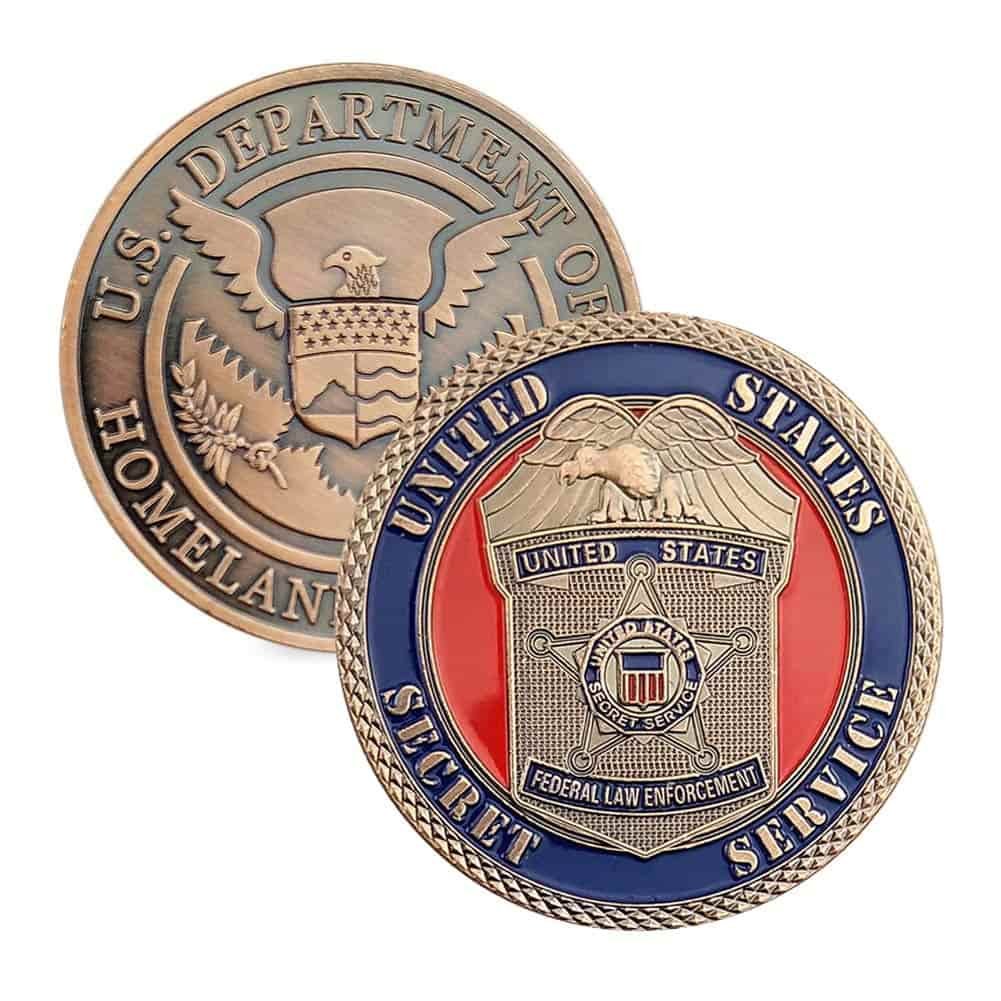
Challenge coins have been around since World War I, when military commanders handed out medallions to build morale and recognize exceptional service. Soldiers carried them as a badge of belonging — proof of who they were and what unit they served.
Fast-forward to 2002. The Department of Homeland Security was established in the wake of 9/11, bringing together over 20 federal agencies under one roof. Almost immediately, the challenge coin tradition followed. DHS leadership adopted coins as a way to recognize achievement, mark milestones, and reinforce a shared sense of mission across a massive, complex organization.
Today, DHS challenge coins function the same way a department of defense challenge coin does within the military — they’re tokens of identity, pride, and accomplishment. For traders and brands, that deep cultural meaning translates directly into sustained buying demand.
The DHS Universe: Key Sub-Agencies and Their Coins
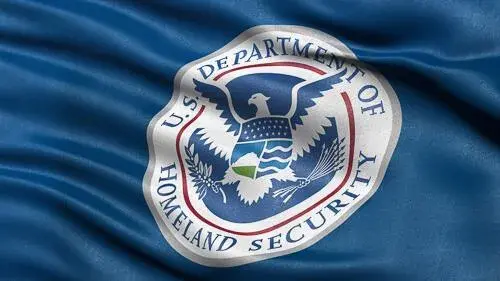
One of the most commercially appealing things about this product category is its range. DHS isn’t a single agency — it’s a network of specialized departments, and each one represents a distinct design theme and buyer audience.
Here’s a quick breakdown:
U.S. Customs and Border Protection (CBP) CBP coins are among the most sought-after in the DHS family. They typically feature border patrol imagery, the CBP seal, and mottos around vigilance and integrity. Strong sellers in both the collector market and government procurement channels.
TSA Challenge Coin The TSA challenge coin is a growing niche. Transportation Security Administration personnel work in one of the most public-facing security roles in the country, and coins recognizing their service resonate strongly — especially around milestone events like 10-year anniversaries or post-deployment recognition programs. For e-commerce sellers, TSA-themed coins perform well in the “first responder gifts” and “government employee appreciation” categories.
ICE Challenge Coins ICE challenge coins (Immigration and Customs Enforcement) carry bold, high-contrast design language — tactical imagery, shields, and agency mottos. These appeal strongly to the law enforcement collector community and make excellent recognition awards for ICE agents and inter-agency task forces.
FEMA Challenge Coin The FEMA challenge coin tells a different story. Where most DHS coins lean into security and enforcement themes, FEMA coins celebrate disaster response, community resilience, and humanitarian service. They’re frequently commissioned for deployment commemorations, retirement ceremonies, and inter-agency partnership events — which makes them a reliable niche for brands targeting emergency management and public safety markets.
United States Secret Service Secret Service coins occupy the premium tier of the DHS collector market. Exclusivity is built into the brand, and buyers who seek these out are willing to pay for quality craftsmanship. High-margin opportunity for retailers who can deliver on production standards.
Safety Challenge Coin The safety challenge coin is a broader category that spans multiple DHS agencies and related organizations. These coins are awarded for exemplary safety performance, zero-incident milestones, and safety training completions. They’ve found a strong secondary market in corporate safety programs and industrial companies that borrow the challenge coin tradition to incentivize workplace safety culture.
Design Elements That Drive Sales
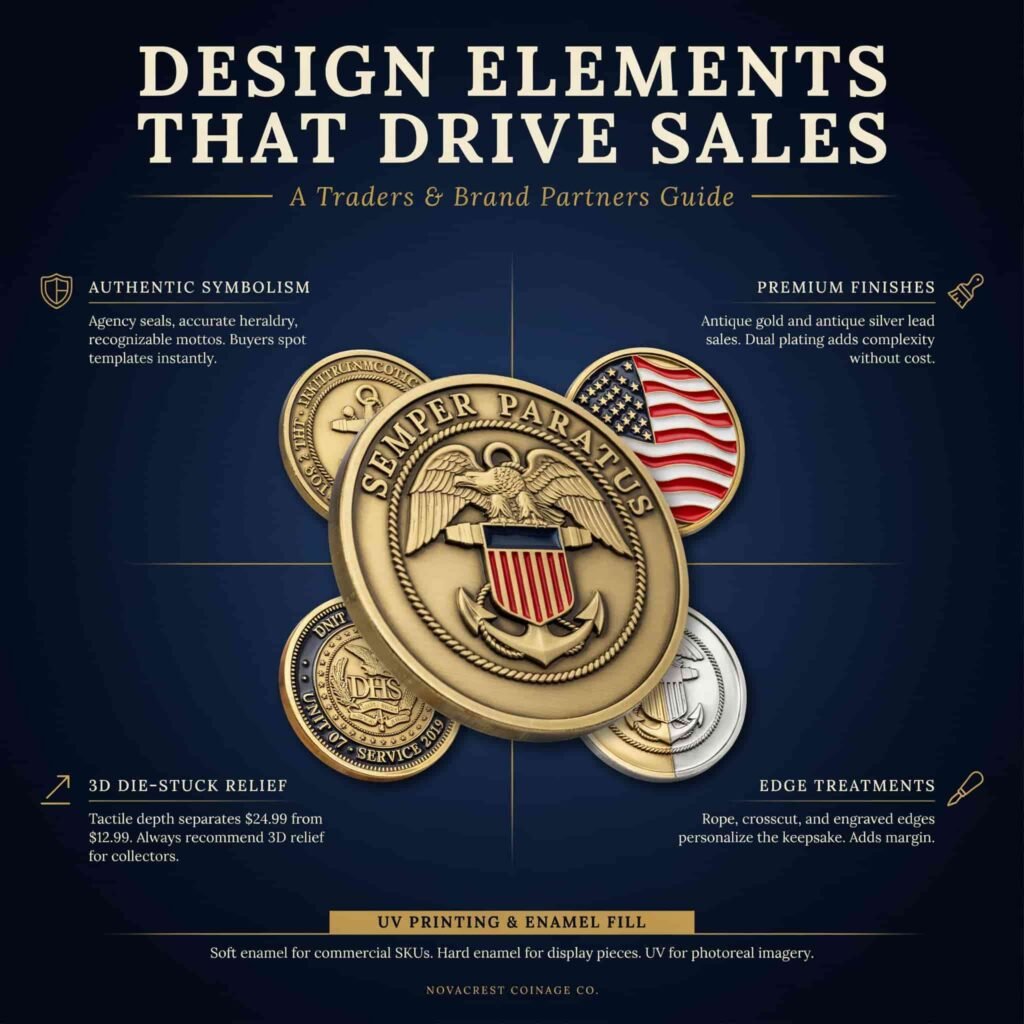
Here’s where it gets practical for traders and brand partners. Not all challenge coins sell equally well. The designs and finishes that resonate with buyers — both institutional and retail — share a few consistent traits.
Authentic symbolism matters most. Coins that incorporate genuine agency seals, recognizable mottos, and accurate heraldic imagery command higher perceived value. Buyers can tell the difference between a thoughtful design and a generic template. Invest in the artwork.
Finish drives the premium feel. Antique gold and antique silver remain the top-selling finishes for DHS-themed coins — they carry a historical, authoritative weight that polished finishes don’t. Dual plating (gold and silver on the same coin) is a popular upsell that adds visual complexity without significantly increasing production cost.
3D die-struck relief separates good coins from great ones. Flat designs look fine in a photo; 3D designs look impressive in hand. For retail buyers, this tactile quality is what makes customers reach for the $24.99 coin instead of the $12.99 one. Always recommend 3D relief for any SKU targeting the collector or gifting segment.
Edge treatments are an underrated differentiator. Rope edges, crosscut edges, and edge engraving (unit name, badge number, service year) turn a standard coin into a personalized keepsake. These add cost but also add margin.
UV printing and enamel fill are ideal when the design requires detailed imagery — a photorealistic American flag background, a specific mission patch, or a multi-color agency emblem. Soft enamel works well for most commercial applications; hard enamel is worth the premium for long-term display pieces.
Who’s Buying These Coins? Your End Customer Map
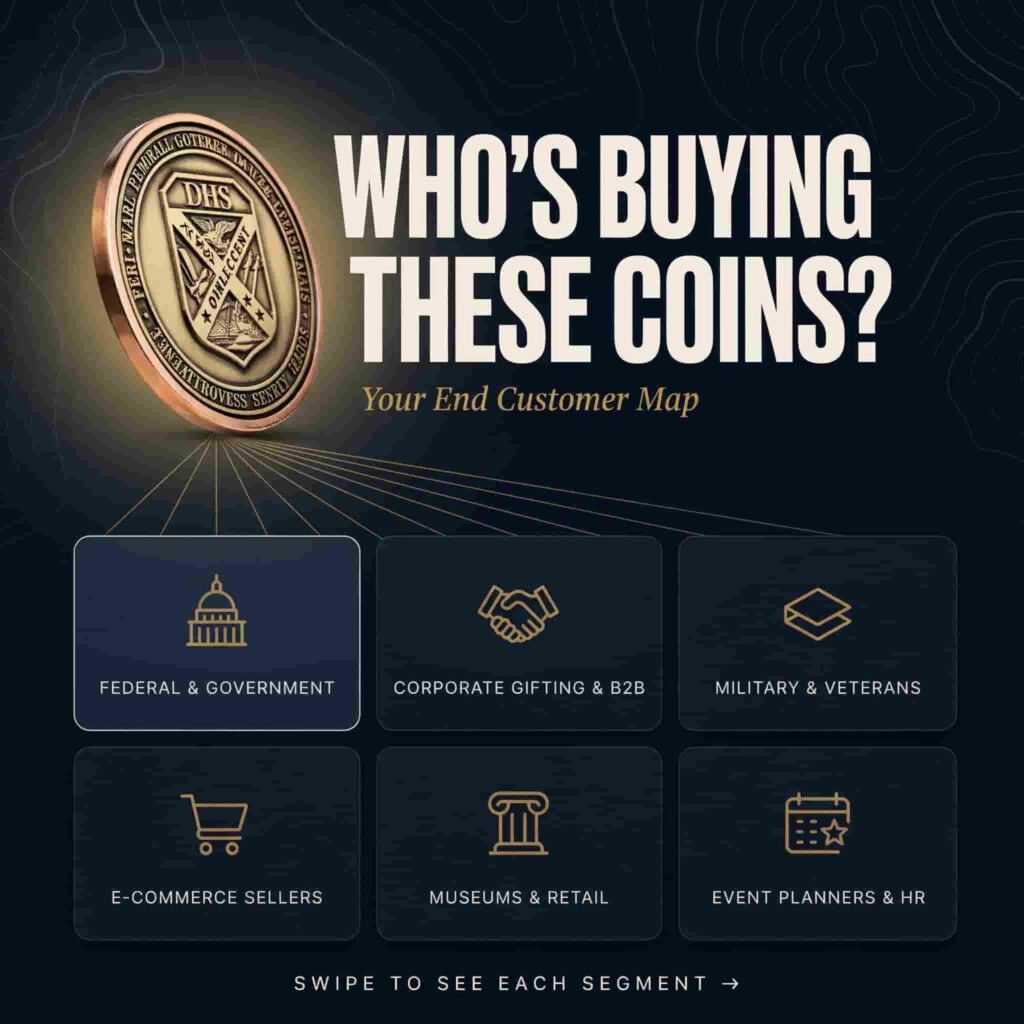
Understanding your buyers makes sourcing decisions much easier. Here are the main audience segments for DHS challenge coins:
- Federal agencies and government contractors — bulk institutional orders for recognition programs, training graduations, and inter-agency events. These buyers prioritize quality, accuracy, and reliable lead times.
- Corporate gifting and B2B markets — companies that partner with or support DHS agencies, plus security industry firms that use the challenge coin tradition for internal recognition. The safety challenge coin has particularly strong traction in industrial and logistics sectors.
- Military and veteran communities — collectors and tribute buyers who value heritage and craftsmanship. They research before they buy and pay attention to design authenticity.
- E-commerce sellers and Amazon merchants — challenge coins are an evergreen catalog product. DHS-themed coins perform consistently in the “patriotic gifts,” “law enforcement gifts,” and “government memorabilia” categories.
- Museums, visitor centers, and patriotic retail — souvenir-market buyers looking for unique, made-to-order products that go beyond the standard magnet or keychain.
- Event planners and HR departments — graduation ceremonies, retirement events, safety award banquets. These buyers often need coins on a recurring basis, making them excellent long-term clients.
How to Source Homeland Security Challenge Coins: A Step-by-Step Guide
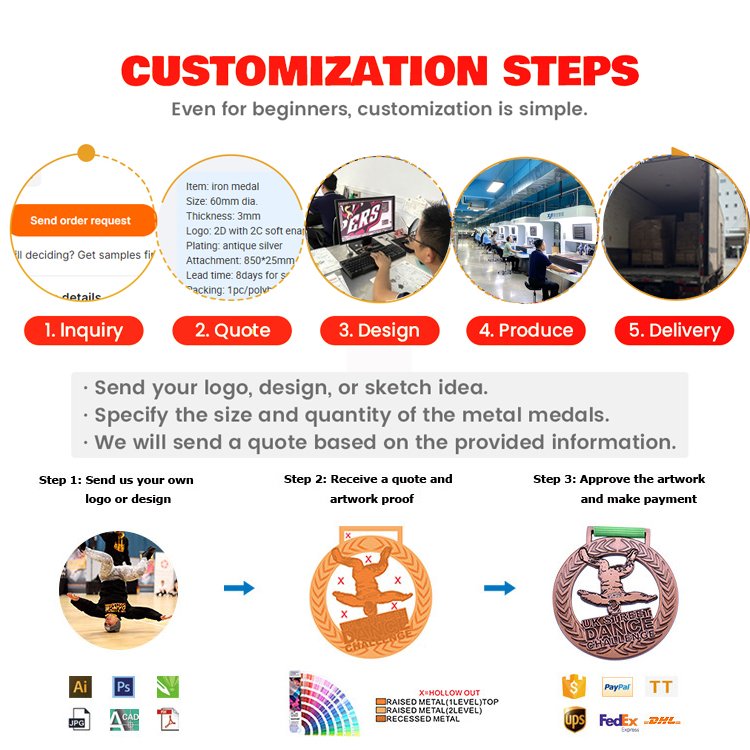
If you’re ready to add DHS challenge coins to your product line or client offering, here’s how the process works:
Step 1 — Define your use case. Are you sourcing for a government client, building an e-commerce SKU, or creating a branded gift for a corporate partner? The use case determines the design direction and the right quantity tier.
Step 2 — Choose your specs. Standard sizes run from 1.5″ to 3″ in diameter. For retail and gifting, 1.75″ and 2″ are the sweet spots. Decide on shape (round, custom badge shape, shield), plating, and enamel style upfront.
Step 3 — Submit your artwork. Most reputable suppliers — including UniqueCustomPins.com — offer free design services and unlimited revisions. You don’t need to come in with a finished file. A reference image, logo, or rough concept is enough to get started.
Step 4 — Review pricing tiers. Coin unit costs scale significantly with quantity. Here’s a general benchmark for a standard 1.75″ die-struck coin with soft enamel and antique gold plating:
| Quantity | Estimated Unit Cost |
|---|---|
| 50 pcs | ~$6.50–$8.00 |
| 100 pcs | ~$4.50–$6.00 |
| 300 pcs | ~$3.00–$4.00 |
| 500 pcs | ~$2.50–$3.20 |
| 1,000 pcs | ~$1.80–$2.50 |
For retail pricing, a typical 2.5x–4x markup is standard. A 100-piece run at $5/unit retail at $14.99–$19.99 each is a healthy margin for e-commerce.
Step 5 — Approve the digital proof. Before production begins, you’ll receive a detailed artwork proof. Review it carefully — check spelling on mottos, verify plating specifications, and confirm dimensions. Production turnaround is typically 14–21 days after approval.
Step 6 — Choose your packaging. For e-commerce, retail-ready packaging matters. Options range from simple poly bags (budget) to velvet presentation boxes (premium) to custom gift cases. For Amazon FBA, velvet boxes photograph well and reduce return rates.
Pricing at a Glance: What to Expect
Challenge coin pricing depends on four main variables: size, finish complexity, quantity, and add-ons (edge engraving, 3D relief, custom shape). As a general rule:
- Budget tier (flat design, single plating, 300+ pcs): $2.50–$4.00/unit
- Mid tier (3D relief, soft enamel, dual plating, 100–300 pcs): $4.00–$7.00/unit
- Premium tier (hard enamel, custom shape, edge engraving, packaging, under 100 pcs): $8.00–$14.00/unit
The premium tier is where margin lives for retail and gifting channels. Brands that invest in quality design and presentation consistently outperform generic options in both conversion rate and customer reviews.
Why Partner with UniqueCustomPins?
At UniqueCustomPins.com, we’ve built our business around one idea: making professional-grade custom products accessible for traders, brands, and e-commerce sellers of every size.
Here’s what that looks like in practice:
- Free artwork and unlimited revisions — no design fees, no revision limits until you’re happy
- Low MOQ starting at 50 pieces — perfect for testing a new SKU before committing to a full run
- Fast turnaround — standard 14-day production, with express options available
- Full product range — coins, lapel pins, patches, medals, and more, all from one supplier
- White-label and private-label capabilities — ideal for brands that want their own identity on the product
- Dedicated account support — a real person helps you from quote to delivery
Whether you’re placing your first order or scaling an existing challenge coin line, we make the process straightforward and the results worth displaying.
Ready to Get Started?
Homeland Security challenge coins represent a genuine commercial opportunity — a product with deep cultural meaning, broad buyer appeal, and healthy margin potential for anyone in the trading, branding, or e-commerce space.
The demand is there. The audience is engaged. All you need is the right manufacturing partner.
FAQs
What is the minimum order quantity for custom DHS challenge coins?
At UniqueCustomPins, the minimum order starts at just 50 pieces — low enough to test a new product concept without risk.
How long does production take?
Standard production is 14–21 days after artwork approval. Rush options are available for time-sensitive orders.
Can I create coins for specific DHS sub-agencies like TSA or FEMA?
Absolutely. We regularly produce TSA challenge coins, FEMA challenge coins, ICE challenge coins, and coins for many other federal agencies and departments. Our design team is experienced with agency symbolism and official seal guidelines.
Are these coins suitable for retail sale?
Yes. Many of our clients sell DHS-themed coins on Amazon, Etsy, and their own websites. We offer retail-ready packaging options to help your product stand out on the shelf or in a product listing.
What file format do I need to submit artwork?
We accept most common formats (AI, PDF, PNG, JPEG). If you don’t have artwork, our design team will create it from scratch — at no extra charge.