Launching a new custom product line? The choice between die casting and sand casting could be the difference between healthy profit margins and razor-thin returns. Whether you’re a trader sourcing 5,000 custom lapel pins, an e-commerce platform testing a new product concept, or a retail buyer evaluating manufacturing options, understanding these two casting methods is crucial for your bottom line.
Here’s a compelling fact: die casting can reduce per-unit costs by up to 40% for orders exceeding 1,000 units, while sand casting offers unbeatable flexibility for smaller batches. But which one is right for your business? Let’s dive into everything you need to know.
Quick Comparison: Die Casting vs Sand Casting at a Glance
| Factor | Die Casting | Sand Casting |
|---|---|---|
| Best for Volume | 1,000+ units | Under 1,000 units |
| Tooling Cost | $8,000-$80,000 | $500-$8,000 |
| Surface Finish | Excellent (Ra <120) | Moderate (Ra 220+) |
| Lead Time | 6-8 weeks setup, fast production | 1-2 weeks setup, slower production |
| Production Speed | 30-60 seconds per piece | 5-10 minutes per piece |
| Ideal Materials | Aluminum, Zinc, Magnesium | Almost any metal including steel |
What is Die Casting?
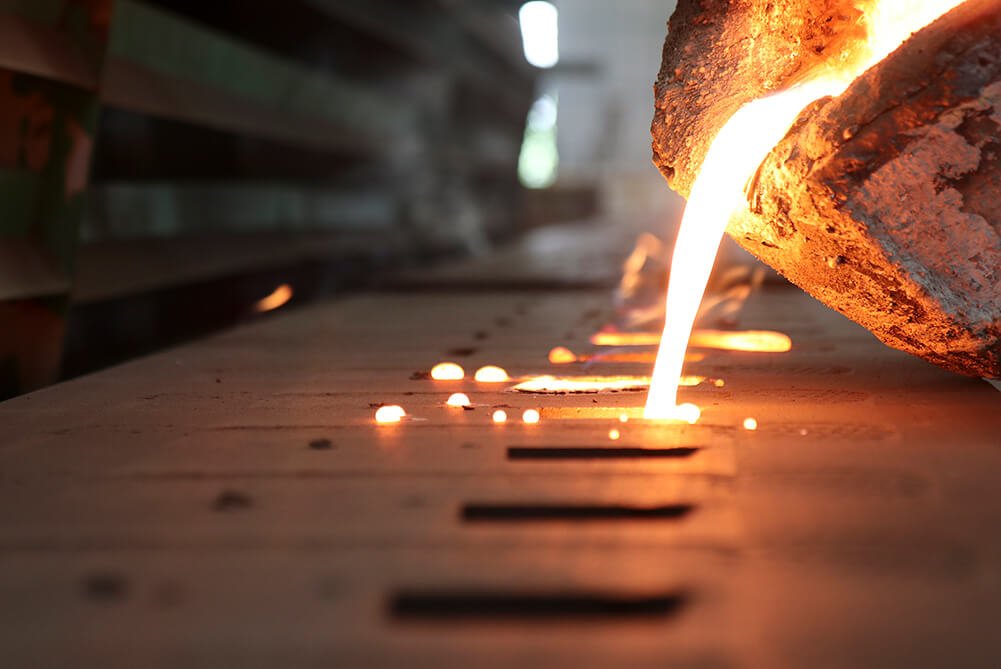
Die casting is a high-precision manufacturing process where molten metal is injected into a steel mold—called a die—under extreme pressure (ranging from 1,400 to 26,000 psi). Think of it as the espresso machine of metal casting: high pressure, fast results, and consistently excellent quality.
How Does Die Casting Work?
The process is surprisingly quick. Molten metal is heated to precise temperatures, then forcefully injected into pre-machined steel dies. Within 30 to 60 seconds, the metal solidifies, the mold opens, and your finished part is ready. The same die can be used thousands of times, making it ideal for high-volume production runs.
Best materials for die casting include aluminum alloys (perfect for lightweight custom products), zinc alloys (ideal for detailed custom pins and badges with intricate logos), and magnesium (for premium lightweight items that need exceptional strength-to-weight ratios).
For traders and brands, die casting shines in applications like custom lapel pins requiring 2,000+ units, branded promotional products for e-commerce platforms, and retail merchandise demanding tight tolerances and mirror-like finishes.
What is Sand Casting?
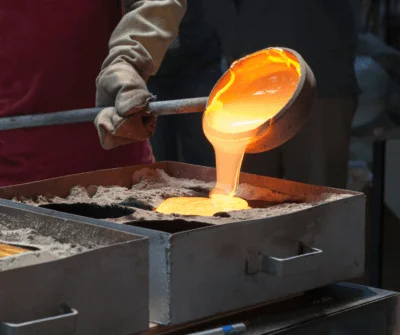
Sand casting takes a different approach entirely. This ancient technique—modernized with today’s technology—involves pouring molten metal into molds made from specially formulated sand mixtures. It’s the artisan bread of manufacturing: slower, more hands-on, but incredibly versatile.
How Does Sand Casting Work
Understanding how does sand casting work starts with creating a pattern (typically wood or plastic) that matches your desired product shape. This pattern is pressed into a mixture of sand and binding agents—this is where sand fusion in casting becomes critical. The sand particles bond together, creating a cavity that perfectly mirrors your pattern.
Once the pattern is removed, molten metal is poured into the sand cavity at atmospheric pressure (no high-pressure equipment needed). After cooling for 5-10 minutes, the sand mold is broken apart—yes, destroyed—to reveal your finished casting. Each new piece requires a fresh sand mold, which is why the sand die casting process is more labor-intensive than die casting.
The Advantages of Sand Casting
The advantages of sand casting are numerous, especially for certain business scenarios. First, sand casting cost is dramatically lower upfront—tooling investment ranges from just $500 to $8,000 compared to die casting’s $8,000 to $80,000. Second, you can work with almost any metal: bronze for premium custom products, brass for decorative items, aluminum for prototypes, and even steel alloys.
Third, sand casting handles size extremes beautifully—from delicate 50-gram badges to massive 500-pound industrial components. Fourth, it’s perfect for limited edition products where brand positioning emphasizes handcrafted quality. Finally, quick setup times mean you can test market demand with 100 units before committing to expensive die tooling.
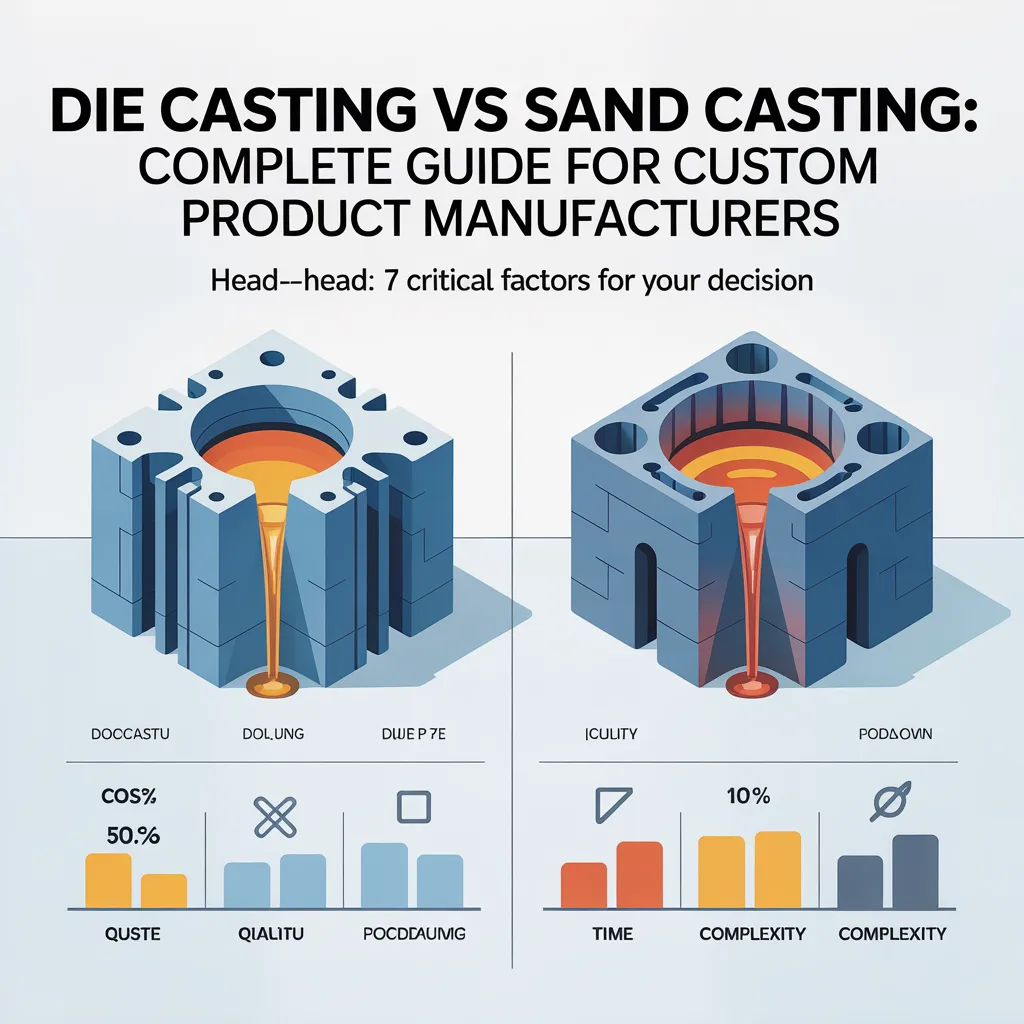
Head-to-Head: 7 Critical Factors for Your Decision
1. Production Volume & Cost Efficiency
Here’s where numbers tell the real story. For 100 units, sand casting saves approximately 60% compared to die casting because you avoid expensive steel die fabrication. At 1,000 units, you hit the break-even point where both methods cost roughly the same per piece. Beyond 5,000 units, die casting pulls ahead, potentially reducing costs by 40% through economies of scale.
For traders and wholesalers: Calculate your realistic annual volume. If you’re consistently ordering 1,500+ units quarterly, die casting pays for itself within the first year.
2. Product Quality & Surface Finish
Die casting delivers packaging-ready parts with surface finishes of Ra 120 or better—smooth enough to feel premium to the touch and perfect for direct branding without additional polishing. Sand cast products typically achieve Ra 220+, which works perfectly fine for many applications but may require light tumbling or finishing for retail-shelf presentation.
For retail buyers: Consider your display strategy. Die-cast items can go straight from production to blister packs, while sand-cast pieces might need one extra finishing step.
3. Design Complexity & Detail Resolution
Die casting excels at thin-walled designs (down to 1-2mm) and intricate logo details—think fine text, complex patterns, and sharp edges. Sand casting offers flexibility with larger geometries and accommodates design changes more affordably during development phases.
For brands and marketing teams: If your custom pin design features a detailed corporate logo with fine lines, die casting ensures every element reproduces crisply across thousands of units.
4. Time to Market
The sand die casting process offers rapid initial setup (1-2 weeks for patterns) but slower per-unit production. Die casting requires 6-8 weeks for steel die fabrication but then cranks out 1,000 pieces in days rather than weeks.
For e-commerce platforms: Planning a holiday campaign? Order die-cast products 10-12 weeks ahead. Testing a new product concept? Sand casting gets samples in your hands within 3 weeks.
5. Material Versatility
This is where sand casting truly shines. While die casting is limited to non-ferrous metals (aluminum, zinc, magnesium), sand casting handles ferrous alloys, bronze, brass, and specialty metals. This matters when customer preferences shift or when premium positioning requires specific materials.
6. Scalability Considerations
Many successful e-commerce brands start with sand casting for their first 500 units, validate market demand, then transition to die casting for scale. This hybrid approach minimizes risk while preserving future cost efficiency.
7. Environmental Impact
Die casting generates minimal material waste and offers high material utilization rates (95%+), appealing to eco-conscious brands. However, it requires more energy due to high pressures and temperatures. Sand casting produces more waste from one-time-use molds but consumes less energy overall.
Investment Casting vs Sand Casting Comparison
Some readers ask about investment casting as a third option. In an investment casting vs sand casting comparison, investment casting (also called lost-wax casting) offers superior surface finish and detail—even better than die casting—but at premium costs. It’s ideal for jewelry, dental prosthetics, and aerospace components.
For most traders, brands, and e-commerce platforms producing promotional products, custom pins, or retail merchandise, investment casting is cost-prohibitive unless your product positioning is ultra-premium with price points to match.
Real-World Scenarios: Which Process Wins?
Scenario 1: E-commerce Brand Launch You’re launching a 5,000-piece custom enamel pin collection. Die casting delivers consistent quality, fast production (all 5,000 units completed in two weeks), and 35% cost savings versus sand casting once tooling is amortized.
Scenario 2: Limited Edition Artisan Product A boutique brand wants 250 bronze badges for a heritage collection. Sand casting provides the handcrafted aesthetic, low upfront investment ($1,200 for patterns vs. $25,000 for dies), and allows for minor design tweaks between batches.
Scenario 3: Product Testing Phase An e-commerce platform tests three badge designs (200 units each). Sand casting enables affordable parallel testing with minimal financial commitment, then successful designs transition to die casting for full-scale rollout.
Expert Tips for Working with Manufacturers
Always request pre-production samples, especially for sand cast products where individual mold variations can occur. For die casting, verify the manufacturer’s quality certifications—ISO 9001:2015 is standard for serious suppliers.
Negotiation insight for traders: Many manufacturers offer discounted tooling if you commit to volume guarantees. A typical offer: 50% off die costs with a 10,000-unit annual commitment.
Making Your Decision
The die casting vs sand casting decision ultimately boils down to three questions:
- How many units will you order annually? Less than 1,000 favors sand casting; more than 1,000 favors die casting.
- What’s your timeline? Need parts in 3 weeks? Sand casting. Planning 10+ weeks ahead for a big launch? Die casting.
- What’s your quality requirement? Retail shelf presentation demanding perfection? Die casting. Artisan positioning where slight variations add character? Sand casting.
For most traders and e-commerce platforms, the winning strategy combines both: sand casting for market validation and small batches, die casting for proven winners at scale. This approach minimizes risk while maximizing long-term profitability.
Ready to move forward with your custom product manufacturing? Understanding these processes puts you miles ahead of competitors still guessing which method to use. Calculate your expected volumes, define your quality standards, and request quotes from qualified manufacturers (Unique Custom Pins) specializing in your chosen process.
The right casting method isn’t just a manufacturing decision—it’s a strategic advantage that impacts your margins, delivery speed, and product quality for years to come. Choose wisely, and your custom products will stand out in an increasingly crowded marketplace.
FAQs
What’s the minimum order quantity for each process?
Sand casting accepts orders as small as 10-50 units economically. Die casting becomes cost-effective starting around 1,000 units, though some suppliers quote from 500 units.
How much does sand casting cost per unit?
Sand casting cost typically ranges from $5-25 per piece for small custom products (under 200g), varying with complexity and material. Die casting ranges from $2-12 per piece for similar items once tooling is amortized.
Which process is better for custom pins and badges?
For orders under 1,000 units or limited editions, sand casting wins. For 1,000+ units requiring perfect consistency and mirror finishes, die casting is superior.
Can I switch from sand casting to die casting later?
Absolutely—and it’s recommended. Validate your design and market demand with sand-cast prototypes, then scale with die casting. Your CAD files transfer directly; only the manufacturing method changes.