So you’ve decided to order custom medals — great choice. Whether you’re sourcing for a corporate awards ceremony, a marathon, a school sports day, or building a retail product line, medals are one of the most powerful physical tokens of recognition you can offer.
But here’s the thing: size matters more than most buyers realize. Order too small, and recipients feel underwhelmed. Order too large, and your budget suffers. Get it just right, and your medal becomes something people keep, display, and talk about. This guide helps traders, brands, e-commerce platforms, and retail buyers make smart, scalable sizing decisions. Let’s break it all down.
How Are Custom Medal Sizes Measured?
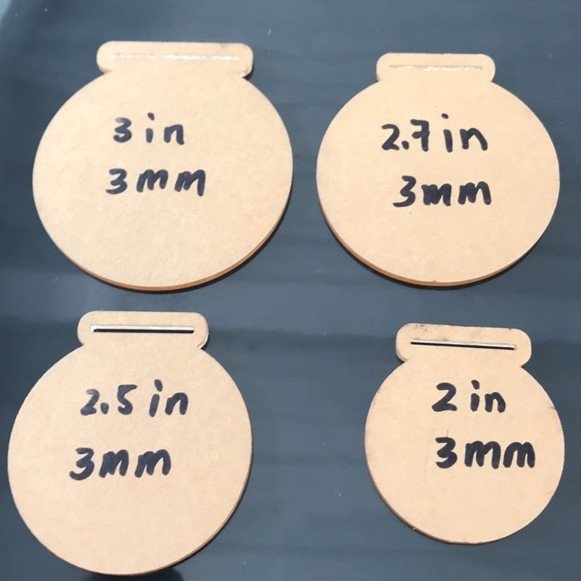
Before diving into recommendations, let’s get the basics right — because a simple miscommunication with your supplier can mean re-ordering thousands of units.
Medal size is measured by diameter for round medals, or by the longest edge for irregular and custom-shaped medals. The two most common unit systems you’ll encounter are:
- Inches — standard in the US market
- Millimeters (mm) — standard in international, EU, and Australian markets
They’re the same thing expressed differently, but confusion between the two is surprisingly common in bulk orders. Always confirm the unit system with your supplier upfront.
Quick conversion reference:
| Inches | Millimeters |
|---|---|
| 1.5″ | 38mm |
| 2″ | 50mm |
| 2.5″ | 63mm |
| 3″ | 75mm |
| 4″ | 100mm |
The Standard Custom Medal Size Chart
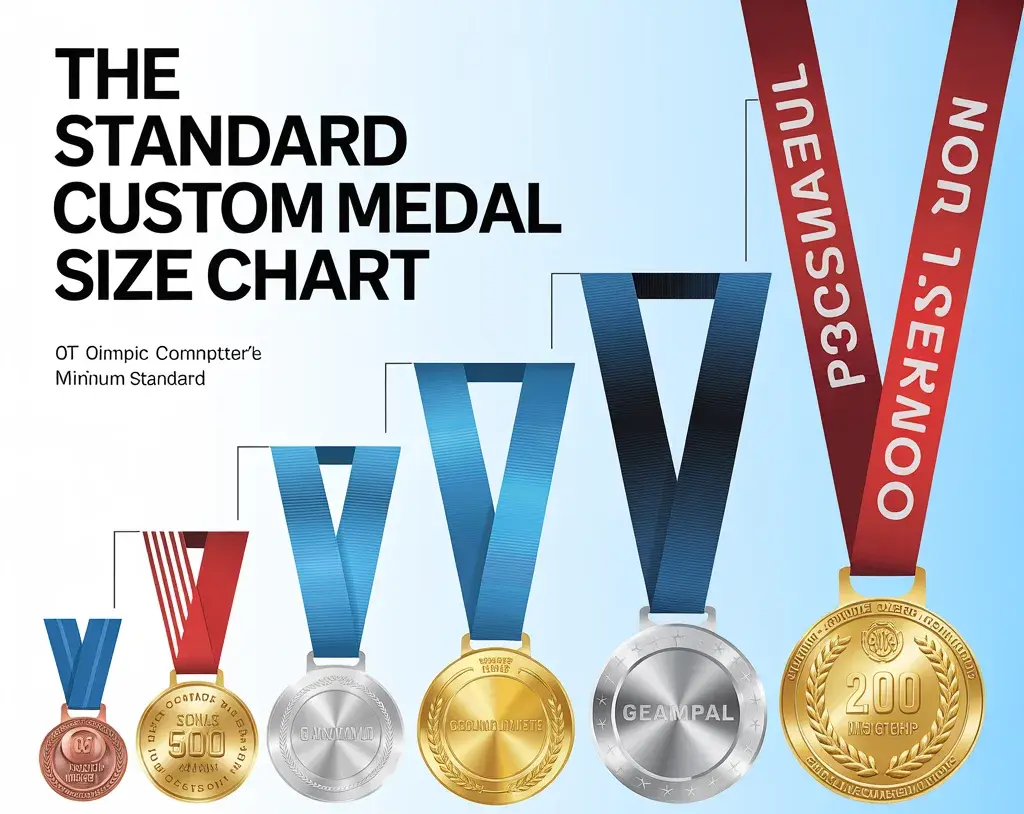
Here’s the full picture across the common size categories, along with the typical use cases for each:
| Size Category | Diameter (inches) | Diameter (mm) | Typical Use Case |
|---|---|---|---|
| Small | 1.5″ – 2″ | 38 – 50mm | Kids’ events, participation medals, fun runs |
| Medium | 2″ – 2.5″ | 50 – 63mm | School sports, clubs, half marathons |
| Standard | 2.5″ – 3″ | 63 – 75mm | Corporate awards, sports leagues, branded merchandise |
| Large | 3″ – 4″ | 75 – 100mm | Full marathons, major competitions, premium awards |
| Statement | 4″ – 5″+ | 100mm+ | Championship events, collector editions, display medals |
Worth knowing: The International Olympic Committee sets a minimum diameter of 60mm for Olympic medals — which tells you a lot about where “serious” starts on the size scale.
For most retail and corporate bulk orders, 2.5 inches (63mm) is the industry sweet spot — large enough to carry design detail and feel impressive, small enough to ship efficiently and wear comfortably.
Don’t Forget Thickness — The Hidden Dimension
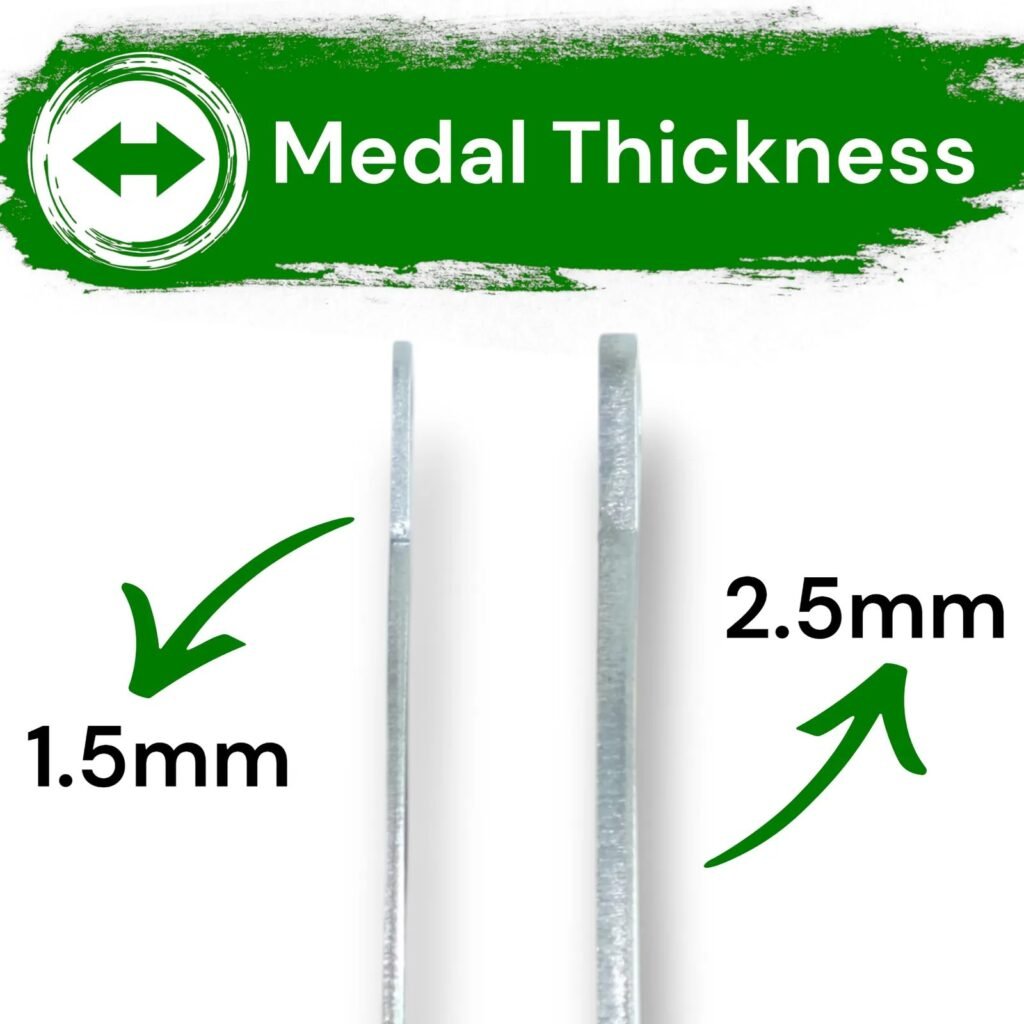
Most buyers obsess over diameter and completely overlook thickness. That’s a mistake, because thickness is what makes a medal feel expensive — even when the design is identical.
Here’s why: humans instinctively associate weight with value. Heavier = better. Scientists have actually studied this effect (yes, really — it shows up in product psychology research), and it explains why a thicker medal always feels more prestigious to the person holding it.
The most common thicknesses are:
| Thickness | Feel & Use |
|---|---|
| 2mm | Lightweight, budget-friendly; good for kids or large 100mm medals |
| 3mm | Industry standard — solid feel without excessive cost |
| 4mm | Premium feel; popular for podium/corporate awards |
| 5mm+ | High-end, statement weight; used for flagship events and collector pieces |
For bulk buyers: thickness directly affects material cost, so it’s a useful lever when managing budgets across tiered order sizes. A 100mm / 2mm combination, for instance, gives you a visually bold medal while keeping weight and cost in check.
Choosing the Right Medal Size by Occasion
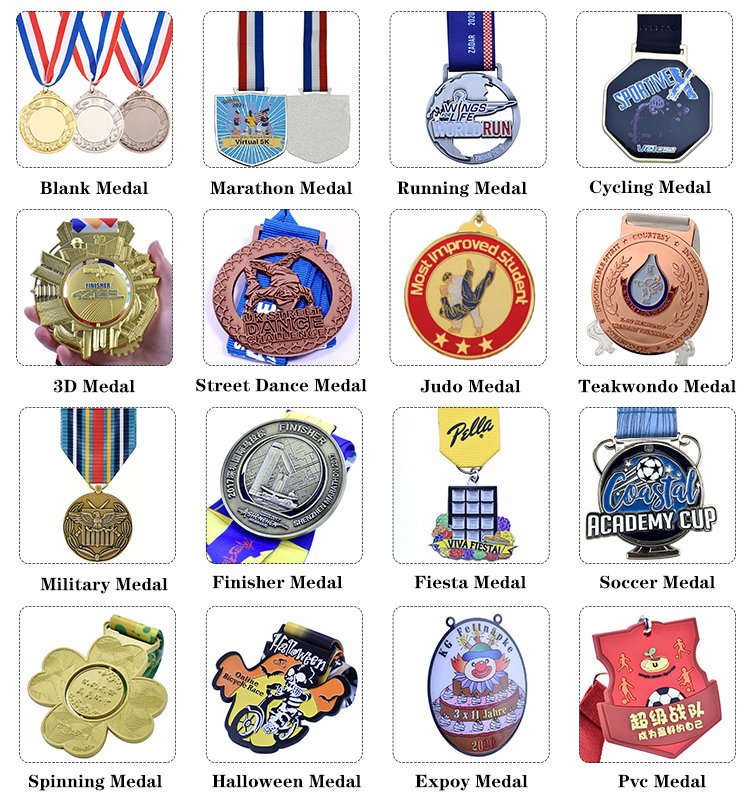
Sports & Running Events
Running medals are the most ordered category globally, and buyer data backs this up clearly. For running medals, roughly 40% of bulk buyers choose 2.5 inches, 35% go with 2 inches, and about 24% opt for 3 inches.
A practical rule of thumb used by many event organizers: half marathon = 50–63mm; full marathon = 70–80mm. Bigger achievements deserve bigger recognition — and your participants will absolutely notice the difference.
Corporate & Employee Recognition
For corporate awards, the recommended range is 2.5″ to 3″ (63–75mm), 3–4mm thick. This gives you enough surface area to clearly display a company logo or event branding, and the added thickness gives the medal a quality feel that matches the gravitas of the occasion.
One practical note: medals are almost always photographed at award ceremonies. A larger medal photographs better and looks more impressive in both print and social media materials — which matters for brand visibility.
Academic & School Awards
Schools typically favor 1.5″ to 2.5″ (38–63mm) medals. They’re lightweight enough for kids to wear comfortably during events, and the smaller size keeps per-unit costs down when ordering in high volumes. Perfect for large-scale academic competitions or end-of-year ceremonies.
Retail & E-commerce Products
This is where smart sizing becomes a commercial strategy. If you’re building a product line of branded medals, consider offering three size variants per design — small, standard, and large. This creates a natural “Good / Better / Best” tiering that increases average order value and gives retail buyers a clear upsell path.
Also keep packaging in mind: larger medals require bigger boxes and display hooks, which affects your total landed cost per unit.
Commemorative & Collector Editions
For medals intended to be displayed rather than worn, go 3 inches (75mm) or larger, with a thickness of 4–5mm. The extra diameter gives you room for intricate engraving, sculptural detail, or multi-color finishes. These are the medals that end up framed on walls — which means they need to look the part.
How Medal Size Impacts Your Bulk Order Budget
Here’s the honest math: price scales with both diameter and thickness. More metal means higher cost per unit. That’s straightforward.
What’s less obvious is how you can use size strategically to manage your budget without sacrificing impact:
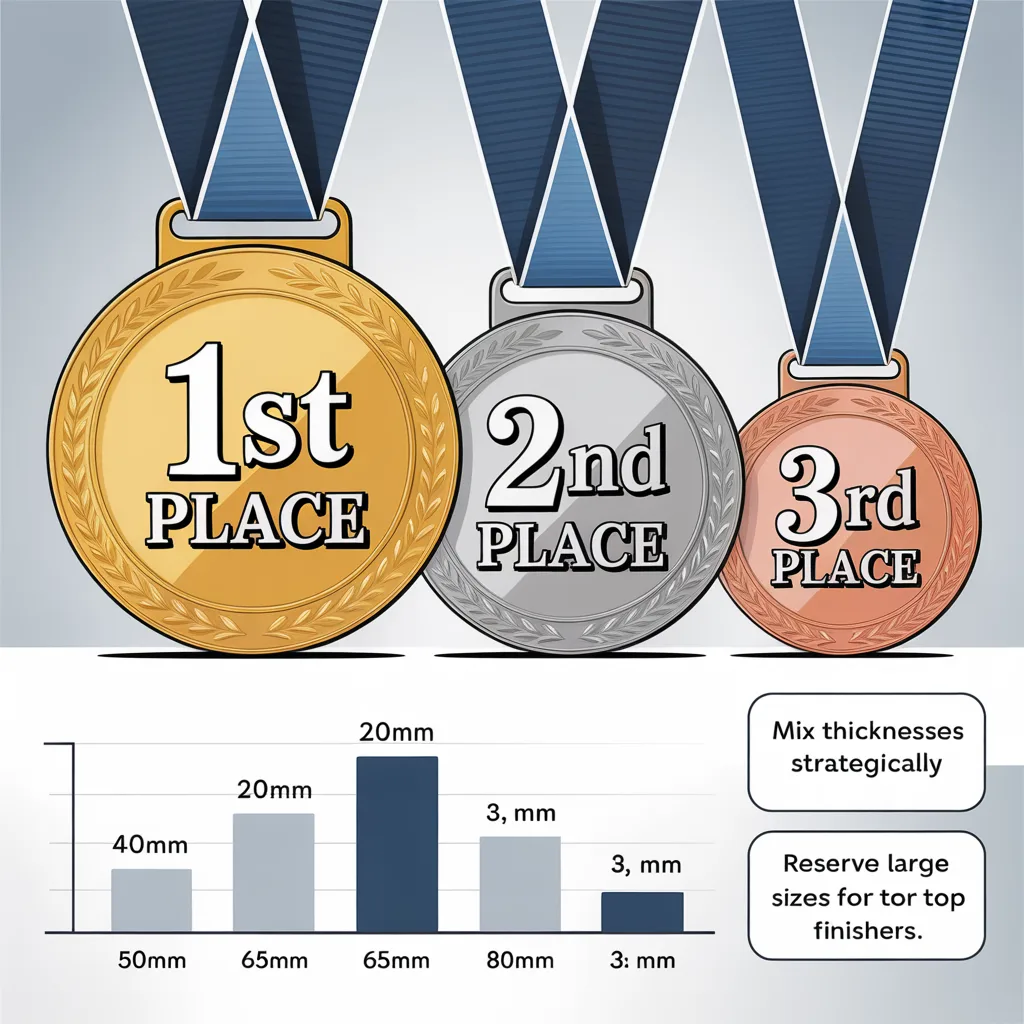
- Use descending sizes across award tiers. A larger 1st-place medal, a mid-size 2nd-place medal, and a smaller 3rd-place medal reinforces the prestige hierarchy while reducing total material costs. Recipients see the difference immediately — and appreciate it.
- Mix 2mm and 3mm thickness across your order tiers rather than going thick across the board.
- Keep participant medals at 50mm and reserve the larger sizes for top finishers or special recognition categories.
Design Complexity vs. Medal Size
Here’s a question worth asking before you finalize your size: how complex is your artwork?
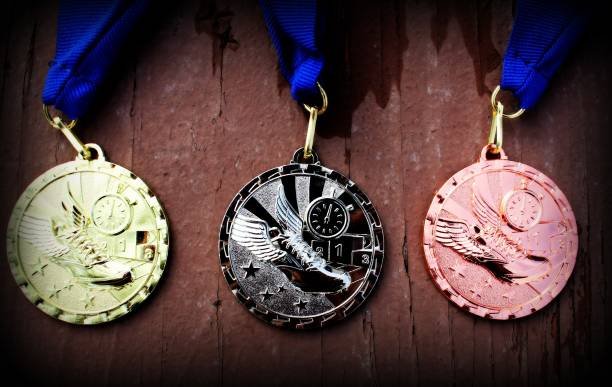
Detailed logos, fine text, multi-element designs — all of these need space to breathe. Trying to squeeze a complex design onto a 1.5″ medal is a recipe for a blurry, unreadable mess once it’s struck in metal.
Minimum recommended size for logo clarity: 2 inches (50mm). If your design includes layered elements or fine typography, step up to 2.5″ or 3″ to preserve visual quality.
Always ask your supplier for a scaled proof — ideally at actual print size — before approving large-volume production. This single step prevents the most common (and costly) bulk ordering mistake.
How to Make a Medal: A Quick Look at the Process
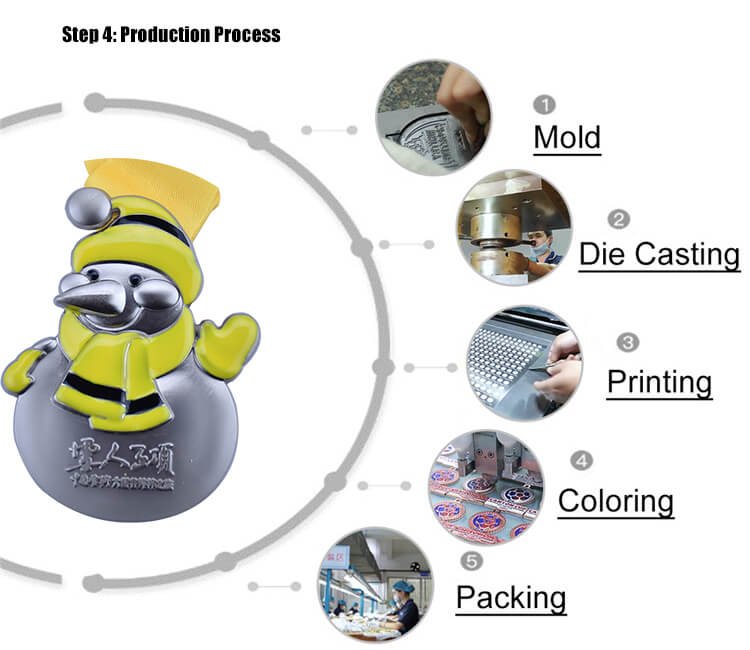
Understanding how to make a medal helps you communicate better with suppliers and set realistic expectations on lead times and quality. Here’s the basic production flow:
- Design approval — artwork is reviewed for detail, size fit, and producibility
- Die or mold creation — a master mold is cut based on your approved design
- Metal stamping or casting — the medal body is formed from zinc alloy, iron, or brass
- Plating — gold, silver, bronze, antique, or custom finishes are applied
- Color fill (optional) — enamel or epoxy is added for colored design elements
- Ribbon attachment — custom ribbons are sewn or clamped to the medal bail
- Quality inspection & packaging — medals are checked, packaged, and shipped
Knowing this process also helps you understand why size affects lead time: larger medals with complex designs require more time in the die-cutting and finishing stages. Plan accordingly for time-sensitive events.
Quick Decision Guide: Which Medal Size Is Right for You?
Still not sure? Run through this checklist:
- ✅ Ordering for kids or fun runs? → 50mm diameter, 2mm thick
- ✅ 500+ medals for a half marathon? → 63mm, 3mm thick
- ✅ Corporate award ceremony? → 70mm, 4mm thick
- ✅ Flagship race or championship event? → 75–80mm, 3–5mm thick
- ✅ Retail product with display value? → 100mm, 2–3mm thick
- ✅ Collector or commemorative edition? → 3 inches (75mm) or larger, 4–5mm thick
Final Thoughts
Choosing the right custom medal size isn’t just a spec decision — it’s a brand decision. The weight in someone’s hand, the scale of it in a photograph, the way it sits in a display case: all of these experiences are shaped by the dimensions you choose before production even starts.
For bulk buyers, the formula is simple: match the size to the prestige of the award, the age of the recipient, and the complexity of your design. Use thickness as your secondary lever for perceived quality. And always, always request a physical sample before committing to a large run.