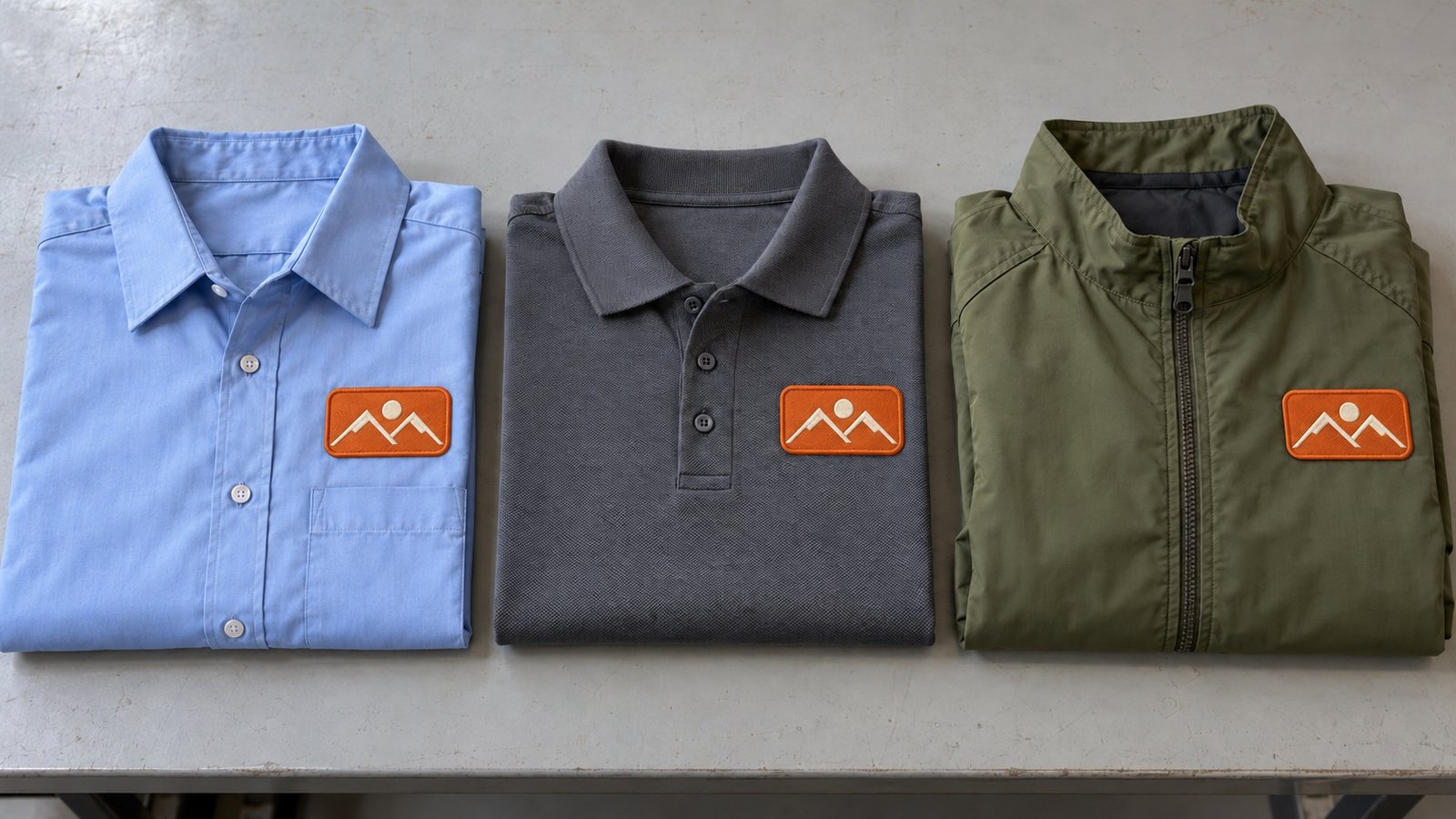








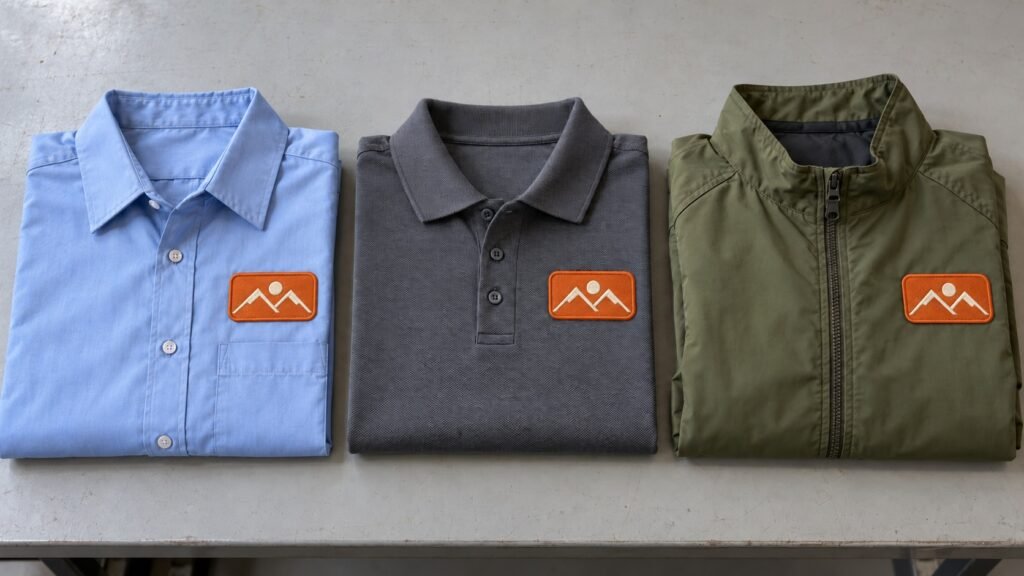
A company ordering patches for work shirts, polos and jackets may want the same logo on every garment. But matching artwork does not mean one backing will suit the entire order. Fabric, care requirements and application conditions can differ between garments.
Choosing between iron-on and sew-on patches starts with those differences. The practical question is whether one specification can cover your uniform range or whether different garments need different backings. Establishing that before ordering helps you allocate quantities, compare installation costs and keep future replacements consistent.
Quick Answer
Consider iron-on patches when the backing is compatible with the garment and your installer can meet the specified heat-application conditions. Consider sew-on patches when you want attachment without relying on heat-activated adhesive, provided the garment allows stitching. Both options must suit the required care routine. A mixed uniform order can use matching front designs with separately specified backings.
What Is the Difference Between Iron-On and Sew-On Patches?
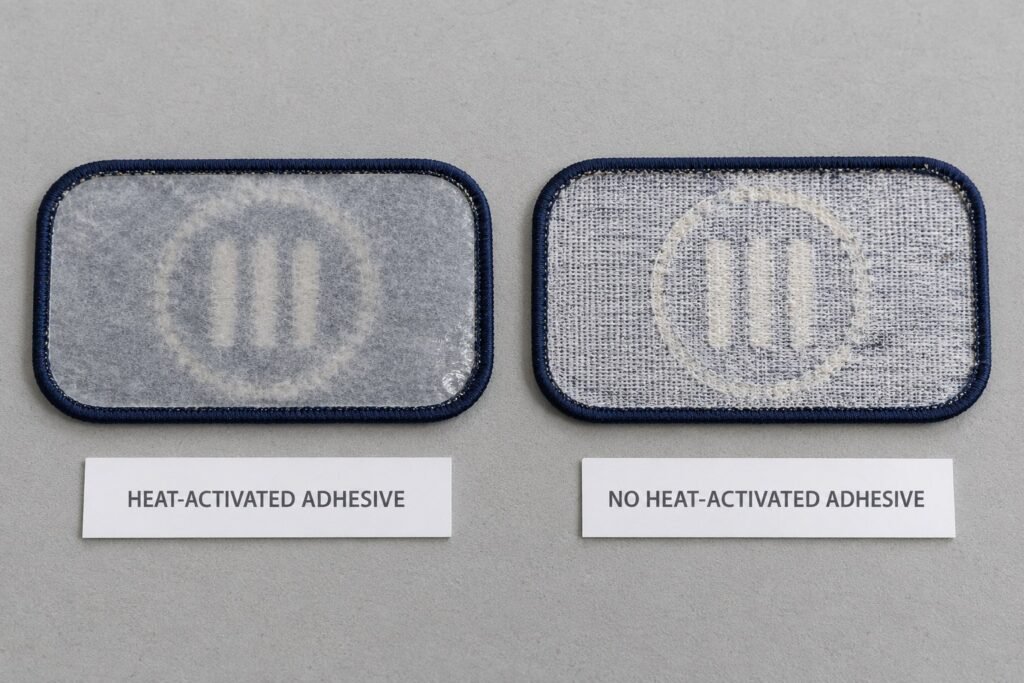
Iron-on patches attach through heat-activated adhesive; sew-on patches attach through stitches. The difference concerns the backing and attachment method, not necessarily the logo design. When ordering custom patches for uniforms, you can request matching artwork with different backing specifications.
“Iron-on” does not automatically mean a household iron is suitable. Some products require a heat press with specified temperature, time and pressure. The two attachment methods are not mutually exclusive: a compatible adhesive-backed patch may also be sewn on.
| Comparison | Iron-On Patches | Sew-On Patches |
|---|---|---|
| Attachment | Heat-activated adhesive bonds the patch to compatible fabric. | Stitches secure the patch to the garment. |
| Application conditions | Requires suitable fabric and the specified equipment, temperature, time and pressure. | Requires a garment that permits stitching and an accessible attachment area. |
| Visible appearance | Does not require an attachment stitch line around the edge. | Attachment stitches may be visible around the patch border. |
| When to consider it | The backing is approved for the garment and the installer can meet its application requirements. | Mechanical attachment is preferred and the garment construction allows sewing. |
| Details to confirm | Backing specification, application instructions and wash suitability. | Patch border, sewing suitability, placement and care requirements. |
Can One Backing Work Across Shirts, Polos and Jackets?
One backing may suit several garments, but “shirt,” “polo” and “jacket” are not enough to make that decision. Record each garment model separately, including fabric composition, construction and care instructions. The logo artwork, colors and finished patch size can remain consistent while backing specifications vary.
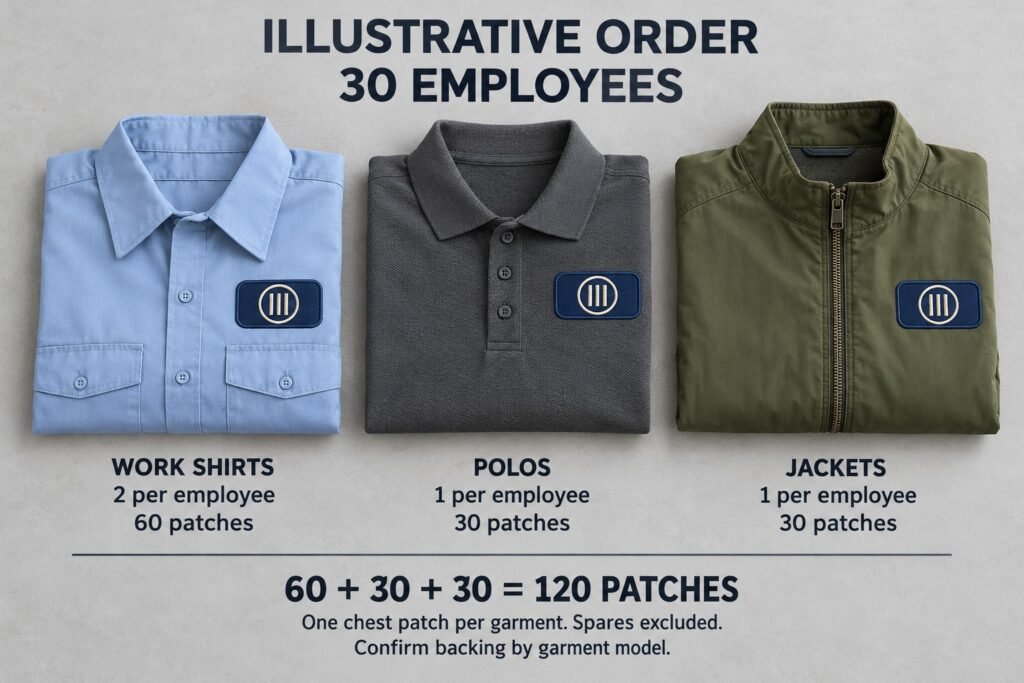
Illustrative example: A company equips 30 employees with two work shirts, one polo and one jacket each. With one chest patch per garment, the base requirement is 120 patches, excluding spares. Share the following schedule with both the patch supplier and installer. If a category contains different garment models, add separate rows.
| Garment | Base Patch Quantity | Details to Confirm Before Choosing Backing |
|---|---|---|
| Work shirts | 60 | Fabric composition, care requirements and exact chest placement. |
| Polos | 30 | Stretch, surface texture, heat compatibility and sewing suitability, including puckering or distortion. |
| Jackets | 30 | Coatings, lining access, application area and garment restrictions. |
| Total | 120 | Allocate quantities by confirmed backing version; list spares separately. |
For illustration, if heat application is confirmed for the shirts and polos, while sewing is specified for the jackets, the order becomes 90 adhesive-backed patches and 30 sew-on patches. This is an example of quantity allocation, not a general recommendation by garment type.
If a jacket cannot be heat pressed easily, sewing is not automatically suitable. Coatings, lining access and the garment manufacturer’s decoration restrictions still need consideration.
How Should Washing and Drying Affect Your Choice?
“Washed frequently” is not a complete specification. Uniforms washed at home may face different conditions from those handled by a commercial laundry. Add the actual care routine for each garment model to your order schedule:
- Laundry setting: Home washing or a commercial service.
- Wash temperature: The actual cycle setting, not just “warm” or “hot.”
- Drying method: Air drying or tumble drying, including heat settings.
- Other treatments: Detergents, bleach, dry cleaning or specialist processes.
Heat-seal backings can have different wash specifications. A product intended for domestic laundering should not be assumed suitable for an industrial laundry process. Equally, a wash rating published for one supplier’s product does not establish performance for another.
Sewing secures the patch, but it does not prevent fading or fabric damage caused by unsuitable washing or drying. Ask for care instructions that apply to the supplied patch and backing, then check that they are compatible with the uniform’s care label. If the requirements conflict, resolve that before installation.
Who Will Attach the Patches—and What Does That Add to the Cost?
A patch quotation may cover only loose patches. Before comparing prices, establish who will deliver uniforms ready to wear and which tasks remain your responsibility. A lower patch price does not necessarily mean a lower cost per finished garment.
| Purchasing Arrangement | Responsibility to Confirm |
|---|---|
| Loose patches only | The buyer arranges application and obtains instructions for the specified backing. |
| Application by an apparel decorator | The decorator confirms garment compatibility, equipment requirements and application charges. |
| Finished uniforms with patches attached | The garment supplier states whether its quotation includes patches, placement, attachment and final packing. |
Total applied cost = patches + application + handling + relevant delivery costs
Use these categories to compare quotation scope; they may be bundled rather than charged separately. Ask whether garment sorting, unpacking, repacking or shipping between suppliers creates additional costs. Compare the same quantities, placement requirements and delivery scope, and identify who receives the garments, applies the patches and returns the completed uniforms.
When Does Heat Application Plus Sewing Make Sense?
A compatible adhesive-backed patch may be heat applied and then stitched around the edge when the installer specifies both steps. Heat application can hold the patch in position during sewing, but the patch construction, backing and garment must support the combined method. The border also needs a suitable sewing area without interfering with important artwork.
The extra operation adds labor and may leave a visible stitch line. Agree on thread color, stitch placement and application charges, and ask what the additional sewing is intended to achieve. It should not be an automatic upgrade. If the garment cannot tolerate the required heat, adding stitches does not make the heat-application step suitable.
How Do You Keep Replacement Uniforms Consistent?
Saving the logo file alone is not enough for reorders. When new employees join, garments wear out or suppliers change, the next order should identify which patch specification was used for each garment model. Keep a brief record so “same as last time” refers to documented details. Our patch design guide explains the artwork, size and color decisions to establish for the original order.
| Record to Retain | Why It Matters |
|---|---|
| Artwork version and finished dimensions | Provides a reference for matching the logo layout and patch size. |
| Color references and approved physical sample | Provides a comparison point for subsequent batches. |
| Backing version | Helps prevent patches intended for different applications from being mixed. |
| Garment brand, model and fabric | Helps establish whether the previous specification remains suitable. |
| Placement and orientation | Documents where and how the patch should be positioned. |
| Application instructions and care requirements | Gives future suppliers and installers the relevant specifications. |
Reference this record when requesting replacements and identify changes explicitly. An approved sample supports comparison; it does not guarantee identical color across batches. If the garment model or fabric changes, reassess the attachment method before reusing the previous backing specification.
FAQs About Patches for Staff Uniforms
Can the same logo patch be ordered with different backings?
You can request matching front artwork with separate backing versions, subject to availability for the chosen patch construction. List quantities by version and ask for clear package labels so installers can identify which patches belong with each garment.
Can employees attach uniform patches with a household iron?
Only if the patch instructions permit it and the garment is compatible. Do not assume a household iron can meet a heat-press specification. If employees will apply their own patches, establish the permitted method and provide the corresponding instructions before distribution.
Can patches be removed when uniforms are reassigned?
Removal may be possible, but a clean result is not guaranteed. Sewing can leave needle holes, while adhesive may leave residue or alter the fabric. If reassignment is expected, discuss removal requirements before ordering and assess a representative garment.
Do sew-on patches need adhesive backing?
No. Stitching does not require heat-activated adhesive, although a sew-on patch may still have a stabilizing backing. Specify whether you want a version without heat-activated adhesive or an adhesive-backed patch that will also be stitched.
Plan Your Uniform Patch Order
Choose the backing around the garment, care routine and available installation method. Where those conditions differ, specify separate versions rather than assuming one backing will cover the entire order.
To start an inquiry, send your logo, garment photos or product links, quantities by garment type and required delivery date. If you are unsure about the backing, include what you know about washing, drying and who will attach the patches.