








If you sell custom pins, enamel badges, or promotional metal products, China is likely already on your radar — the world’s manufacturing powerhouse, shipping over $3.5 trillion in goods yearly. For traders, brands, and e-commerce sellers, that’s real opportunity. But knowing how to purchase wholesale from China the right way differs from simply ordering online. Importers lose thousands yearly to preventable fraud, quality mismatches, and missed deadlines.
The good news? These mistakes are avoidable once you know what to look for. In this guide, we’ll walk through the ten most common China sourcing mistakes — and the practical fixes that keep your orders, margins, and reputation intact.
Why China Sourcing Mistakes Cost More Than You Think
A wrong move in sourcing rarely stays small. Industry data shows that 20–30% of unverified suppliers on B2B platforms turn out to be unreliable middlemen, with fraud losses averaging $50,000–$100,000 per incident for small businesses. Quality defects alone contribute to an 18% return rate across imported goods.
And the fallout looks different depending on who you are:
- Traders feel it in cash flow and client trust — a blown deadline can cost you the next order.
- Brands feel it in reputation — inconsistent quality chips away at years of brand equity.
- E-commerce sellers feel it in reviews and account health — one bad batch can trigger a wave of returns or platform penalties.
- Retail buyers feel it in shelf space — missed seasonal windows mean dead inventory.
Whether you’re placing your first order or your fiftieth, understanding how to source products from China properly is what separates a smooth partnership from a costly headache.
Mistake 1: Choose Suppliers Based on Price Alone

Why the cheapest quote is rarely the cheapest outcome
It’s tempting to go with the lowest bid — after all, isn’t cost savings the whole point of sourcing overseas? Not quite. A rock-bottom quote often hides thinner materials, weaker plating, skipped inspections, or bare-minimum packaging. What looks like savings on paper can turn into rework, returns, and unhappy customers down the line.
The Fix: Evaluate total landed cost, not unit price
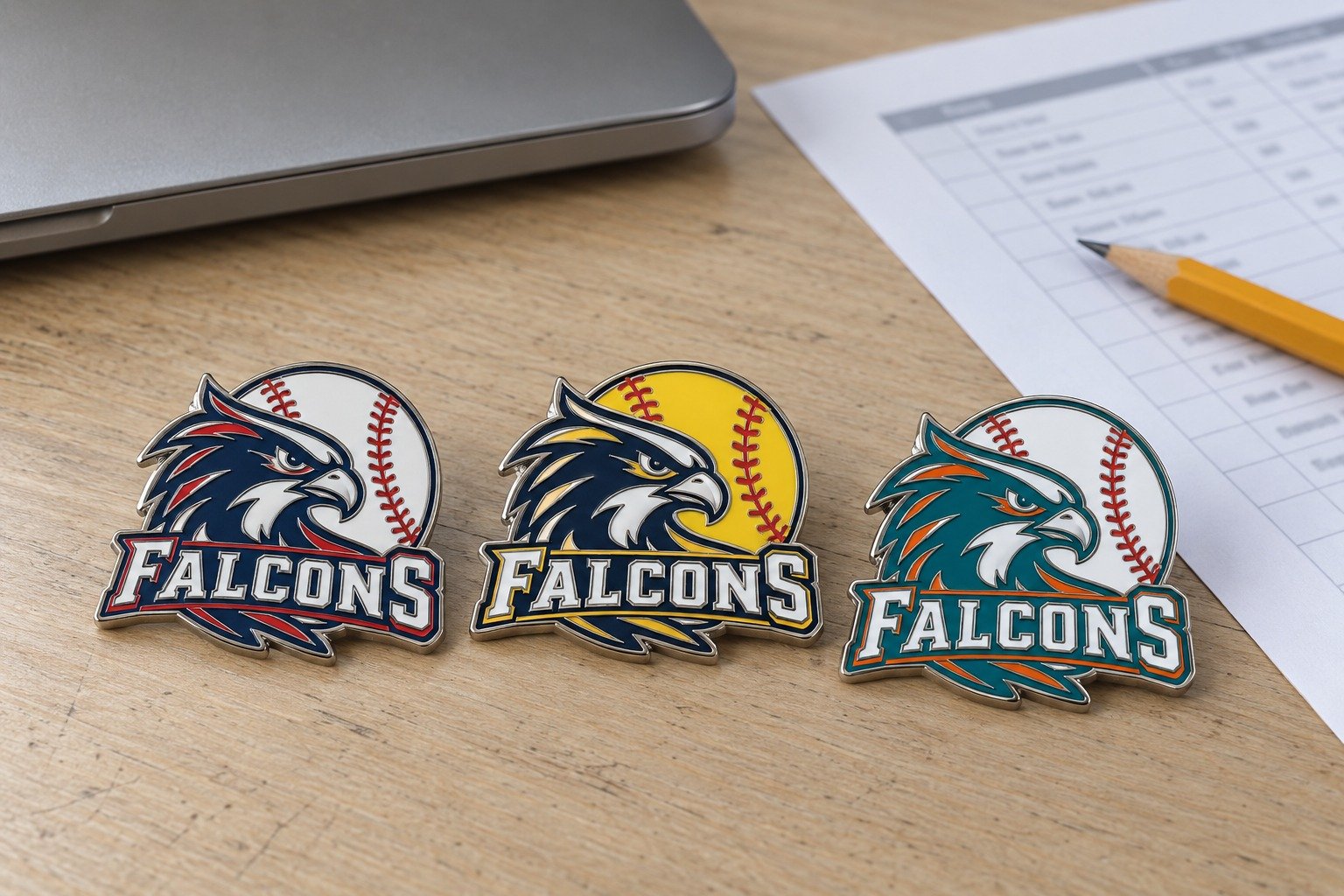
Instead of comparing quotes line by line, look at the full picture: material specs, tolerances, finish quality, packaging, and testing scope. A supplier quoting 10% more but including proper QC and export-grade packaging is usually the smarter buy. This is especially true for detail-heavy products like custom enamel pins, where color accuracy and plating quality make or break the final look. If you’re placing a bulk order, our guide on ordering wholesale custom pins walks through exactly what to specify before production begins.
Mistake 2: Skip Supplier Verification

Trading company vs. real factory — why it matters
Not everyone selling on Alibaba is actually manufacturing your product. Many listings belong to trading companies that outsource production, adding a layer of markup and miscommunication you never see coming. If you want to understand this distinction in more depth, see our full breakdown of factory direct vs. trading company sourcing.
The Fix: A practical verification checklist
Before committing, ask for:
- Business license and export registration
- Factory audit report (in-person or third-party)
- Relevant certifications (ISO 9001, Sedex, BSCI, RoHS, REACH)
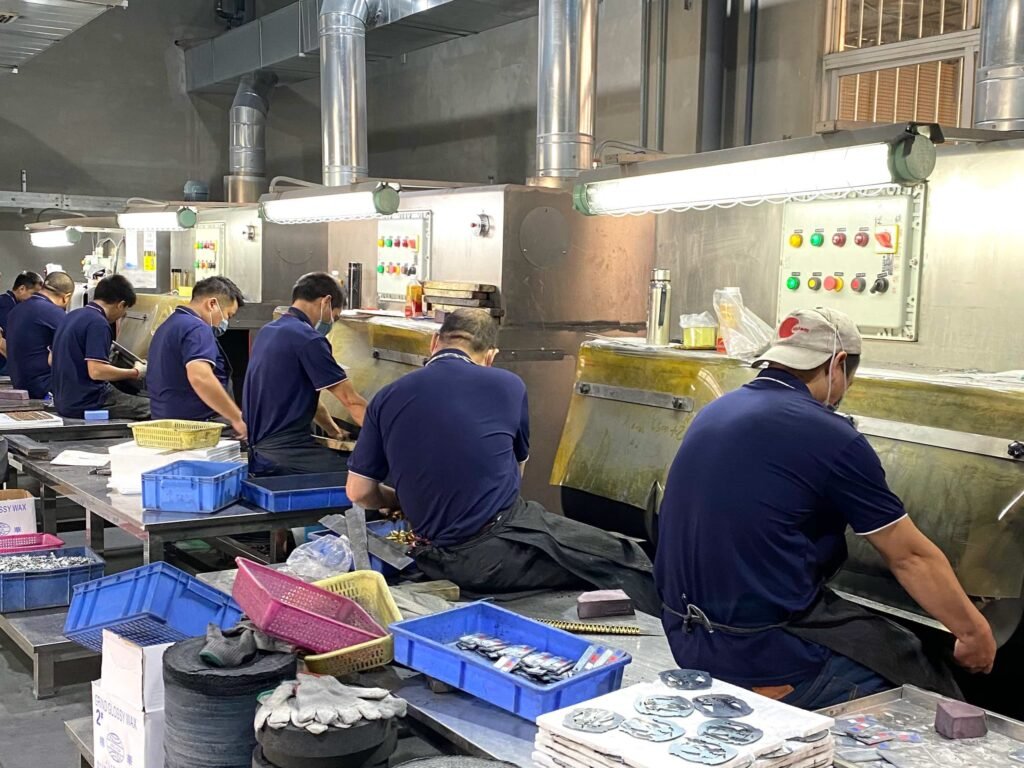
- Photos or videos of the actual production floor
A verified, certified factory dramatically reduces your scam risk — and gives you someone accountable when questions come up.
Mistake 3: Start Production Without Clear Specifications

Vague briefs lead to costly rework
“Make it look premium” or “same as the reference photo” means something different to every factory. Without exact specs, suppliers fill in the gaps themselves — and you’re left with a product that technically matches your email but not your vision.
The Fix: Build a proper spec sheet
For custom metal products specifically, spell out:
For custom metal products specifically, spell out:
- Exact Pantone color codes
- Plating type (gold, silver, antique bronze, nickel)
- Manufacturing method — knowing when to specify die-casting vs. stamping upfront avoids mismatched expectations on design detail and cost
- Dimensions and tolerances
- Packaging requirements (polybag, PVC bag, branded box)
Clear input equals predictable output — every single time.
Mistake 4: Treat Samples as a Formality

Golden samples vs. mass-production reality
A beautifully hand-finished sample doesn’t guarantee your bulk order will look the same. Some suppliers put extra care into that one “golden sample” to win your business, then cut corners once mass production begins.
The Fix: A proper sample approval workflow
Don’t skip this stage — treat it as insurance. Order a development sample first, request revisions if needed, and only approve a final “golden sample” once you’re fully satisfied. That approved sample then becomes the benchmark your inspection team compares every finished piece against.
Mistake 5: No Written Contract or Unclear Payment Terms

Why verbal agreements create disputes
A friendly WeChat chat isn’t a contract. Without clear terms in writing, disagreements over specs, timelines, or defects become “he said, she said” situations — and you have very little leverage.
The Fix: Put it all in writing
Every purchase order should include the approved spec sheet, quality standards, lead time, inspection rights, and payment milestones (typically a deposit plus balance upon quality approval). It sounds basic, but this single habit prevents the majority of sourcing disputes before they start.
Mistake 6: Underestimate Lead Time and Logistics

Chinese New Year and shipping delays catch buyers off guard
Many first-time importers plan lead time as “days on the production line” and forget everything else: sampling, revisions, raw material procurement, QC, and customs clearance. Add in a factory shutdown for Chinese New Year (which can pause production for 2–4 weeks), and your “quick” order suddenly isn’t quick at all.
The Fix: Plan realistically and understand Incoterms
Build in a 15–25% time buffer, confirm the production schedule before final payment, and get familiar with shipping terms like EXW, FOB, and DDP so you know exactly who’s responsible at each stage.
Mistake 7: Rely Only on the Supplier’s Self-Inspection

“The factory said it’s fine” isn’t quality control
Letting a supplier grade their own homework rarely ends well. Production is often subcontracted, batch consistency varies, and defects can easily slip through unnoticed until the goods land on your doorstep.
The Fix: Multi-stage quality checks
Professional buyers implement checks at multiple points: raw materials, mid-production, and pre-shipment (using AQL sampling standards). Never release full payment before this final QC approval — it’s your last line of defense before the goods leave the factory.
Mistake 8: Ignore Compliance and Testing Requirements

Why non-compliant products get stuck at customs
Skipping regulatory checks is one of the most expensive mistakes an importer can make. Non-compliant products can be held, fined, or destroyed at customs — and for metal accessories or items intended for children, requirements like RoHS, REACH, or CPSIA aren’t optional extras.
The Fix: Confirm requirements before mass production
Ask your supplier directly which certifications and test reports apply to your destination market, and request documentation before goods ship. A five-minute conversation upfront can save weeks of delay later.
Mistake 9: Poor Communication and Scattered Project Management

Version confusion across emails, chats, and spreadsheets
When your design lives in one email thread, your color approval lives in a WeChat screenshot, and your packaging notes live in a spreadsheet, mistakes are inevitable. Someone, somewhere, works off an outdated version.
The Fix: One source of truth
Keep a single master file with all approved specs, assign one point of contact on each side, and send a written recap after every call. It’s a small discipline that eliminates a shocking number of avoidable errors.
Mistake 10: No Backup Supplier or Diversification Strategy
The risk of relying on a single factory
What happens if your only supplier faces a delay, a shutdown, or a sudden price hike? If you don’t have a plan B, your entire supply chain is exposed.
The Fix: Build in redundancy
You don’t need five backup factories — but having at least one alternative supplier who can produce to the same specification gives you real peace of mind, especially heading into peak seasons.
Quick Reference: China Sourcing Mistakes vs. Fixes
| Mistake | Risk | Fix |
|---|---|---|
| Choosing on price alone | Hidden quality costs | Evaluate total landed cost |
| Skipping verification | Fraud, unaccountable factories | Request license, audit, certifications |
| Vague specifications | Wrong production | Detailed spec sheet |
| Skipping samples | Product mismatch | Proper sample approval workflow |
| No written contract | Disputes, no leverage | Clear PO with milestones |
| Underestimating lead time | Missed sales windows | Realistic buffer + Incoterms knowledge |
| Self-inspection only | Defective shipments | Multi-stage QC |
| Ignoring compliance | Customs holds, fines | Confirm certifications early |
| Scattered communication | Version errors | Single source of truth |
| No backup supplier | Supply chain exposure | Build in redundancy |
Conclusion
At Unique Custom Pins, we’ve spent over 20 years learning exactly where sourcing relationships go wrong — and building our process to close those gaps for you:
- No minimum order quantity — so you can test a supplier without risking a large upfront commitment.
- ISO 9001, Sedex, and BSCI-certified factory — verification handled before you even ask.
- Free design and unlimited digital proof revisions — no more guessing on specs or getting stuck with a mismatched sample.
- 200+ QC checkpoints across production — because self-inspection just isn’t enough.
- 7–14 day fast, transparent delivery — realistic timelines you can actually plan around.
Whether you’re placing your first order of custom lapel pins or scaling up as an established brand, our team is here to make sourcing from China feel less like a gamble and more like a partnership.
Ready to get started? Get a free quote in 30 seconds — no minimums, no pressure, just a fast, honest answer from our sourcing team.
FAQs
What is the biggest mistake businesses make when sourcing from China?
Choosing a supplier based on the lowest price without verifying their capabilities. It often leads to hidden costs that far outweigh the initial savings.
How can I verify a Chinese supplier is legitimate?
Request their business license, ask for a factory audit (in-person or third-party), and check for relevant certifications like ISO 9001 or Sedex.
Do I need a sample before placing a bulk order for custom pins?
Yes. A small sampling investment (often under $100) can save thousands of dollars in defective inventory down the line.
What’s the average lead time for custom enamel pins from China?
Standard production typically takes 10–15 days, depending on design complexity, plus shipping time based on your location.
Is it safe to source custom pins from China with no minimum order quantity?
Absolutely — no-MOQ ordering is actually a great way to test a new supplier’s quality and communication before committing to a larger order.
How do I protect my design when working with a China manufacturer?
Work with an established, reputable factory, keep design sharing limited to your shortlisted suppliers, and use written agreements that clarify ownership of your artwork and designs.