




Whether you’re a brand manager looking for standout promotional items, an e-commerce seller hunting for the next bestseller, or a retail buyer stocking up on trend-driven accessories — acrylic keychains belong on your radar. Small in size, big on impact, and surprisingly versatile, they’re one of the best-value custom products in the market today. This guide covers everything you need to know, from materials and manufacturing to acrylic keychain ideas that actually sell.
What Are Acrylic Keychains? Materials, Types & Key Benefits
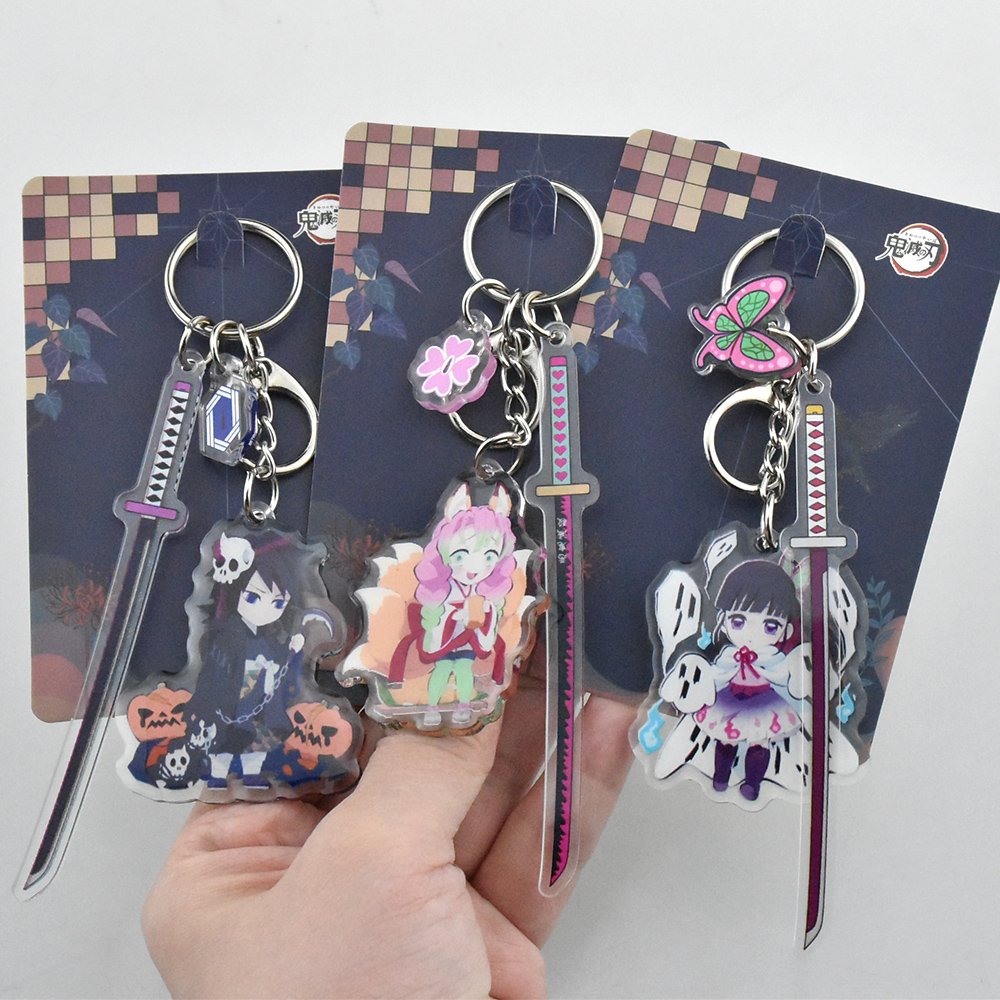
Acrylic keychains are small accessories made from acrylic plastic (PMMA) — a material prized for its glass-like clarity, lightweight feel, and impressive durability. Unlike metal keychains that turn cold in winter or rubber ones that lose shape over time, acrylic sits in a sweet spot: tough enough for daily use, light enough to carry everywhere, and clear enough to showcase vibrant, full-color designs.
How Does Acrylic Compare to Other Materials?
- Vs. Enamel: Acrylic is lighter, warmer to the touch, and far more affordable for custom printing.
- Vs. Rubber/PVC: Acrylic offers much higher print clarity and a premium, polished appearance.
- Vs. Wood: Acrylic is waterproof and UV-resistant, making it more practical for everyday carry.
Popular Product Types
The product range is broader than most buyers expect:
- Clear acrylic keychains: Transparent base that makes colors pop — the most popular choice for brand logos and character art.
- Double-sided keychains: Different designs on each face — great for adding product details or bilingual branding.
- Glitter acrylic keychains: Embedded sparkle particles for a playful, eye-catching effect.
- Glow-in-the-dark versions: A hit for fan merchandise and novelty retail.
- Epoxy-coated keychains: A glossy resin layer on top for extra scratch protection and a premium finish.
How Are Acrylic Keychains Made? A Look at the Manufacturing Process
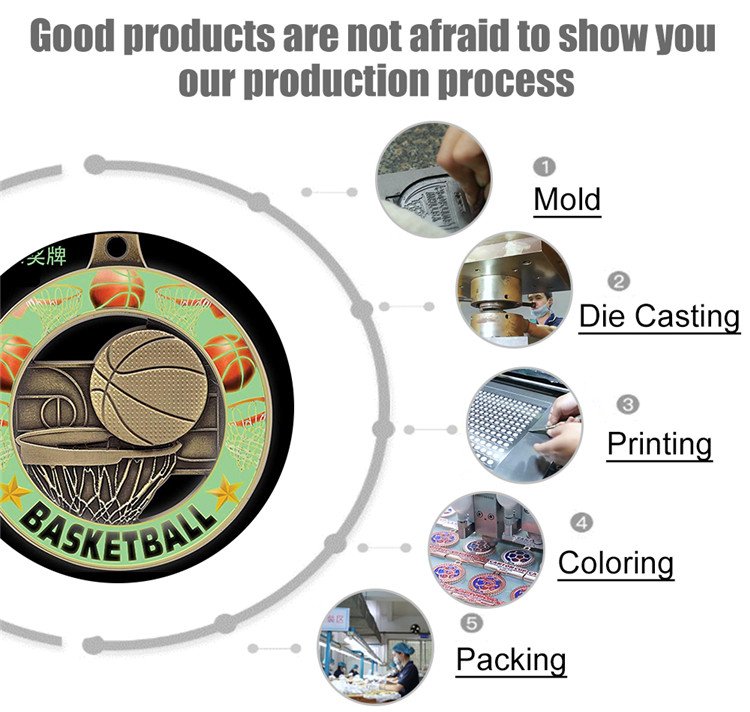
Understanding how your products are made helps you ask the right questions when vetting suppliers — and it helps you set realistic timelines for your orders. Here’s what a standard production run looks like:
Step 1: Artwork & File Preparation
Every great acrylic keychain starts with a great file. Designs should be submitted as vector files (AI or EPS) or high-resolution raster images at 300 DPI minimum. If you’re not a designer, most reputable acrylic keychain makers — including the team at Unique Custom Pins — offer in-house design support to get your artwork print-ready.
Step 2: UV Printing
The design is printed directly onto the acrylic sheet using UV printing technology. This ensures the colors are vibrant, fade-resistant, and durable — even with regular handling. Full-color printing means there’s no limit to gradients, illustrations, or photography-based designs.
Step 3: Laser Cutting
Once printed, a laser cutter shapes the acrylic into your chosen silhouette with precision down to fractions of a millimeter. This is what makes die-cut shapes possible — animals, logos, characters, or any custom outline you can dream up.
Step 4: Polishing, Drilling & Assembly
After cutting, edges are polished smooth. A small hole is drilled for the key holder keyring hardware — the metal split ring or lobster clasp that makes the piece functional. Quality control checks happen at this stage to catch any print defects or rough edges before packaging.
Business Use Cases: Where Acrylic Keychains Drive Real Value
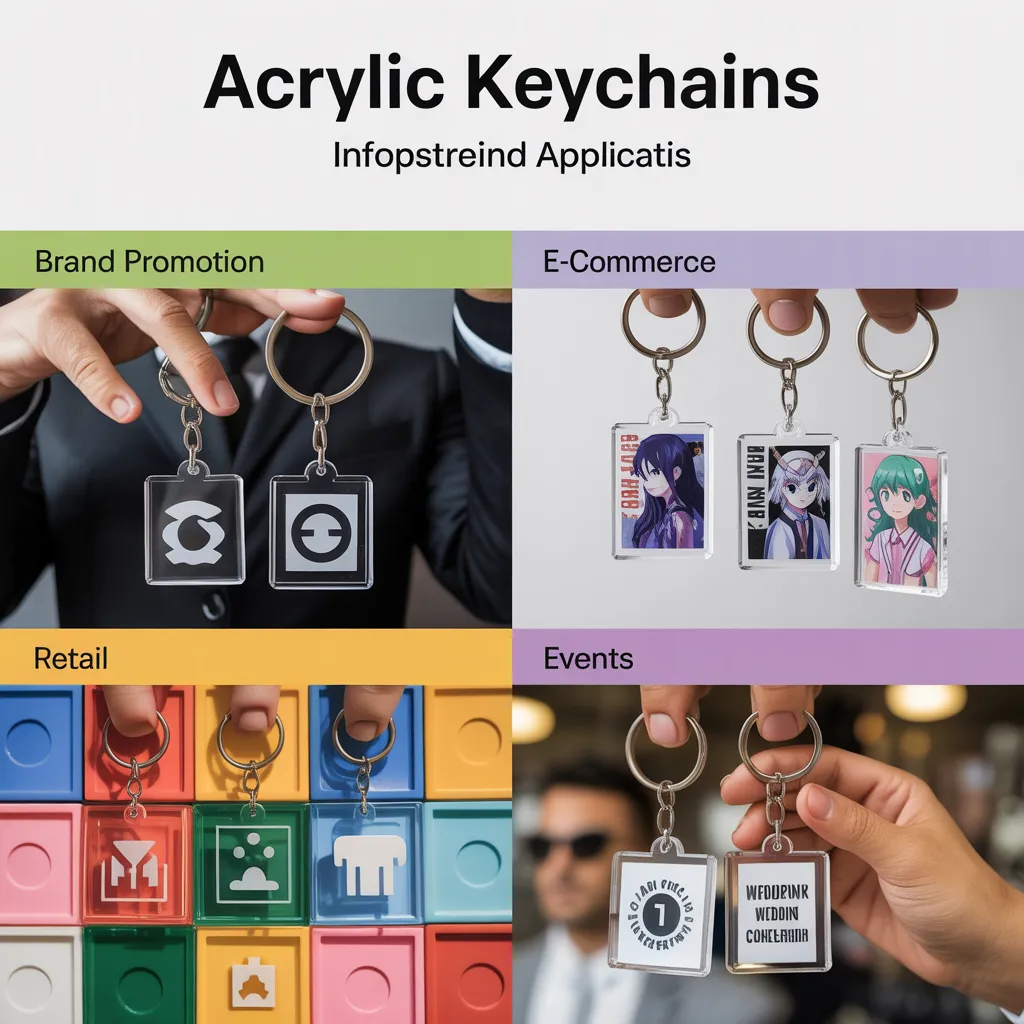
One of the biggest advantages of acrylic keychains is how well they adapt across industries and business models. Here are the use cases where they consistently deliver strong ROI:
- Brand promotion & corporate gifting: Logo keychains are a low-cost, high-visibility marketing tool. Hand them out at trade shows, include them in product packaging, or offer them as customer loyalty rewards. Unlike flyers, people actually keep them.
- E-commerce & dropshipping: Fan merchandise is one of the hottest categories on Etsy, Amazon, and independent storefronts. From pop culture characters to niche hobby communities, customized designs drive strong conversion. A great example of this in action: sellers offering a Heaven Official’s Blessing acrylic keychain — featuring characters from the beloved Chinese fantasy novel and animated series — consistently rank among top performers in the anime merch category. Niche + quality + fandom loyalty = repeat customers.
- Retail & souvenir shops: Tourist destinations, museums, and boutiques love acrylic keychains for their compact display footprint, attractive shelf appeal, and healthy margins on small-format items.
- Events & memorabilia: Weddings, conventions, festivals, and corporate milestones — custom keychains make tangible, affordable mementos that guests and attendees actually take home.
How to Design Custom Acrylic Keychains: A Practical Buyer’s Guide
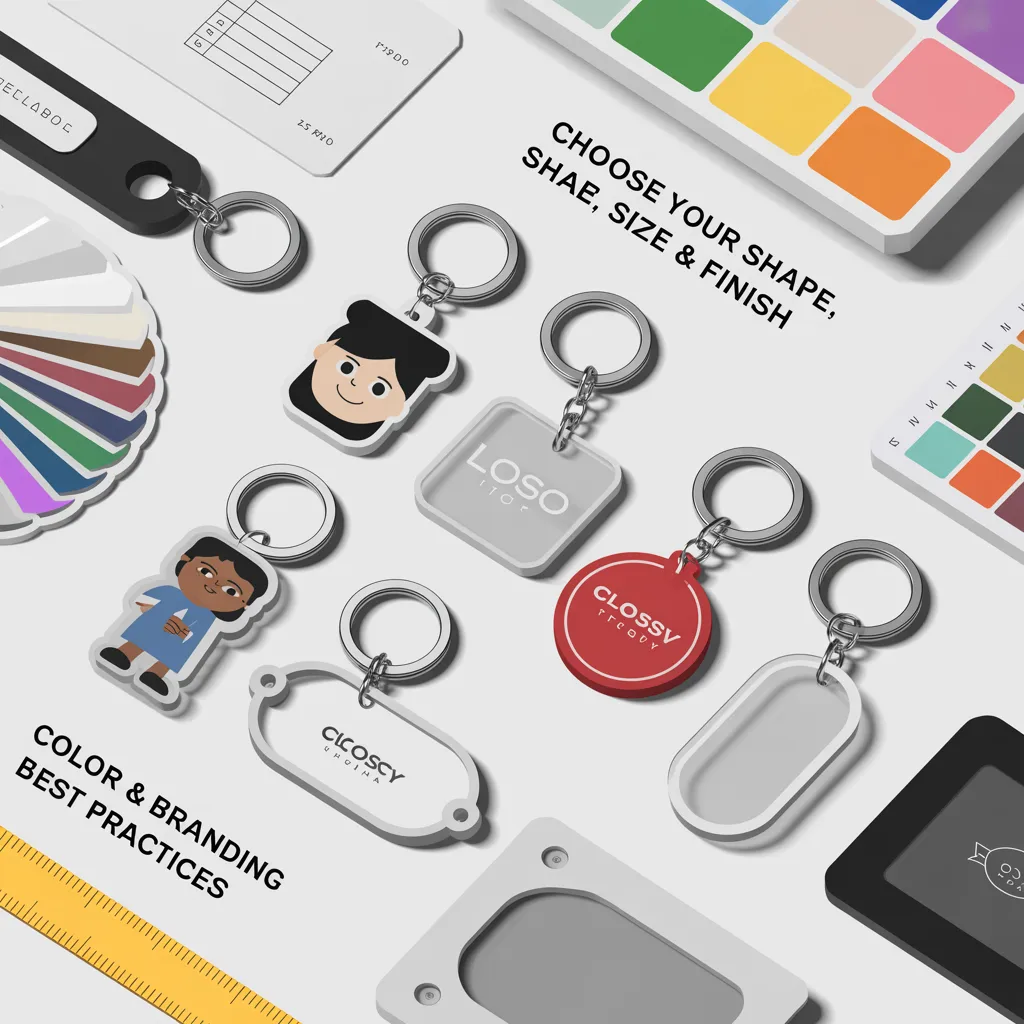
Good design doesn’t just look great — it sells. Here’s how to approach the design process like a pro, even if you’re not a graphic designer yourself.
Choose Your Shape, Size & Finish
Standard sizes run between 1 and 3 inches. Smaller sizes (1–1.5″) work well for simple logos and icons; larger formats (2.5–3″) are better for character art or detailed illustrations. Die-cut silhouettes — shapes that follow the outline of your design — add a premium feel and photograph beautifully for product listings.
Finish options include:
- Glossy: High-shine, vibrant, eye-catching. Best for character art and photography.
- Matte: Soft, premium look. Reduces fingerprint visibility.
- Frosted: Elegant and diffused — pairs beautifully with minimalist branding.
Color & Branding Best Practices
- Keep text to a minimum — small formats don’t have room for long copy.
- Use contrasting colors to ensure logos and characters are legible from a distance.
- For brand keychains, include your URL or social handle on the back — double-sided designs make this easy.
- Think about how it photographs: product listing images matter enormously for e-commerce sales.
Need a starting point? Canva and Adobe Illustrator are popular tools for building your design file. Or, work directly with an acrylic keychain maker who offers design services — they’ll know exactly what works at print size.
Sourcing & MOQ: What Traders and Retail Buyers Need to Know
Pricing and minimums are often the first questions buyers have — and they vary significantly depending on supplier, complexity, and order size.
Typical MOQ & Pricing Tiers
Most manufacturers set a minimum order quantity (MOQ) starting around 50–100 units for standard designs. As you scale, unit costs drop significantly:
- 50–100 units: ideal for sampling, event runs, or small boutique restocks
- 500 units: a common sweet spot for e-commerce sellers building inventory
- 1,000+ units: best per-unit pricing, suited for established retailers and brand campaigns
How to Evaluate a Supplier
Not all suppliers are equal. Here’s a quick checklist when vetting a potential partner:
- Request physical samples before committing to a bulk order.
- Ask about production lead times — standard is 7–15 business days for most custom runs.
- Check certifications (ISO, BSCI, or equivalent) for consistency and safety compliance.
- Confirm packaging options — OPP bags, header cards, custom retail packaging all affect your sell-through.
- Review past work — a reliable acrylic keychain maker will have a portfolio with references.
Latest Trends in Acrylic Keychains
The acrylic keychain market is more dynamic than you might expect. Here’s what’s resonating with buyers and consumers right now:
- 3D layered designs: Multiple acrylic layers stacked to create depth and dimension. Premium look, strong price point.
- Glow-in-the-dark & UV reactive printing: Especially popular for convention merch and youth-oriented retail.
- Miniature embedded art: Tiny illustrations — often by independent artists — encased in clear acrylic. A strong seller on Etsy and artist alley tables.
- Eco-friendly acrylic: Recycled and biodegradable acrylic variants are gaining traction as brands respond to sustainability expectations.
- Fandom-driven designs: From classic anime to webtoons and video games, character-based acrylic keychain ideas tied to specific fandoms continue to drive high sell-through rates. The key is timeliness — matching product drops to content release windows.
Care, Durability & Quality Standards
One of the practical advantages of selling acrylic keychains is that they’re easy to care for — which means fewer customer complaints and returns.
Care Tips to Share With Your Customers
- Wipe clean with a soft, lint-free cloth and mild soap — no harsh chemicals.
- For minor surface scratches, a small amount of toothpaste on a soft cloth can buff them out.
- Store away from direct sunlight and extreme heat to prevent warping or color fade.
- The protective film that ships on most keychains should be kept on during transit and peeled off before use.
Quality Checklist for Buyers & Traders
Before accepting a bulk shipment, check:
- Edge smoothness — no rough burrs or uneven laser cuts
- Print adhesion — no peeling, bubbling, or color bleed
- Key holder keyring hardware — confirm the metal rings or clasps are securely attached and open/close smoothly
- Protective film — should be intact and covering both surfaces
- Packaging condition — no loose pieces or damaged bags in the shipment
Ready to Create Your Own Custom Acrylic Keychains?
Acrylic keychains punch well above their weight as a product category. They’re affordable to produce, easy to customize, highly giftable, and consistently in demand — from branded corporate runs to fan merchandise drops inspired by titles like Heaven Official’s Blessing. Whether you’re placing your first order or scaling an existing line, the fundamentals are straightforward: start with great artwork, partner with a reliable manufacturer, and choose a product format that fits your channel.
Get a free custom quote from Unique Custom Pins today — our team is ready to help you bring your acrylic keychain ideas to life, from concept to delivery.
FAQs
Do acrylic keychains scratch easily?
They can develop light surface scratches with heavy daily use, but the design itself — printed or engraved beneath the surface — remains protected. Most keychains ship with a protective film that helps prevent scratches in transit. Opting for an epoxy coating adds an extra layer of surface protection.
Do acrylic keychains break when dropped?
Acrylic is significantly more impact-resistant than glass and won’t shatter under normal conditions. Thin designs or keychains with very narrow connecting points are more vulnerable, so it’s worth ensuring adequate thickness (typically 3mm minimum) for designs that need to withstand daily use.
What is the typical MOQ for custom acrylic keychains?
Most suppliers start at 50–100 units per design. At Unique Custom Pins, we work with buyers at various scales — reach out to discuss what makes sense for your specific project.
How long does production take?
Standard lead time is 7–15 business days after artwork approval, depending on order size and complexity. Rush options are often available — ask your supplier upfront if timing is a factor.
Are acrylic keychains waterproof?
Yes — acrylic itself is waterproof and won’t rust or warp when exposed to moisture under normal conditions. UV-printed designs are also resistant to water damage, making these keychains well-suited for everyday carry.