



In the promotional products and retail merchandise industry, custom keychains remain a reliable, high-margin product category. When sourcing custom merchandise, the debate almost always centers on two prevailing materials: metal-based enamel keychains and high-clarity synthetic acrylic keychains. Both options hold immense popularity, yet they appeal to vastly different target demographics, production budgets, and artistic requirements.
Choosing between an acrylic vs enamel keychain structure requires understanding physical manufacturing workflows, mold expenses, international shipping weights, and visual design limitations. This OEM sourcing guide provides an operational breakdown of both keychain styles to help brand managers and procurement specialists make fully informed inventory decisions.
Comprehensive Feature Matrix: Enamel vs. Acrylic
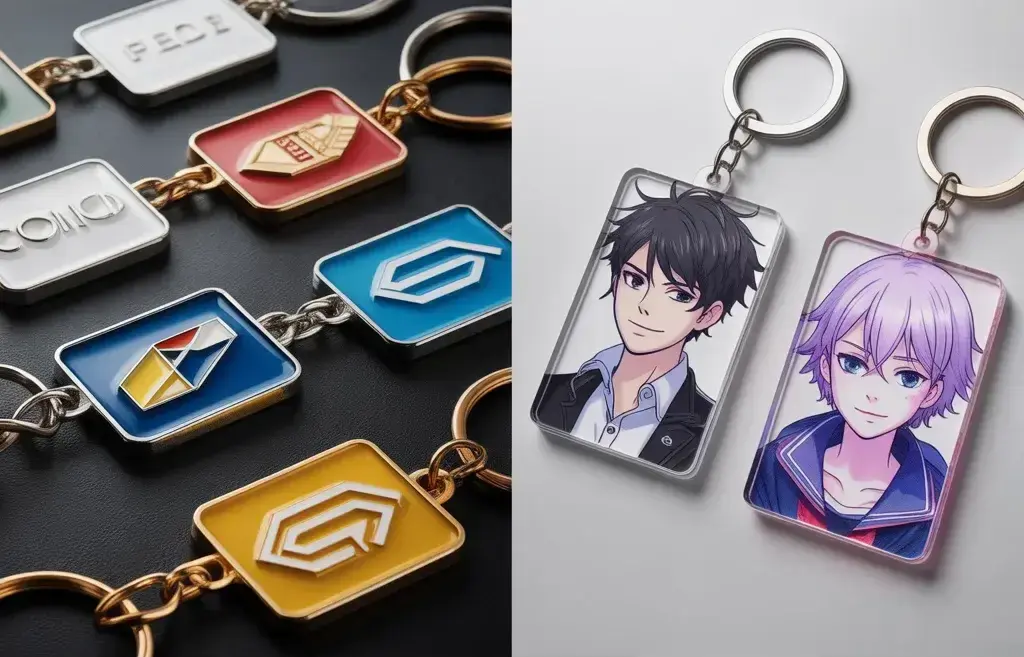
To establish a foundational baseline, the table below highlights the principal technical, financial, and physical specifications distinguishing custom metal enamel keychains from custom acrylic keychains.
| Specification Metric | Custom Enamel Keychains (Hard & Soft) | Custom Acrylic Keychains (PMMA) |
| Primary Material Base | Zinc Alloy, Stamped Brass, Iron, or Copper | High-Clarity Optical PMMA (Plexiglass Plastic) |
| Manufacturing Technology | Die-striking/Die-casting, electroplating, hand-filled color enamel | High-resolution digital UV printing, precise laser cutting |
| Initial Tooling / Mold Fee | $50 – $150 (Custom steel die creation required) | $0 (100% digital vector path cutting) |
| Average Factory Unit Cost | $1.20 – $3.80+ (Varies with metal plating and size) | $0.45 – $1.75 (Varies with acrylic thickness & layers) |
| Unit Weight & Freight Impact | Heavyweight (25g – 55g per piece; higher air freight costs) | Lightweight (8g – 18g per piece; minimal freight expenses) |
| Color Gradient Capability | Solid PMS color fills only (Separated by metal borders) | Unlimited full-color CMYK gradients, photography & transparency |
| Recommended Minimum Order (MOQ) | 100 – 300 pieces per design (To offset initial tooling) | 25 – 50 pieces per design (Ideal for testing new artwork) |
Enamel Keychains: Industrial Craftsmanship & Heritage Value
Enamel keychains represent the gold standard for traditional, collectible, and corporate-grade merchandise. Produced using metal fabrication techniques, metal keychains impart an unmistakable sense of weight, luxury, and permanence.
3.1 The Production Workflow of Metal Enamel Keychains
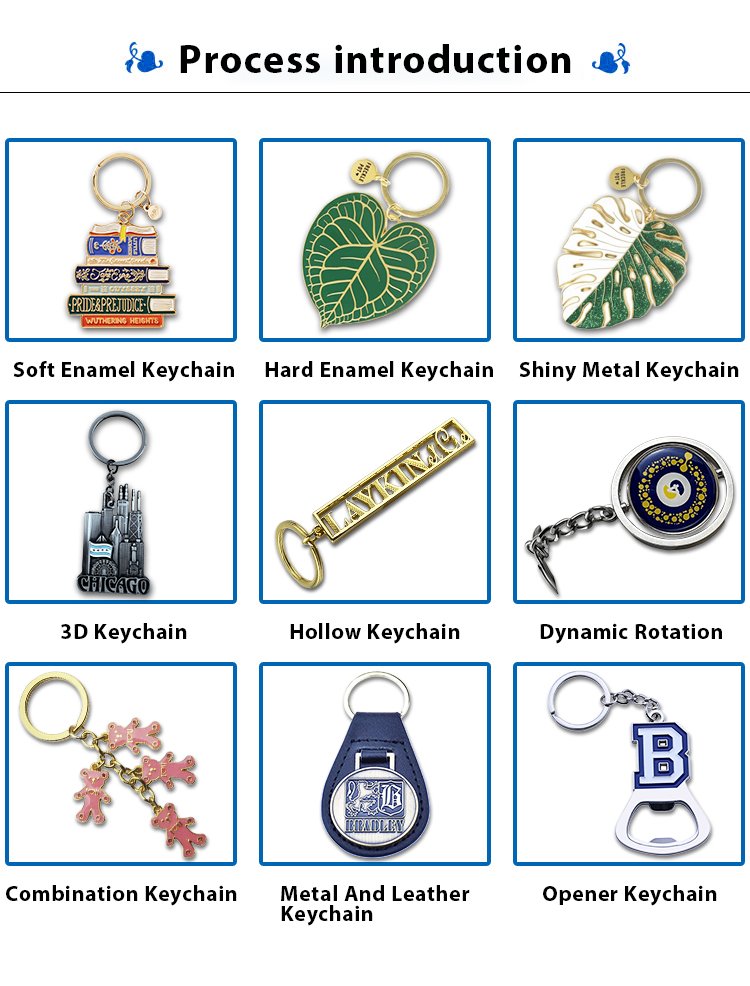
The manufacturing process of custom enamel keychains begins with custom tooling. Engineers engrave your two-dimensional vector artwork onto a heavy steel master die used to stamp or die-cast base metal shapes. Metal bases undergo chemical cleaning and electroplating to apply metallic outer finishes, such as polished gold, nickel, antique bronze, black nickel, or rose gold. Specialized technicians then inject pigmented liquid enamel into the recessed cavities of the design.
Hard Enamel vs. Soft Enamel Keychains
Understanding the distinction between hard enamel and soft enamel is crucial for selecting the correct product tier:
- Hard Enamel (Epola / Cloisonné Style): Liquid enamel pigment is filled into recessed cavities and baked at high temperatures repeatedly. The entire surface is stone-polished flat, resulting in a smooth, glass-like finish where metal lines and color fills sit at the exact same height.
- Soft Enamel: Enamel paint is filled into recessed metal areas and baked once. As the paint cures, it settles slightly below the raised electroplated metal borders, creating a tactile, 3D textured surface.
Commercial Advantages and Trade-Offs of Enamel
Enamel keychains command higher retail prices because consumers intrinsically value metallic items. They are virtually indestructible under normal daily usage, making them ideal key rings for automotive dealerships, government agencies, luxury fashion houses, and souvenir shops. However, custom steel molds introduce higher upfront setup costs, making runs under 100 pieces less economical per unit.
Acrylic Keychains: Modern Versatility & Low-Barrier Customization
While metal enamel keychains dominate traditional luxury markets, custom acrylic keychains have conquered the modern pop culture, gaming, and creator economies. Made from durable PMMA thermoplastic, acrylic keychains offer unmatched visual clarity and unlimited artistic freedom.
Modern UV Printing and Laser-Cutting Manufacturing
The acrylic manufacturing pipeline bypasses physical mold creation entirely. High-resolution UV printers deposit multi-layer CMYK inks, white backing layers, and protective varnish directly onto premium acrylic sheets. Industrial CNC laser cutters follow digital vector paths to cut around each design with sub-millimeter precision, heat-sealing smooth crystal-clear borders.
Thickness Variations: Single-Layer vs. Double-Layer Protection
When customizing acrylic merchandise, brand managers must select an appropriate board construction:
- Single-Board Acrylic (3mm): Artwork is printed directly onto the backside of a single acrylic sheet. A thin white seal coat or clear varnish protects the ink.
- Double-Board Acrylic (4mm): Artwork is encapsulated inside two bonded acrylic plates (typically 2mm + 2mm). The ink layer is fully sealed within the center, making graphics immune to surface scratches and fading.
Whether your catalog requires a lightweight 3mm build for promotional mailing campaigns or a heavy-duty 4mm sealed double-board construction, evaluating a thick and thin keychain structure allows brand owners to tailor product weight directly to shipping budgets and perceived retail value.
Commercial Advantages of Acrylic Keychains
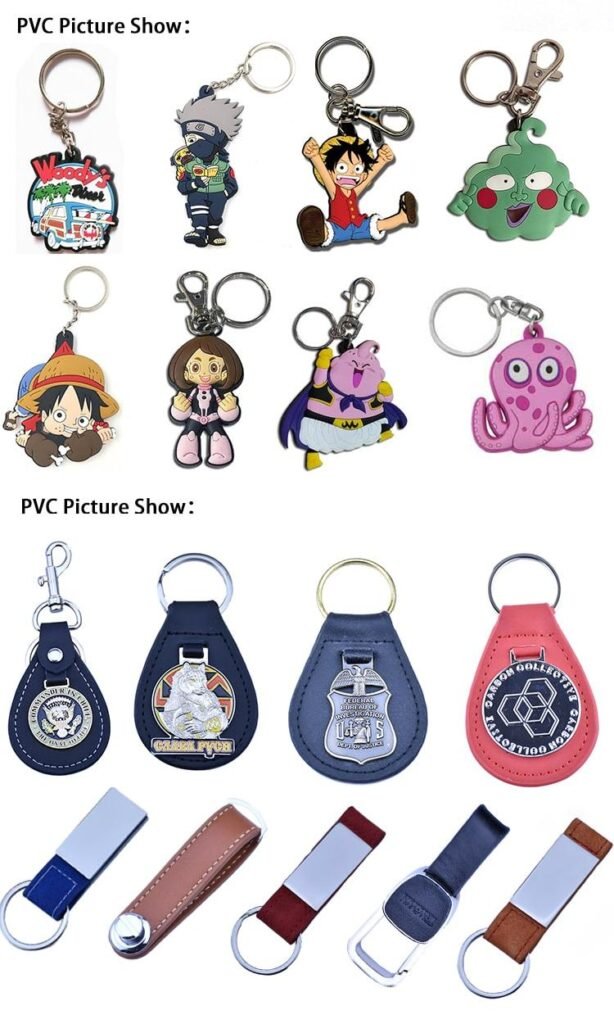
The primary advantage of acrylic keychains lies in zero tooling costs and rapid turnaround times. E-commerce sellers and artists can launch collections featuring 20 different character designs without paying a single mold fee. Furthermore, because PMMA plastic weighs approximately 60% less than zinc alloy metal, global air freight shipping costs are drastically reduced.
Critical Sourcing Considerations for B2B Procurement
To select the optimal keychain material for your organization, consider these core procurement metrics:
Calculating Your Overall Custom Keychain Cost
When calculating your total project outlay, evaluate both fixed initial setup fees and variable unit costs. For a run of 100 pieces, enamel keychains involve mold costs and heavier air freight fees, whereas acrylic keychains eliminate tooling charges and reduce freight costs significantly. For detailed pricing breakdowns across different order tiers, plating options, and custom attachments, consult our dedicated breakdown on custom keychain cost factors.
Design Complexity, Market Demand & Production Details
If your artwork features photographic elements or intricate gradients, acrylic keychains are technically superior. To analyze demographic trends before finalizing inventory orders, read our report on whether keychains are in high demand. Furthermore, to inspect raw material cutting and curing stages for plastic items, review our technical guide detailing how acrylic keychains are made in OEM facilities.
Prototype Workflows & Proofing Excellence
Before committing capital to full mass production, establishing a rigorous pre-production proofing workflow prevents costly errors.
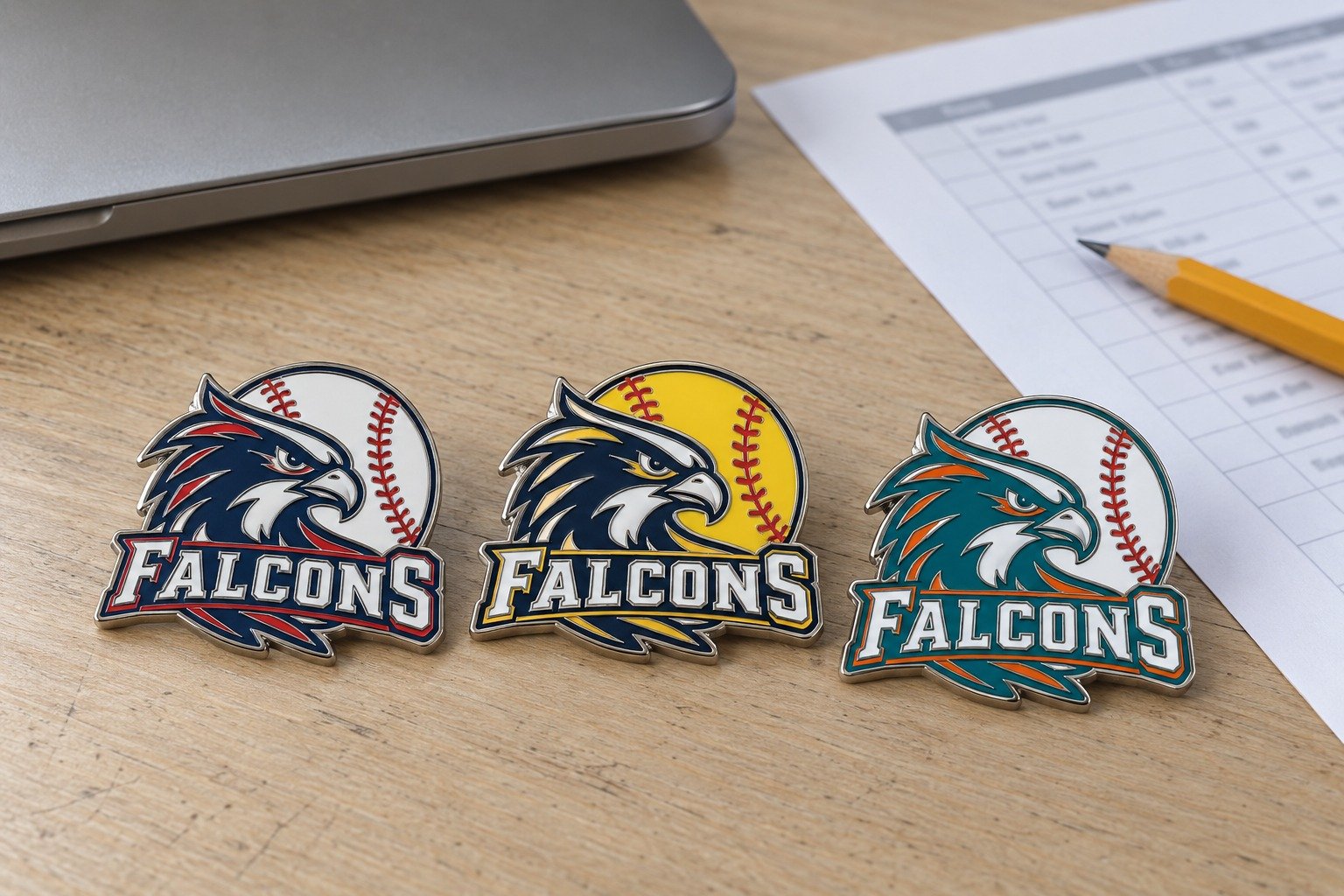
When ordering enamel keychains, physical sampling involves engraving the metal die, taking 7 to 10 business days. To streamline approvals, top-tier suppliers generate a high-precision enamel keychain mockup that renders metal plating borders, pantone colors, and simulated 3D recessed depth. Reviewing digital mockups allows brand managers to verify metal line tolerances prior to die cutting. For broader context on how keychains compare across promotional categories, explore our overview explaining why the keychain market is big enough to support diverse material strategies.
Conclusion
Neither enamel nor acrylic keychains can be declared universally superior; rather, each material fulfills distinct operational and marketing roles within a balanced merchandise catalog. Enamel keychains deliver unmatched weight, metallic prestige, and lifelong durability. Acrylic keychains provide unparalleled color detail, zero tooling barriers, low shipping expenses, and rapid scalability.
Ready to launch your next custom merchandise project and create your custom keychains with factory-direct pricing? Contact us today to request free digital proofs and comprehensive volume quotes.
FAQs
Which keychain style offers better margins for e-commerce retail?
A: Acrylic keychains generally yield higher profit margins for low-to-medium order quantities (50–500 pcs) due to zero mold fees and low air freight costs. However, enamel keychains command higher retail prices ($12–$20 MSRP) in premium souvenir and corporate markets, offering strong total margin dollars on larger bulk production runs.
Can I combine multiple designs within a single bulk factory order?
A: Yes. For acrylic keychains, factories can easily split a 500-piece order across 5–10 artwork designs with little to no setup penalty because cutting is digitally controlled. For enamel keychains, each distinct design requires its own metal steel mold ($50–$150 per mold), so multi-design runs increase upfront tooling expenses.
What is the average production lead time for bulk custom keychains?
A: Acrylic keychains feature rapid production cycles of 5 to 9 business days because no tooling is needed. Enamel keychains require 12 to 18 business days for mold engraving, metal stamping, plating, and hand-filled enamel curing.
How do unit shipping weights differ between enamel and acrylic keychains?
A: Enamel keychains (zinc alloy/brass) typically weigh 25g to 55g per piece depending on thickness and metal attachment rings. Acrylic keychains weigh only 8g to 18g per piece. Choosing acrylic can reduce international air express shipping charges by 50% to 70% per shipment.
How do I request a pre-production sample or digital proof before ordering?
A: Simply upload your vector artwork (AI, PDF, or high-res PNG) when contacting our engineering team. We provide free 2D/3D digital proof mockups within 24 hours to confirm sizing, Pantone color codes, cutlines, and plating choices before manufacturing begins.