Challenge coins have come a long way from their military roots. What started as tokens of unit pride in World War I has evolved into one of the most versatile branded merchandise formats available today — used in corporate recognition programs, e-commerce collectibles, trade show giveaways, and retail loyalty campaigns. They carry a tactile weight and permanence that a printed card or branded pen simply cannot match.
But not all challenge coins are created equal. A poorly designed coin gets tucked in a drawer and forgotten; a well-designed one gets carried in a pocket and shown off for years. If you are a brand manager, trader, retail buyer, or e-commerce seller looking to create challenge coin products that people actually want to keep, this guide breaks down the seven design elements that make the difference.
Element 1: Symbolism — Make Every Image Earn Its Place

The most memorable challenge coins share one quality: every visual element means something. When you create a challenge coin, the first question to ask is not “what looks cool?” but “what story does this tell?”
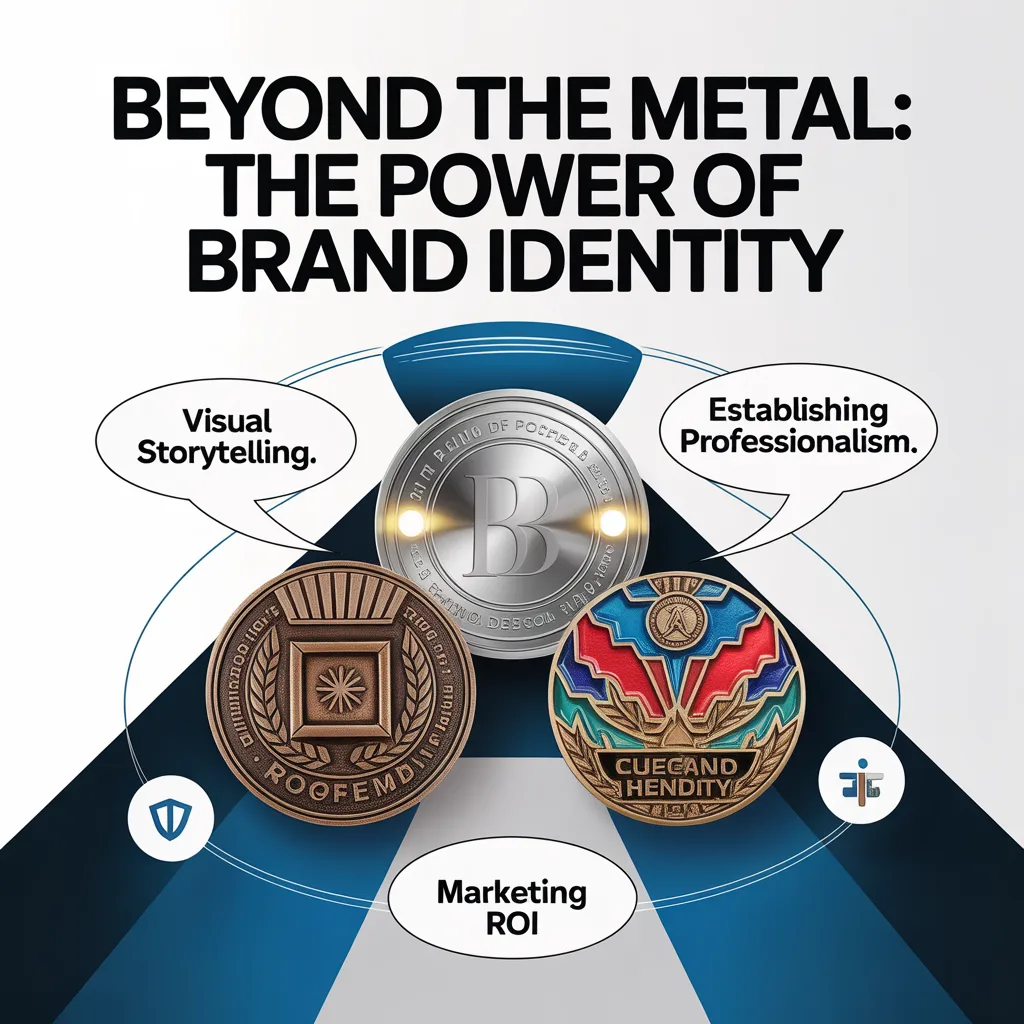
For brands, this means anchoring the challenge coin design around your core visual identity — your logo, brand mark, or a symbol strongly associated with your product or mission. For event coins, it means capturing the essence of that specific occasion in a single, bold graphic. The best coins work like a visual haiku: economical, precise, and resonant.
Practical tip: limit yourself to one or two hero symbols per face. Cluttered designs lose their impact at coin scale and are much harder to manufacture cleanly. When in doubt, simplify.
For B2B Buyers
If you are sourcing coins for retail or wholesale, check whether the manufacturer offers a free artwork proof before you commit to a full order. At Unique Custom Pins, we provide a custom challenge coin sample free proof with every inquiry — so you can review the design at full scale before production begins.
Element 2: Size and Shape — First Impressions Are Physical
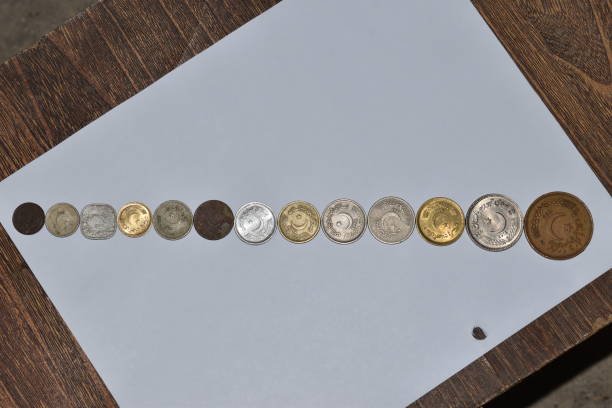
Before anyone reads a coin, they feel it. Size and shape are the first things a recipient registers, and they set the tone for everything else.
Average Challenge Coin Size
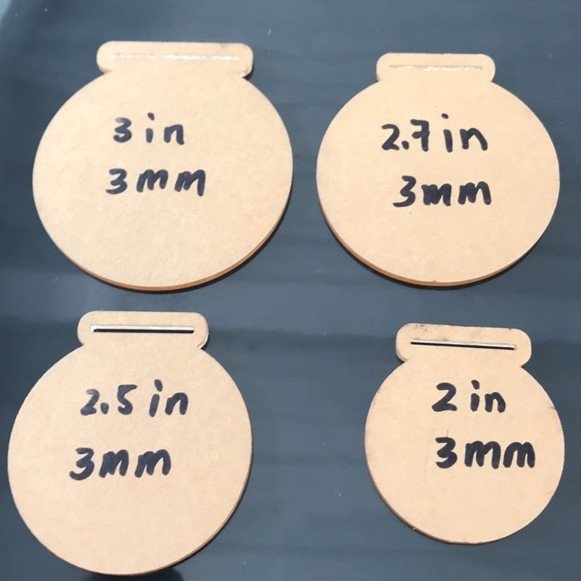
The average challenge coin size falls between 1.5 inches and 2 inches in diameter. Most standard corporate and military coins sit at 1.75 inches — large enough to accommodate a detailed design, small enough to fit comfortably in a pocket or wallet. For premium gift applications or collector pieces, sizes up to 2.5 inches are common, as the larger canvas allows for more intricate artwork and a more impressive physical presence.
Challenge Coin Thickness
Challenge coin thickness is often overlooked, but it is one of the strongest signals of quality. Standard coins range from 2.5mm to 4mm thick. A thicker coin feels heavier and more substantial — ideal for VIP gifts, premium retail lines, or any application where perceived value matters. Thinner coins reduce unit cost and work well for high-volume trade show giveaways where budget efficiency is the priority.
Custom Shapes
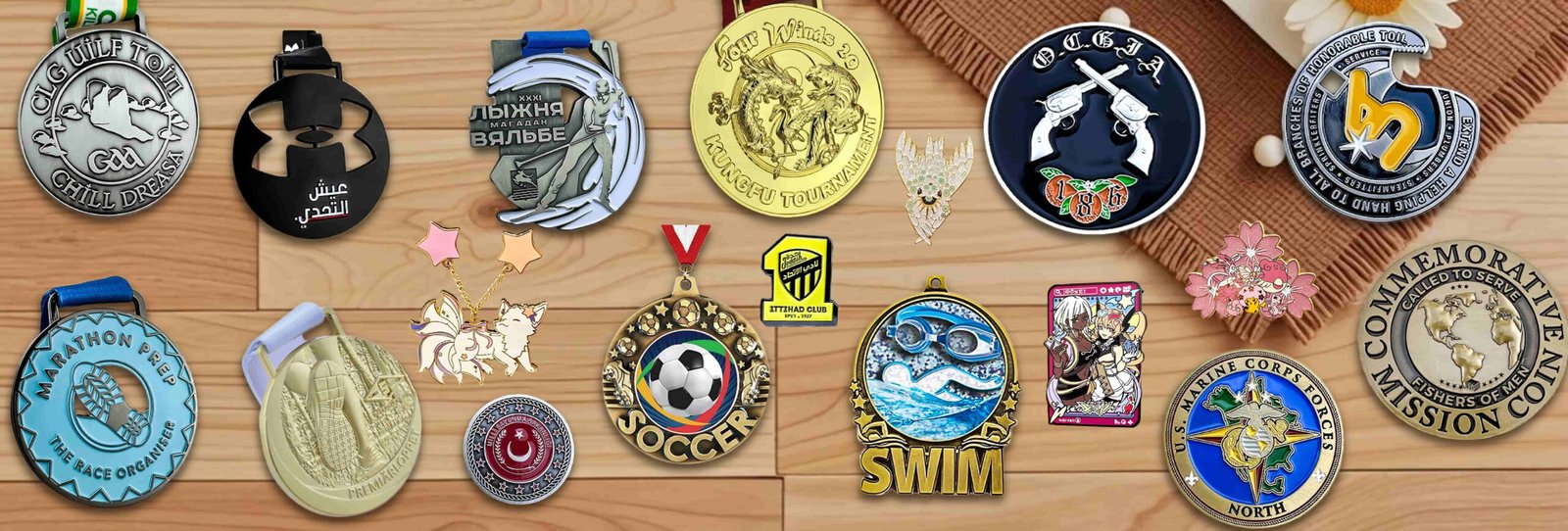
Round is classic, but it is far from your only challenge coin option. Shield shapes, dog tags, hexagons, state outlines, product silhouettes — if you can draw it, it can likely be die-cut. Custom shapes are one of the most powerful brand differentiation tools available in the challenge coin format. A coin shaped like your product logo or brand mascot is immediately recognizable and much harder to forget.
Element 3: Material and Metal Finish — Quality You Can See and Feel
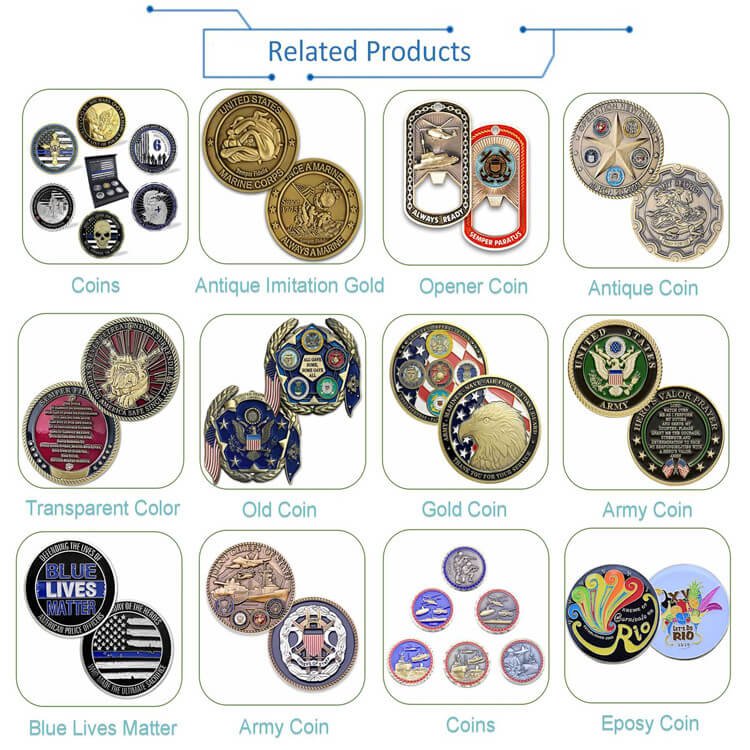
The metal and finish you choose will define how your coin looks in product photography, how it ages over time, and how the recipient perceives its value. This is a decision worth spending time on.
Common Base Metals
- Zinc alloy: the most common choice for custom challenge coins. Cost-effective, excellent detail reproduction, and available in any plating.
- Brass: heavier and slightly more expensive, with a premium feel that appeals to upscale retail and gifting.
- Copper: distinctive warm tone, popular for antique-finished collector coins and heritage-brand products.
Finish Options
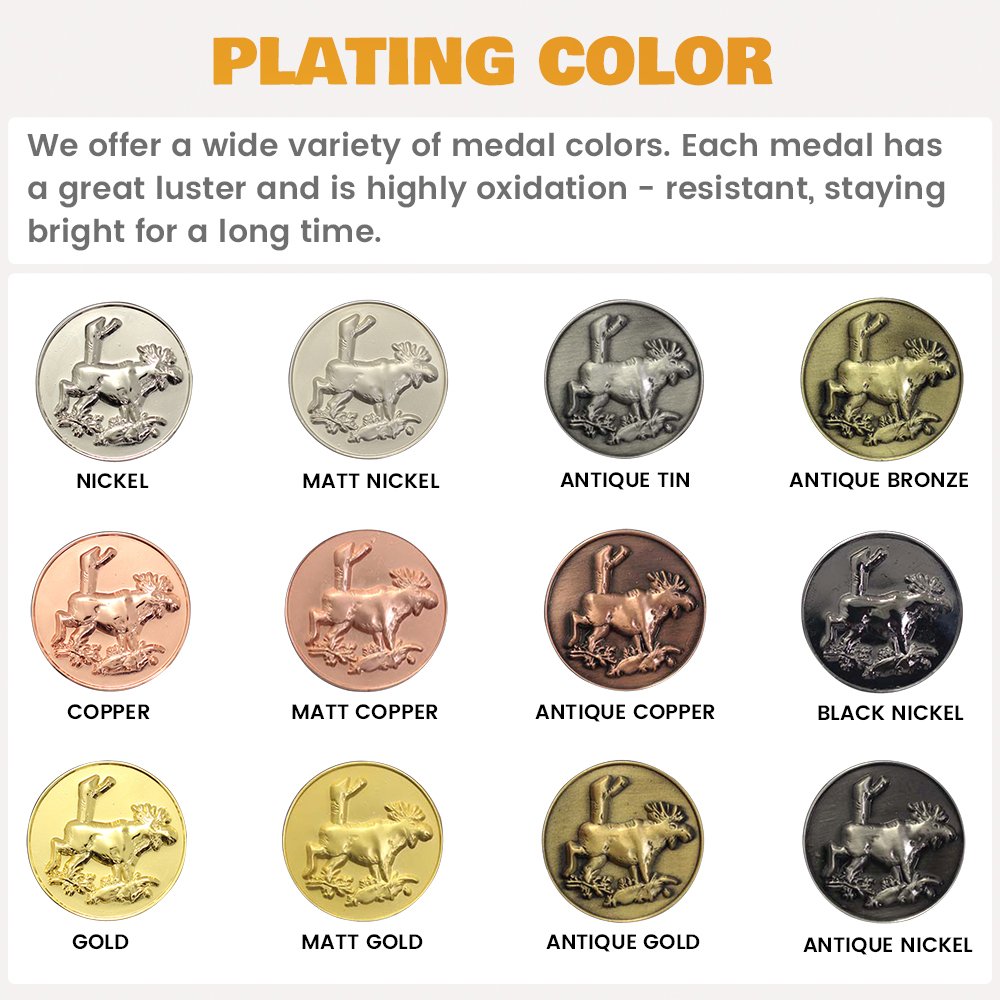
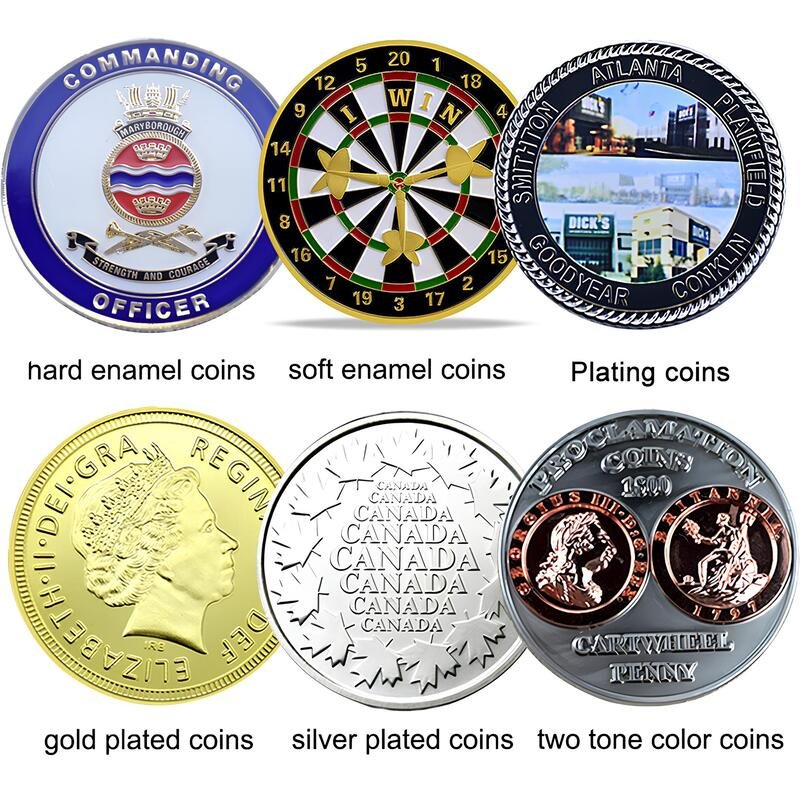
Polished gold and polished silver are the most popular finishes for corporate and brand coins — bright, photogenic, and universally appealing. Antique finishes (gold, silver, bronze, copper) add depth and a vintage character that works especially well for military, heritage, and collector applications. Matte and sandblasted finishes offer a more understated, contemporary look.
E-commerce tip: polished finishes photograph exceptionally well and tend to perform better in online listings. If your coins will be sold or showcased digitally, factor product photography into your finish decision from the start.
Element 4: Enamel Color and Challenge Coin Printing — Bringing Your Brand Colors to Life
Color transforms a challenge coin from a metallic token into a branded visual statement. Understanding how color works in coin production — and the differences between fill methods — is essential for getting results that match your brand identity.
Soft Enamel vs. Hard Enamel
Soft enamel is the most popular and versatile choice. Color fills sit slightly recessed below the metal lines, creating a textured surface with satisfying depth. It supports a wide color range and is ideal for most brand and promotional applications. Hard enamel is filled flush to the metal and polished smooth, producing a glass-like surface with a premium, jewelry-quality feel. Hard enamel costs more but is the right choice for high-end retail, executive gifts, or collector items.
Challenge Coin Printing
For designs that require photographic detail, gradients, or complex multi-color imagery, challenge coin printing (also called offset printing or epoxy doming) is the solution. A full-color image is printed directly onto the coin surface and protected with an epoxy dome layer. This technique opens up possibilities that traditional enamel cannot achieve — and it is particularly valuable for brands with detailed illustrations, photographic product imagery, or intricate graphic elements.
Color matching note: work with your manufacturer to match enamel fills to your Pantone or hex color values as closely as possible. A reputable supplier will provide a painted sample for color approval before bulk production.
Element 5: Challenge Coin Edges — The Detail Most People Miss
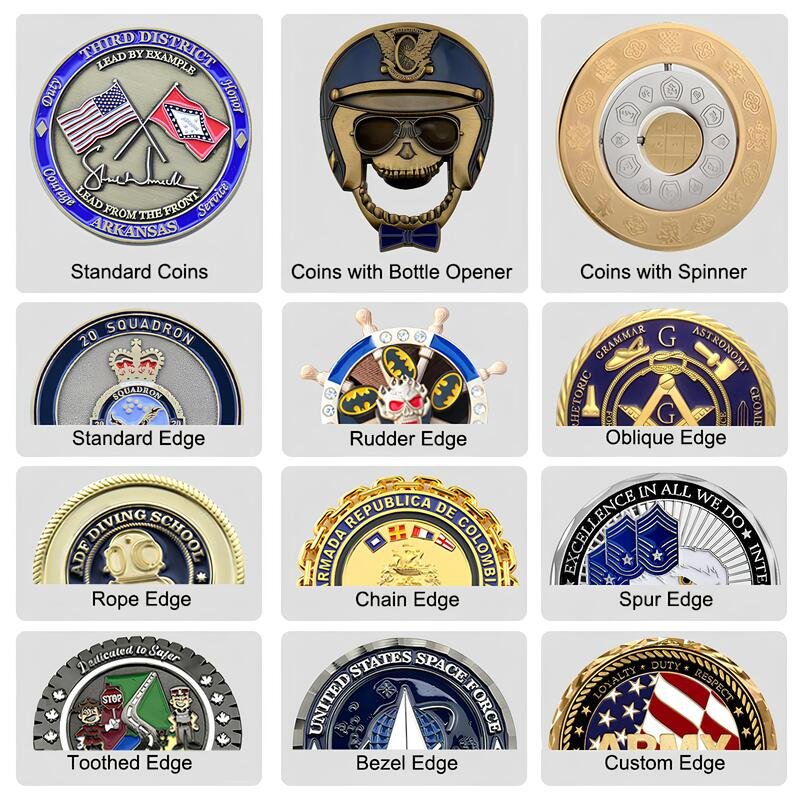
Pick up any well-made challenge coin and run your thumb along the edge. That texture — or the deliberate absence of it — is a design decision that experienced buyers pay close attention to, and one that significantly affects the overall premium feel of a coin.
Challenge coin edges come in several standard styles. A plain flat edge is clean and minimal. A reeded edge (the ridged pattern familiar from currency coins) adds a classic, authoritative feel. Rope and cross-cut patterns offer more decorative options suited to heritage or ceremonial coins. For a truly custom touch, the edge can be engraved with text — a unit motto, a brand tagline, a date, or a serial number.
Edge design is one of the most underutilized challenge coin options among first-time buyers. It adds minimal cost and has an outsized effect on how a coin is perceived when handled. If you are designing a premium product, do not leave the edge as an afterthought.
Element 6: Text and Typography — Say More with Less
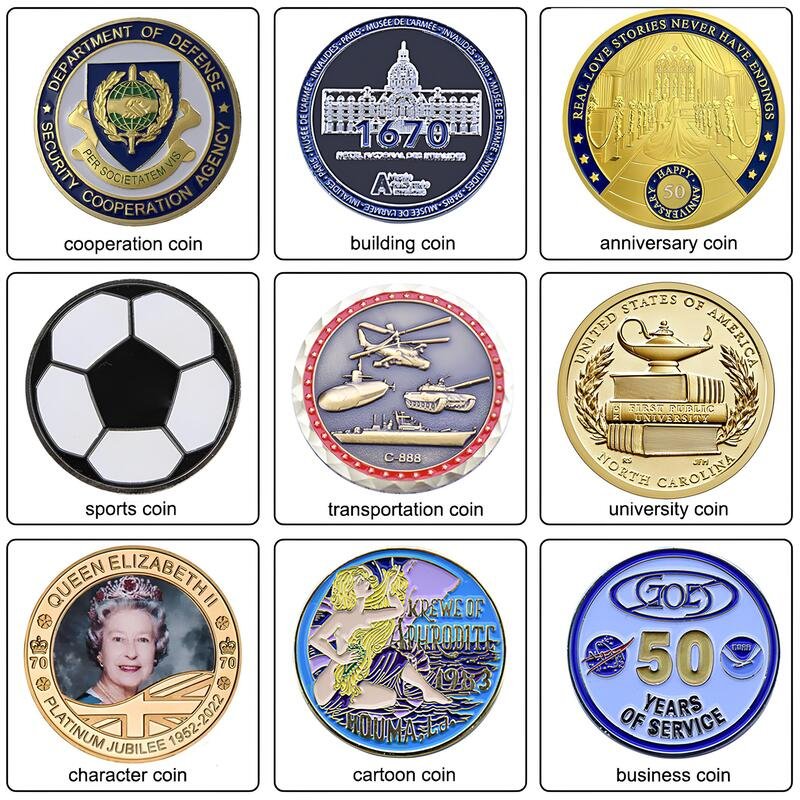
Text on a coin serves a very different purpose than text on a printed page. At coin scale, less is always more. When you design a challenge coin, treat every word as precious real estate.
A useful rule of thumb: aim for no more than 20 to 25 words of text across both faces combined. This forces you to prioritize — organization name, tagline, date, location — and discard everything that does not pull its weight. Choose clean, bold typefaces that remain legible at small sizes. Decorative script fonts rarely work well on metal; their thin strokes disappear in the relief process.
Also consider where text appears. Text arranged in a circle around the coin perimeter is a classic, highly legible approach. Central text panels work for key information like dates or serial numbers. When in doubt, ask your manufacturer for a proof — text legibility issues that are invisible at screen scale become obvious the moment you see a physical sample.
Element 7: Special Features — When to Go Beyond the Standard Coin
Once you have nailed the fundamentals, special features give you the opportunity to create something genuinely unexpected. The best challenge coin options in this category add functional or tactile value — not just visual novelty.
- 3D relief design: sculptural raised elements that turn the coin into a miniature work of art. Particularly effective for figurative designs — animals, vehicles, equipment, or architectural landmarks.
- Spinner coins: a rotating inner element adds interactivity and collectibility. Popular in corporate and gaming applications.
- Bottle opener coins: a practical feature that keeps the coin in daily use rather than stored away. Strong performer for hospitality brands, breweries, and events.
- Glow-in-the-dark enamel: a distinctive and memorable finish option that photographs dramatically and appeals strongly to younger collector markets.
For traders and retail buyers: premium features justify higher retail price points and improve margin. A standard coin might retail for $8 to $12; a 3D spinner coin with antique finish and engraved edge can comfortably sit at $20 to $30. Know your end customer and design to match their expectations.
Before You Place an Order: A Practical Checklist
Understanding how to design a challenge coin is one thing — preparing for production is another. Here is what to have ready before you contact a manufacturer:
- Artwork file: vector format (AI or EPS) is strongly preferred. High-resolution raster files (300dpi minimum) are acceptable for print-based designs.
- Quantity: most manufacturers operate on tiered pricing — the more you order, the lower your per-unit cost. Common breakpoints are 100, 250, 500, and 1,000 units.
- Specifications: size, shape, thickness, metal, finish, edge style, and any special features.
- Timeline: standard production runs typically take 14 to 21 business days. Rush options are available from most suppliers at a premium.
- Packaging: decide early whether you need retail-ready packaging (velvet pouches, acrylic cases, gift boxes) as this affects both cost and lead time.
Ready to Create Your Custom Challenge Coin?
Great challenge coin design comes down to seven things: meaningful symbolism, the right size and shape, quality material and finish, smart use of color and printing, edge detail, clear typography, and well-chosen special features. Get these right and you will create a coin that people keep, display, and talk about — which is exactly what great branded merchandise is supposed to do.
At Unique Custom Pins, we work with traders, brands, e-commerce sellers, and retail buyers to bring challenge coin concepts to life at any scale. Whether you need 100 coins for a product launch or 10,000 for a retail program, our team handles everything from initial artwork through to packaged, ready-to-ship product.Get started today: request your free custom challenge coin sample and proof at Uniquecustompins. Our team will respond within one business day.
FAQs
What is the standard size of a challenge coin?
The most common size is 1.75 inches in diameter, though the average challenge coin size range runs from 1.5 to 2 inches. Larger coins (up to 3 inches) are available for special applications.
What is the difference between soft enamel and hard enamel?
Soft enamel sits recessed below the metal lines, giving a textured surface with strong color vibrancy. Hard enamel is polished flush with the metal for a smooth, premium finish. Hard enamel costs slightly more and is best for high-end applications.
How do I get a free proof before ordering?
At Unique Custom Pins, we offer a custom challenge coin sample free of charge with every order inquiry. Submit your artwork or design idea and our team will produce a digital proof — and physical sample on request — before any production commitment.
How long does production take?
Standard production is 14 to 21 business days after proof approval. Rush production (7 to 10 days) is available for time-sensitive orders.
What challenge coin options are available for retail packaging?
We offer a full range of retail packaging options including individual velvet pouches, acrylic display cases, cardboard coin holders, and custom gift boxes. Retail-ready packaging can be branded with your logo and is available as part of any bulk order.